Kitchen & Dining · Dining & Drinks · Coffee & Tea
Bodum
Bodum Chambord French Press
Since 1958 · 68 years to 2026 · First made in Denmark
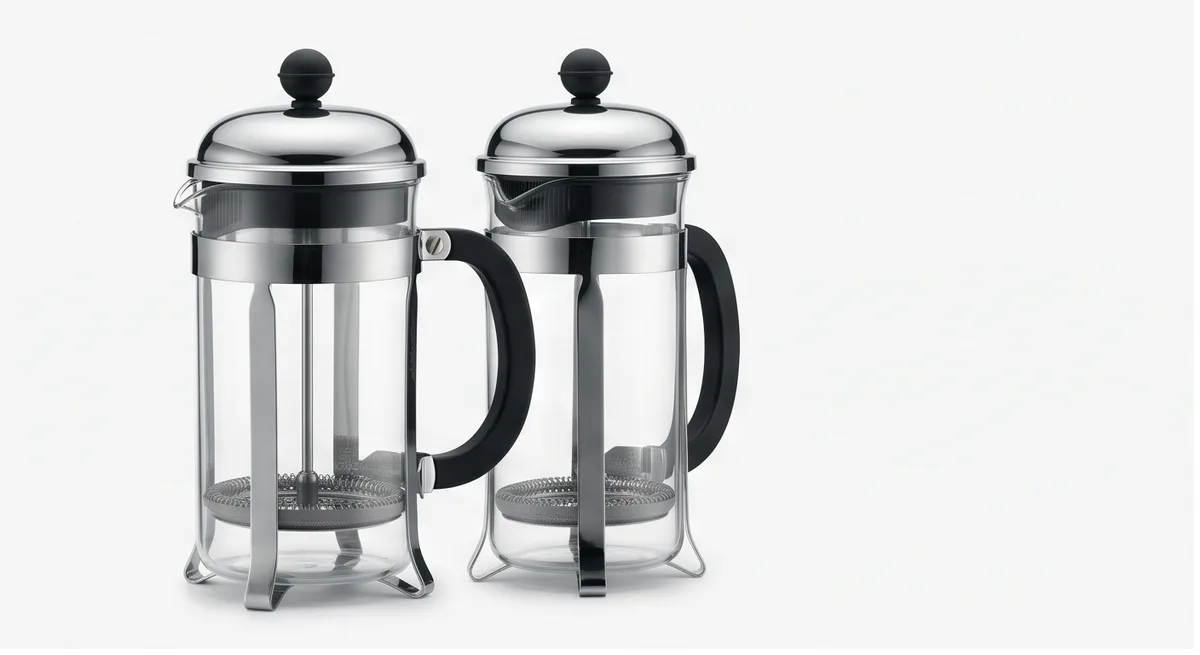
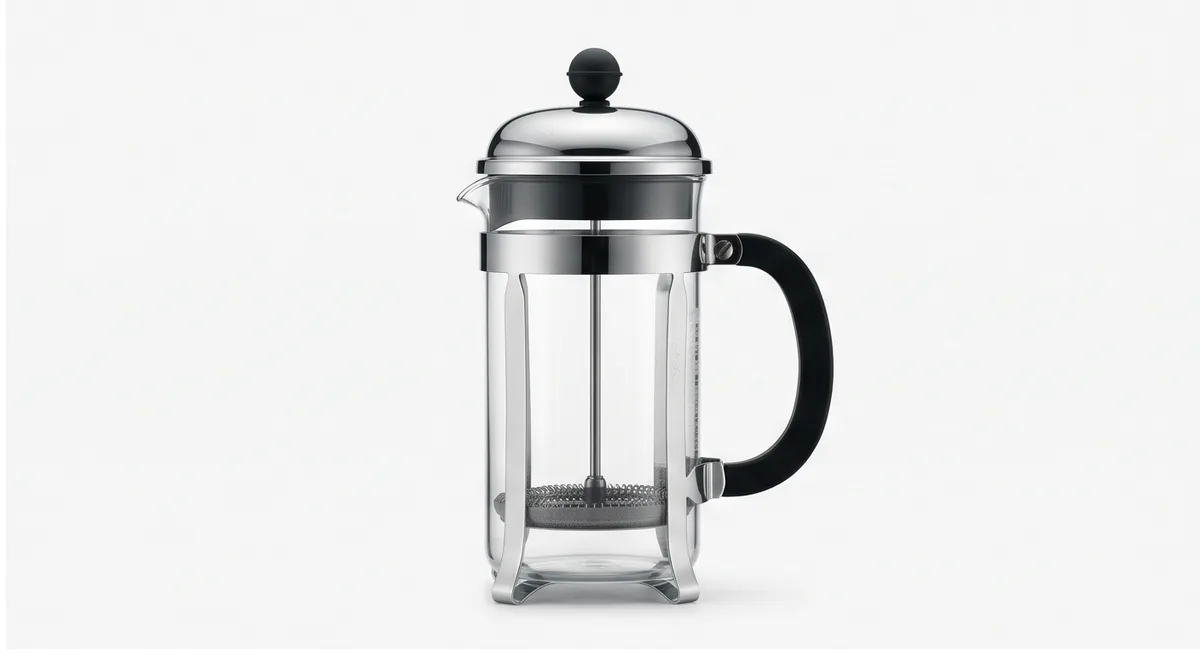
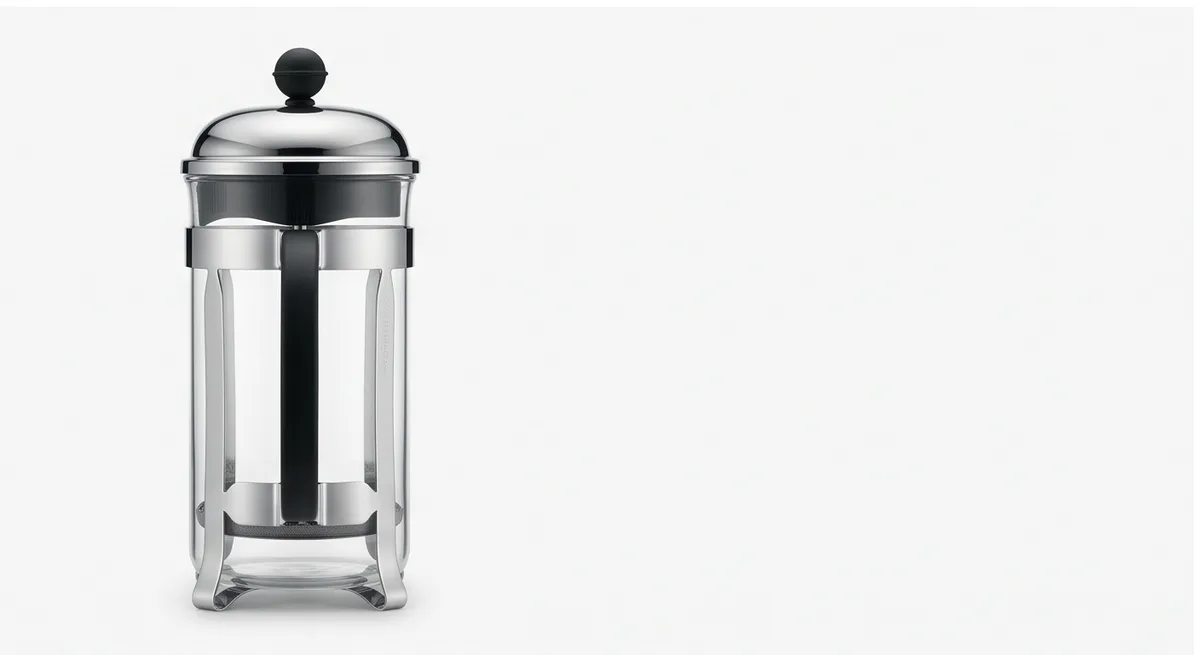
The Bodum Chambord is a French press coffeemaker that has maintained its original design and continuous production for more than sixty-five years. Its longevity as a commercial product is unusual; most kitchen equipment either evolves substantially or disappears. The Chambord has done neither.
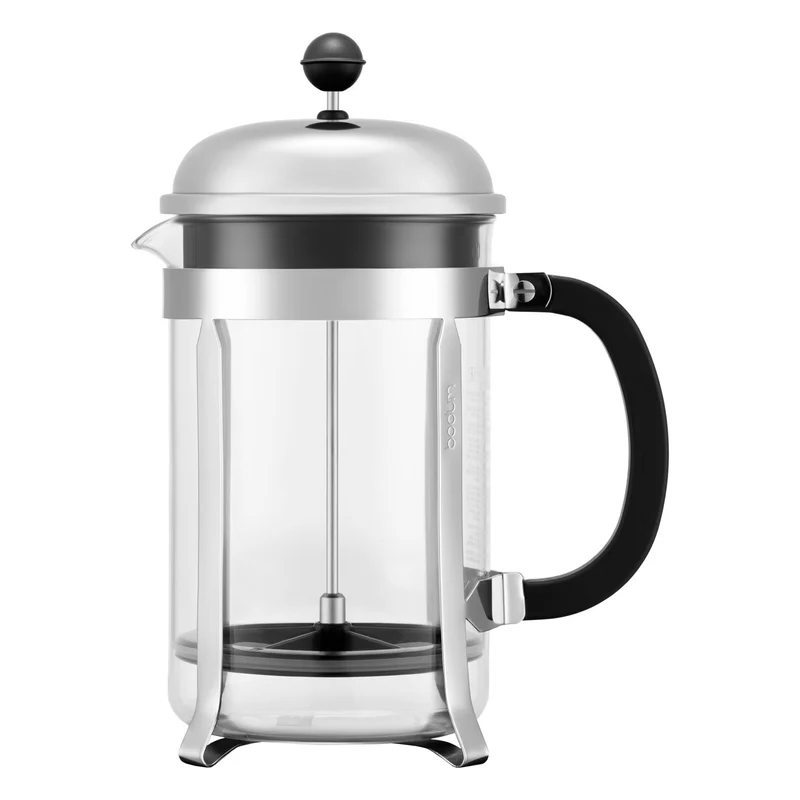
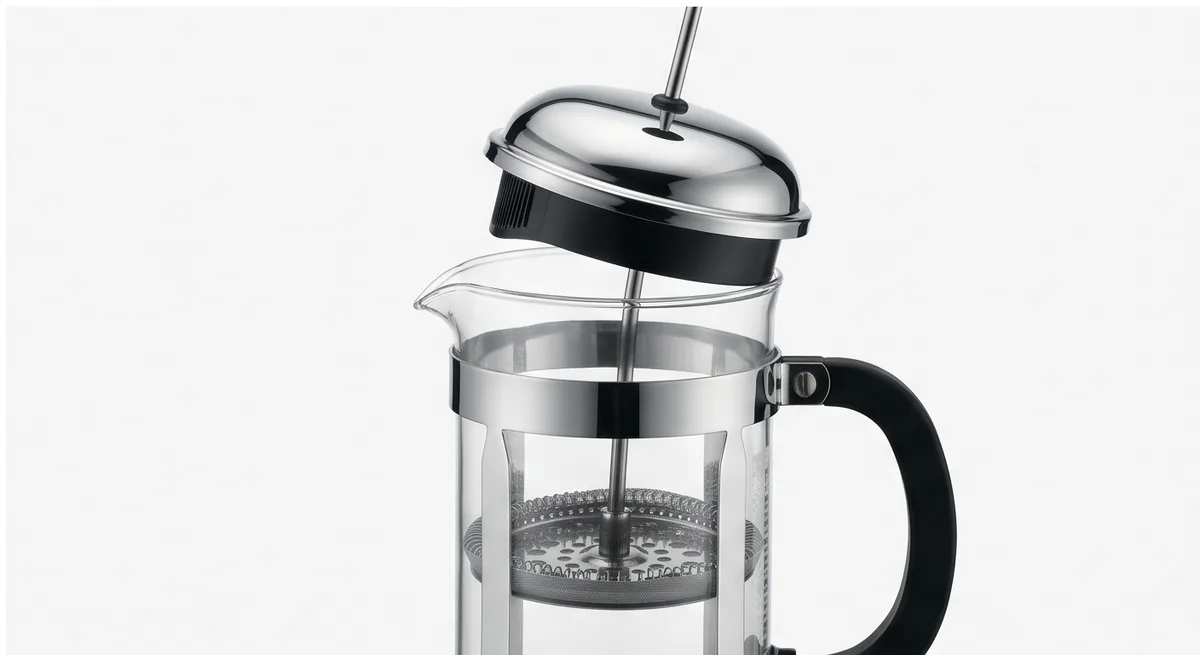
The French press itself is a simple mechanism: ground coffee is steeped in hot water in a glass cylinder; a metal plunger with a fine mesh filter is pressed downward to separate grounds from liquid. Attilo Calimani conceived this principle in the 1930s; it became popular in European cafés in the postwar years. Jørgen Bodum, recognizing the superior coffee the method produced, partnered with the French manufacturer Melior-Martin to develop a refined version. The result—the Chambord, with its distinctive stainless-steel frame, domed lid, and proportioned carafe—entered production around 1958 and has been manufactured continuously since.
The design belongs to a category of objects whose form follows function so completely that improvement becomes unnecessary. The cylindrical glass body serves as brewing vessel and serving pot. The frame protects against thermal shock and provides structural integrity. The handle offers purchase without conducting heat. The plunger mechanism is mechanical, requiring no electricity, no moving parts beyond the plunger rod itself. This simplicity accounts partly for its survival: there is little to fail, little to improve without introducing complexity. But simplicity alone does not ensure commercial longevity. The Chambord endured because Bodum chose to continue producing it, marketing it as a premium alternative to electric coffee makers, and selling it through major retailers—Starbucks, Target, Walmart, Crate & Barrel. The product became synonymous with the Bodum brand itself.
Manufacturing has shifted—from Melior-Martin's French factory to Bodum's Portuguese facility—and environmental standards have tightened, particularly in chrome plating. The glass, steel, and plastic materials have remained unchanged. The design has not. Across decades of industrial change, aesthetic fashion, and competition from cheaper imitators, the Chambord has persisted as an icon of functional design and as evidence that some products, once perfected, require neither reinvention nor obsolescence.
Timeline
- 1958 First made · Disputed Bodum Chambord French Press enters production in Denmark.
- 1991 Ownership Bodum acquires Melior-Martin, bringing the Chambord into full corporate ownership.
Milestone dates are taken from the production notes behind this entry and have not been checked separately.
More like this
-
 Coffee & Tea · since 1961 La Pavoni Europiccola Direct-lever espresso machine in continuous production since 1961. Read the entry →
 -
 Coffee & Tea · since 1941 Chemex Coffeemaker Laboratory-inspired glass coffeemaker, patented 1941, still hand-assembled. Read the entry →
 -
 Coffee & Tea · since 1936 Melitta Cone Filter Cone-shaped paper filter, refined in 1936, continuously produced. Read the entry →
 -
 Coffee & Tea · since 1933 Bialetti Moka Express The stovetop coffee maker that defined Italian domestic life Read the entry →