Fashion · Bags · Backpacks
Fjällräven
Fjällräven Kånken
Since 1978 · 48 years to 2026 · First made in Västernorrland, Sweden
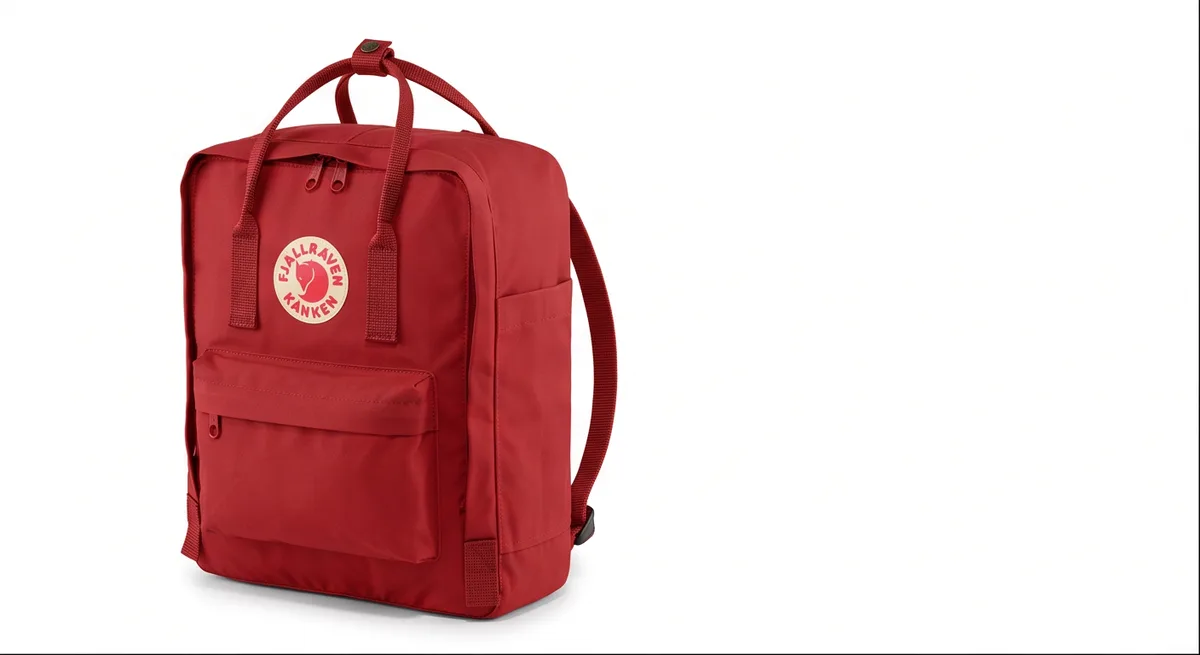
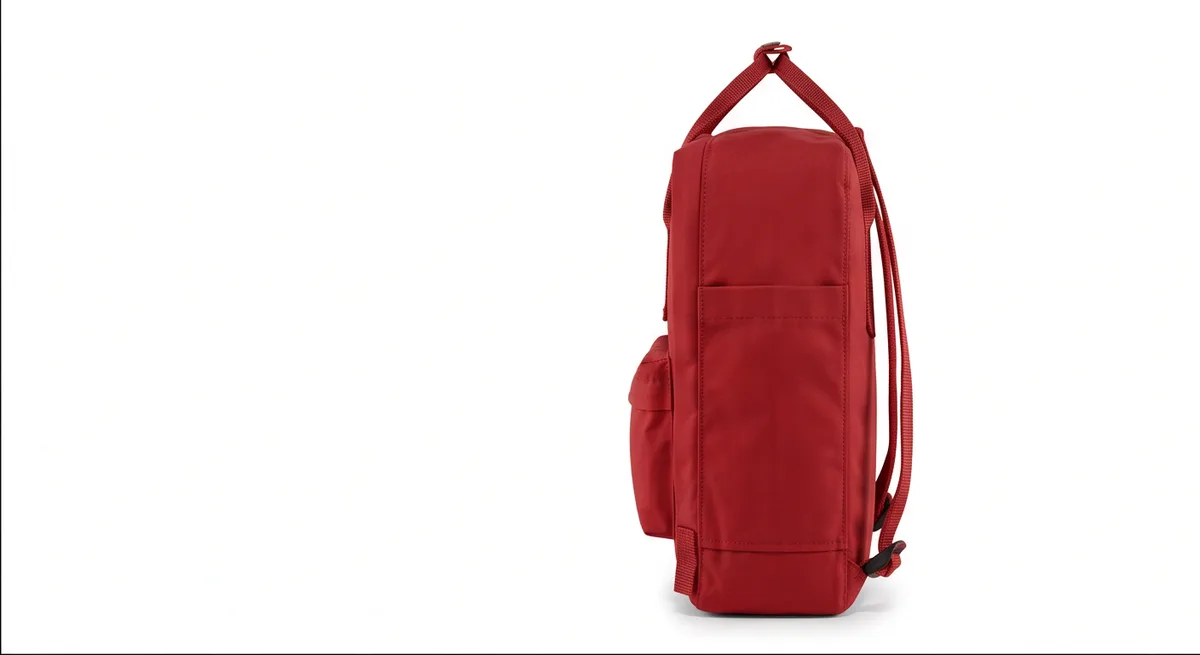
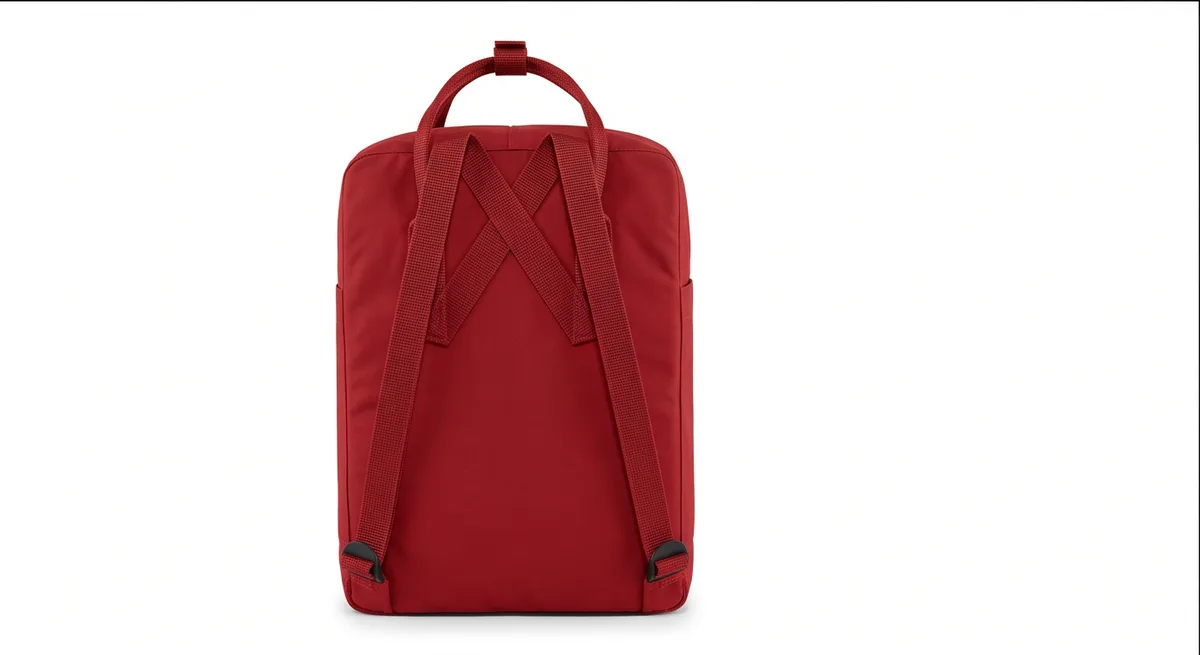
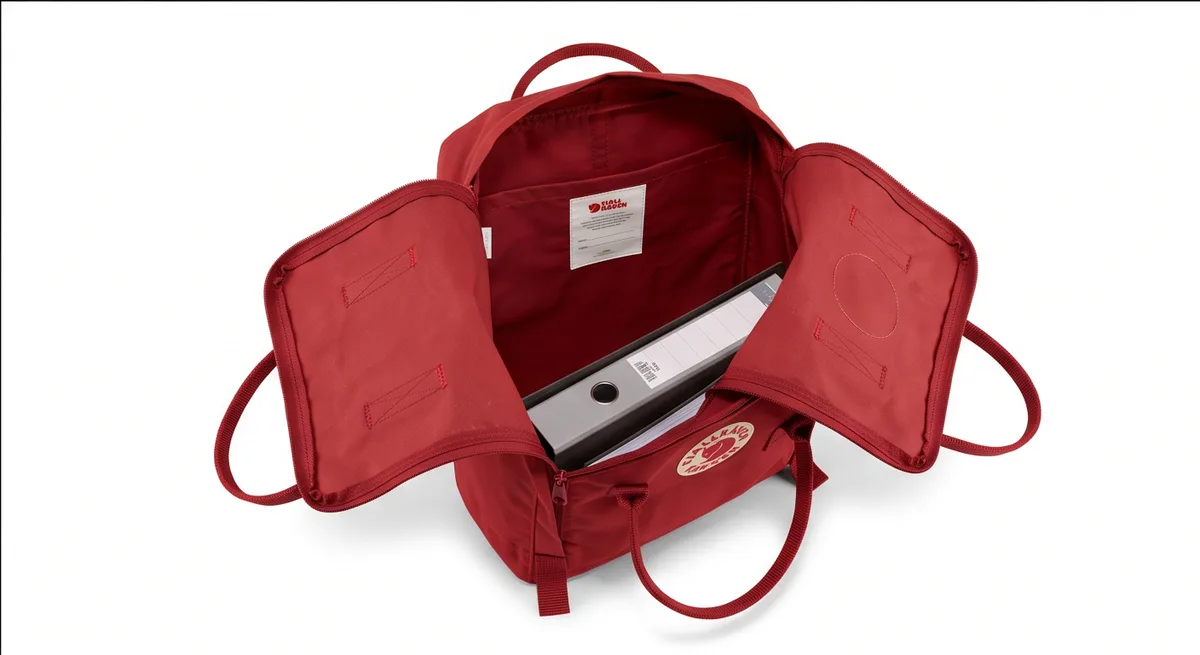
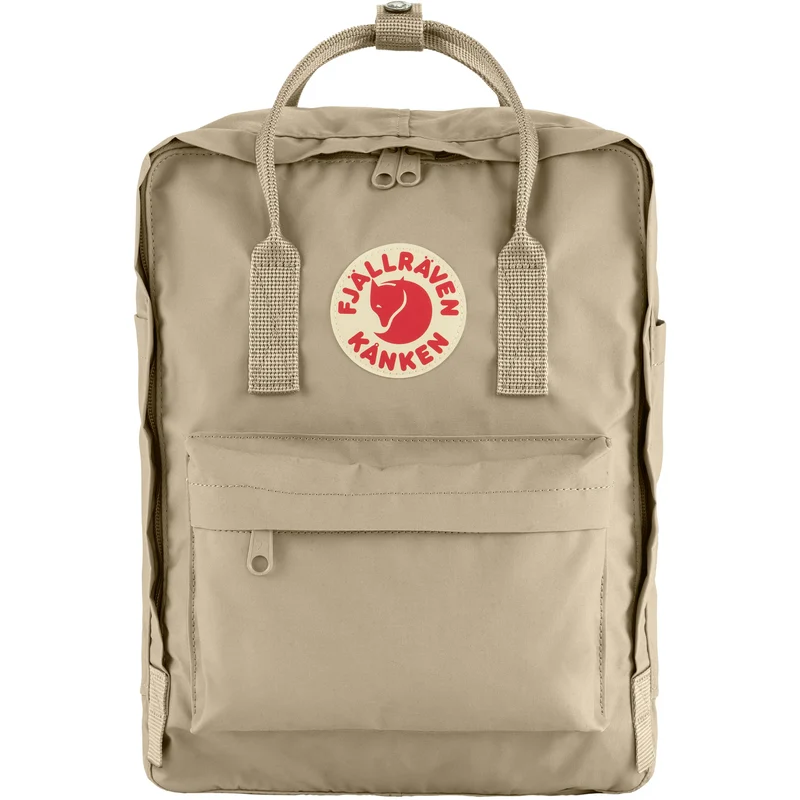
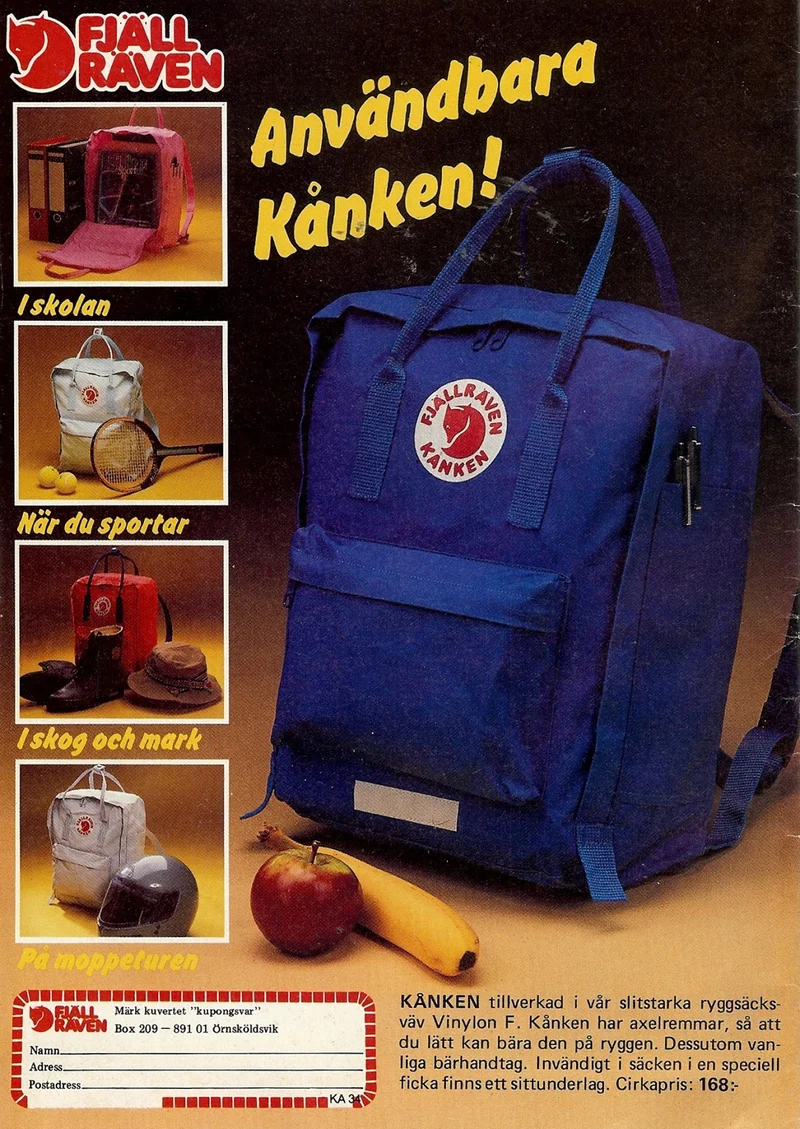
The Kånken is a flat rectangle of tough synthetic fabric, its proportions taken, the story goes, from the Stockholm telephone directory. One long zip opens the whole of the main compartment; below it sits a smaller zipped pocket and the round fox badge, red and white rather than the brand's usual brown, and reflective. Two narrow straps run the full height of the back, two loop handles sit on top, and a flat foam pad lives in an inner pocket against the spine, to keep the contents from digging in and to sit on when the walk pauses.
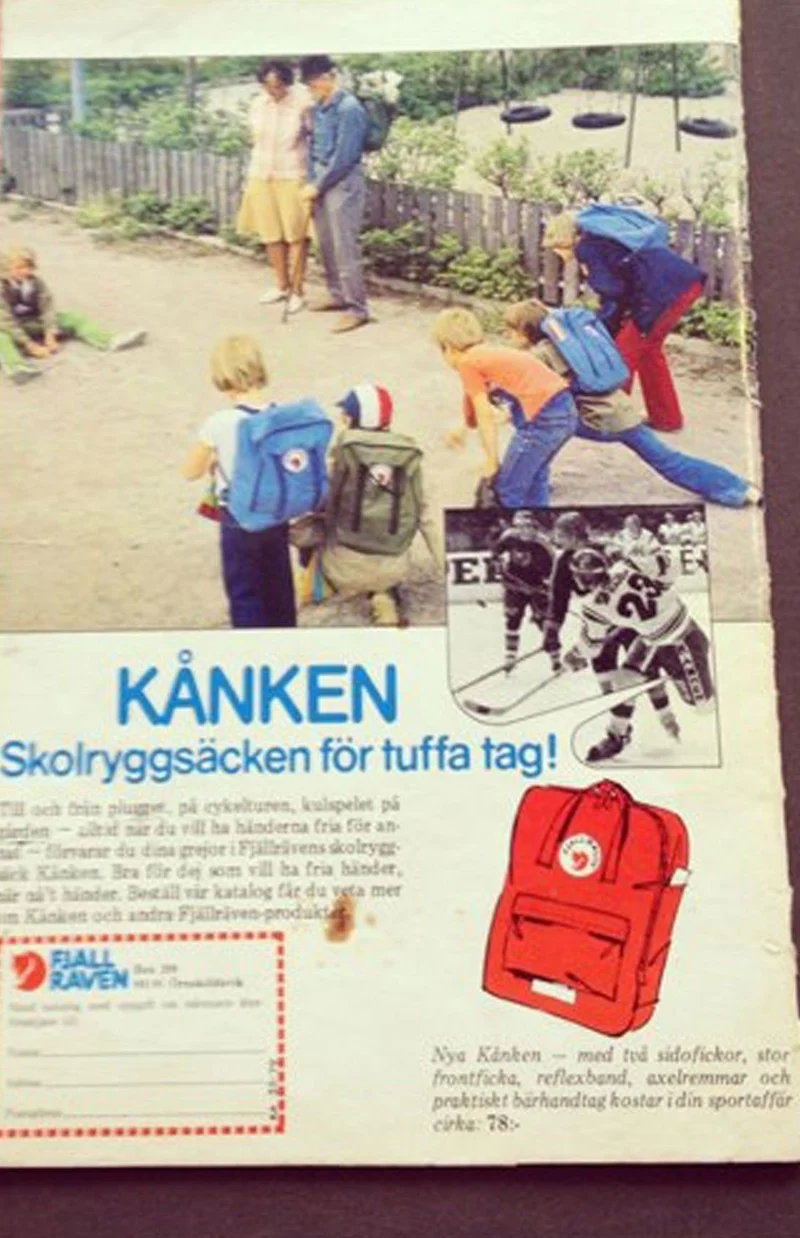
It was made for children. In the late 1970s Swedish school doctors and youth workers were worried about back pain appearing at ever younger ages, and blamed the fashionable shoulder bag hung with schoolbooks. Åke Nordin, who had founded Fjällräven in Örnsköldsvik in 1960 to make frame rucksacks, followed the debate and worked with the Swedish Guide and Scout Association on a cheap, simple pack that would spread the load across both shoulders and hold two A4 binders.
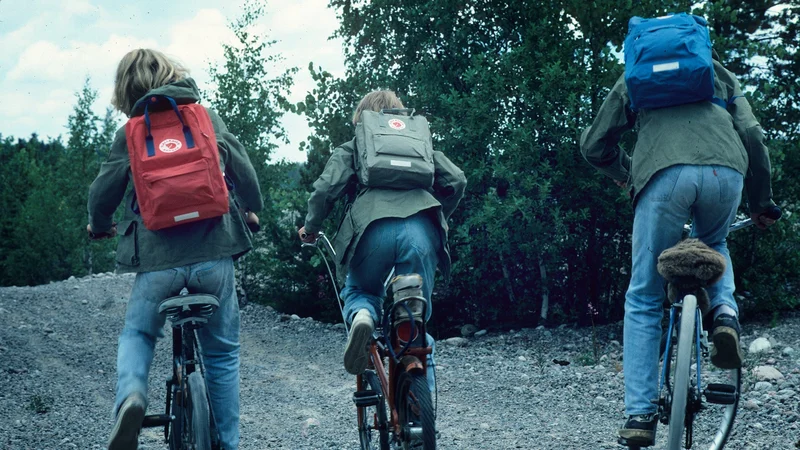
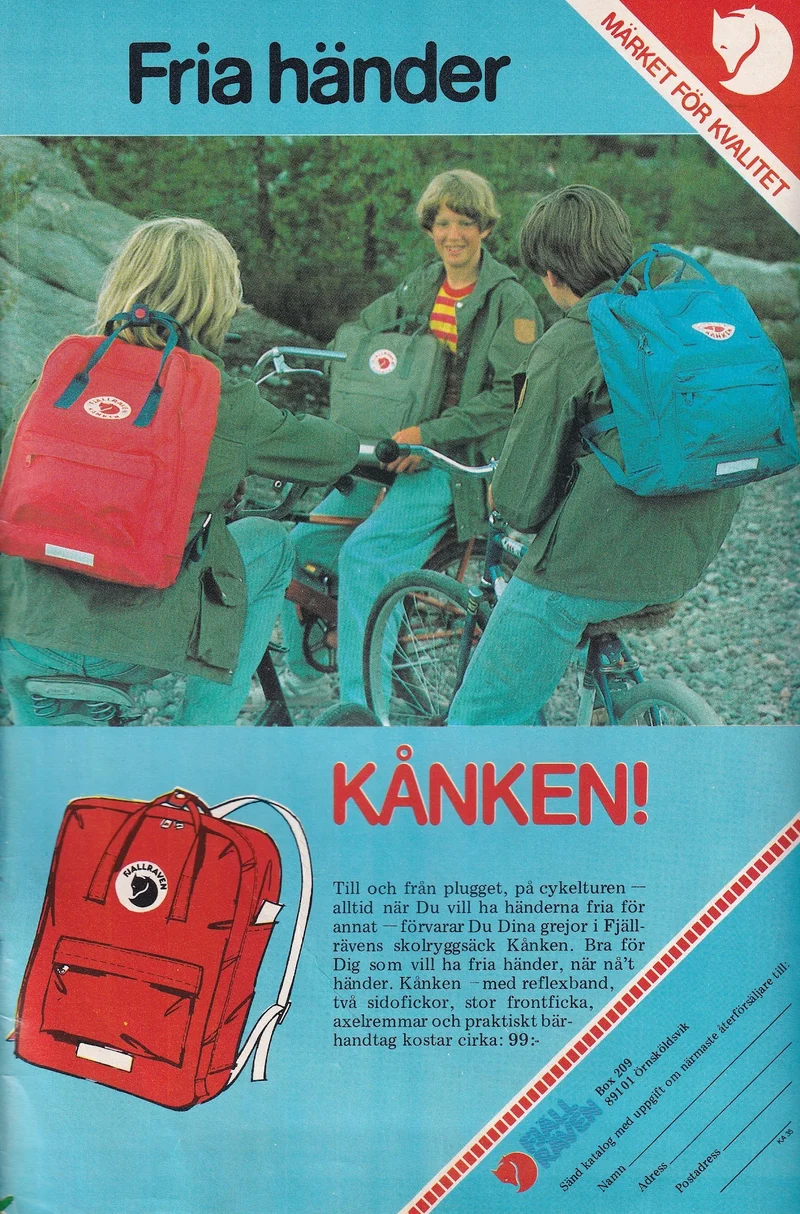
The name came from kånka, to lug. The bag went on sale for the 1978 school year, after dozens of newspapers had written about the back-pain problem with the new rucksack as their example. Nordin had hoped to sell two hundred in the first year and sold twice that; in 1979 it sold thirty thousand. It became a fixture of Swedish preschools and nature schools, and was teased on the left as the 'communist hump'.
Apart from colour, the bag has barely changed. In 2008 the narrow palette became a wide one, and the Kånken travelled: in 2016 the Swedish Society of Crafts and Design declared it a piece of utility art, protected by copyright. It is cut today in Vinylon F, a hard-wearing fabric that shrugs off dirt and rain, and still carries its seat pad.
Timeline
- 1978 First made · Claimed Fjällräven Kånken enters production in Västernorrland, Sweden.
- 1979 Production In its second year the Kånken sells 30,000, against 400 in the first.
- 2008 Designed For its thirtieth year Fjällräven widens the narrow colour range into a broad spectrum.
- 2016 Recognised The Swedish Society of Crafts and Design names it a work of utility art, bringing it under copyright protection.
- 2018 Recognised The Kånken wins the Guldknappen Accessoar design prize.
Milestones as we found them, not as we've checked them.
From the archive
More like this
-
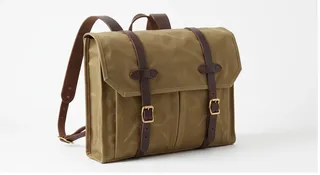 Backpacks · since 1882 Duluth Pack #3 Canoe Pack The portage pack that shaped wilderness travel since 1882. Read the entry →
 -
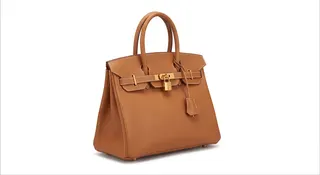 Handbags · since 1984 Hermès Birkin Sketched on a flight in 1984 for an actress who needed room for a baby's bottles. Read the entry →
 -
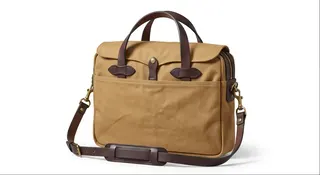 Briefcases & Work Bags · since 1994 Filson Original Briefcase Waxed twill and bridle leather, cut for the office by a Gold Rush outfitter. Read the entry →
 -
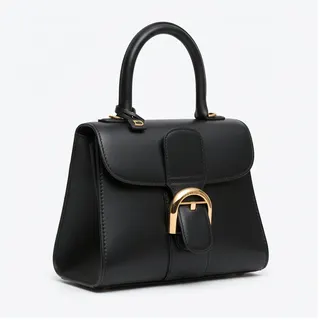 Handbags · since 1958 Delvaux Brillant Bag Sixty-four leather pieces, hand-assembled since 1958. Read the entry →