Musical Instruments · Guitars & Basses · Electric Guitars
Gretsch
Gretsch 6120
Since 1954 · 72 years to 2026 · First made in Brooklyn, New York
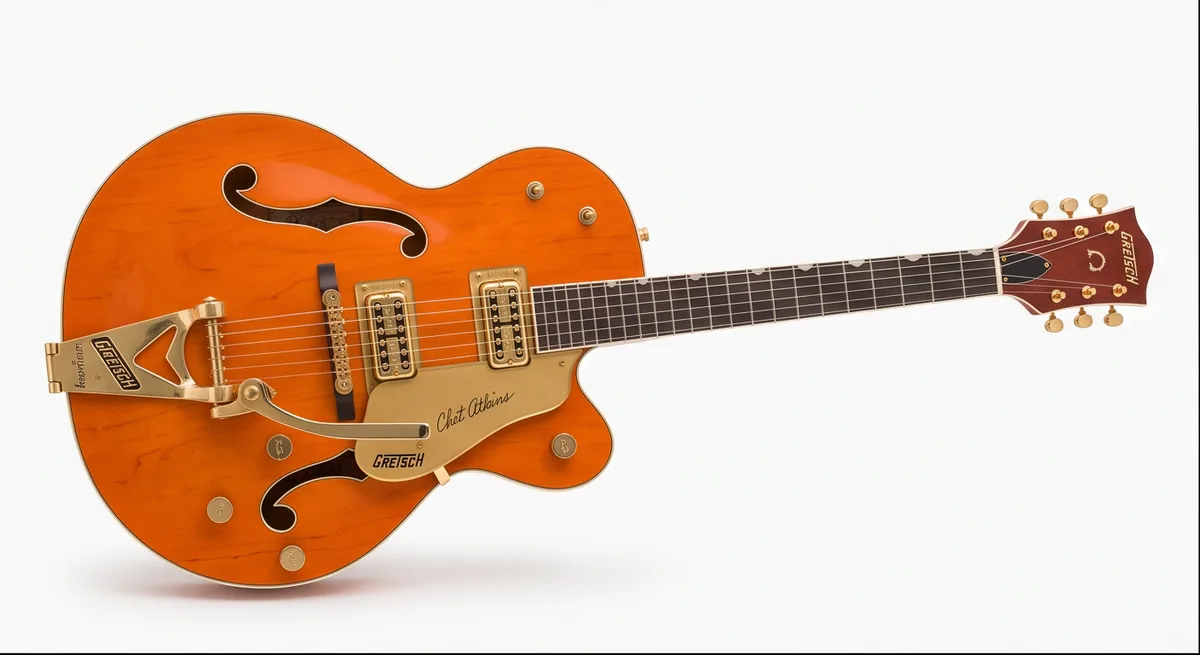
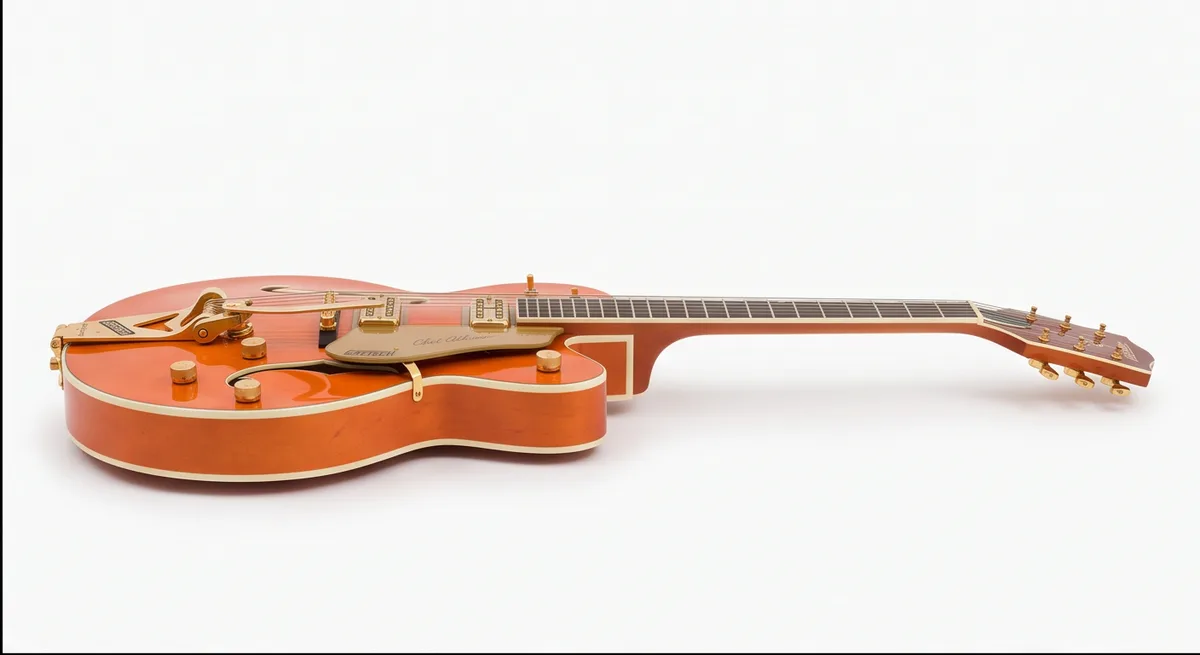
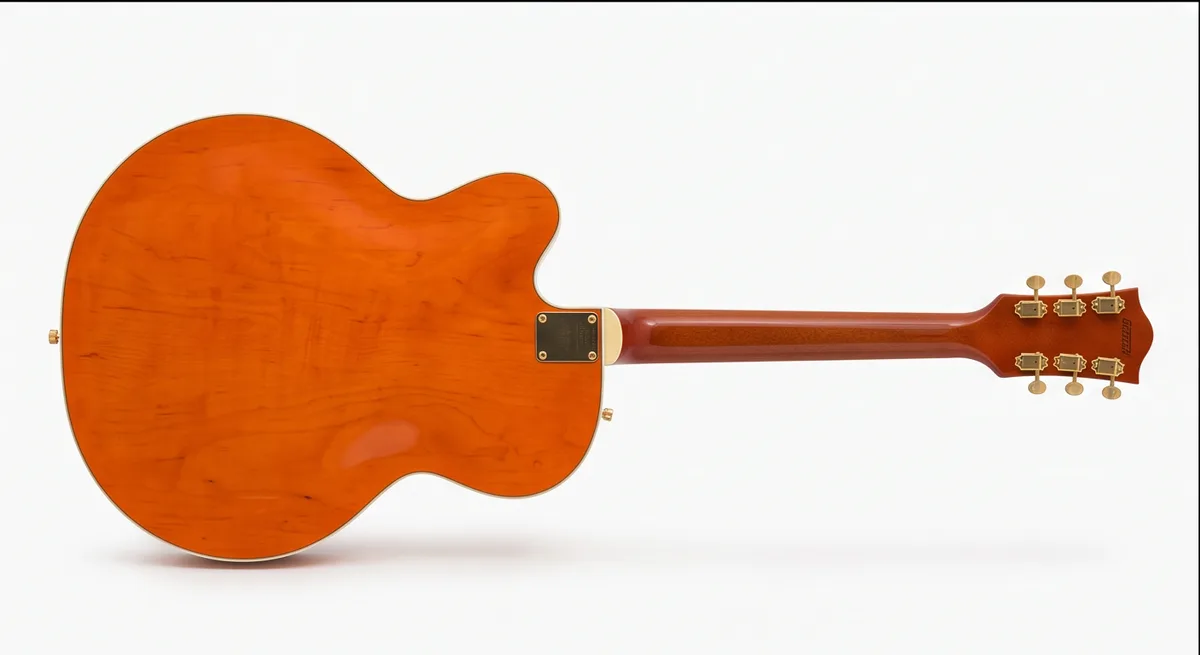
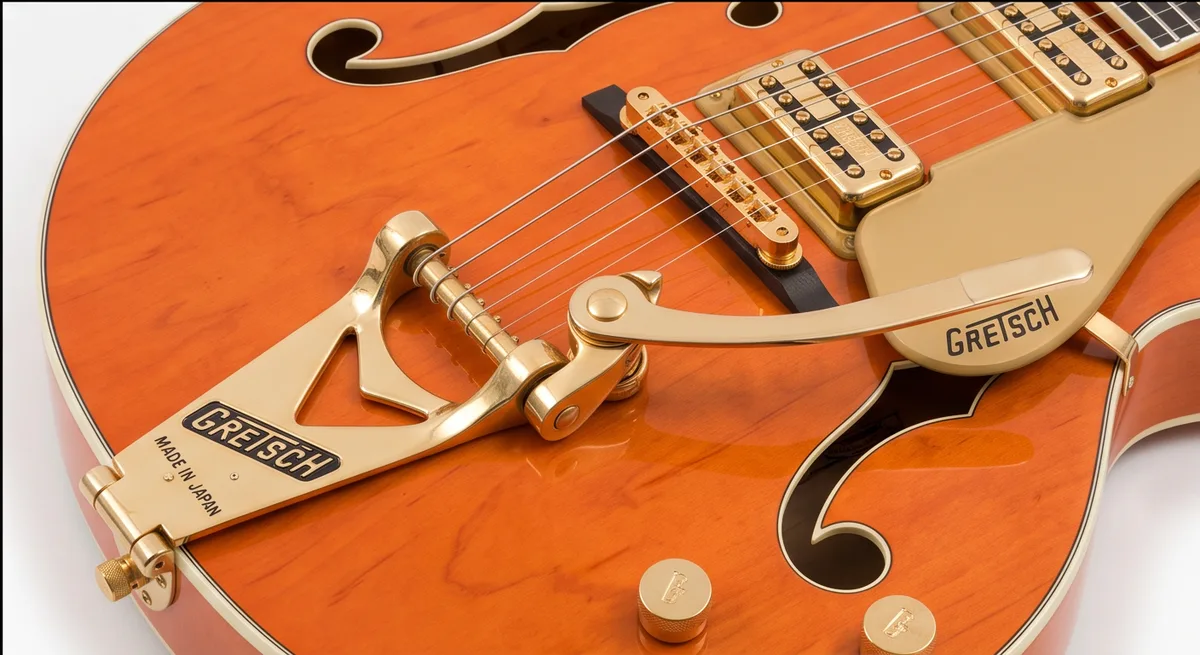
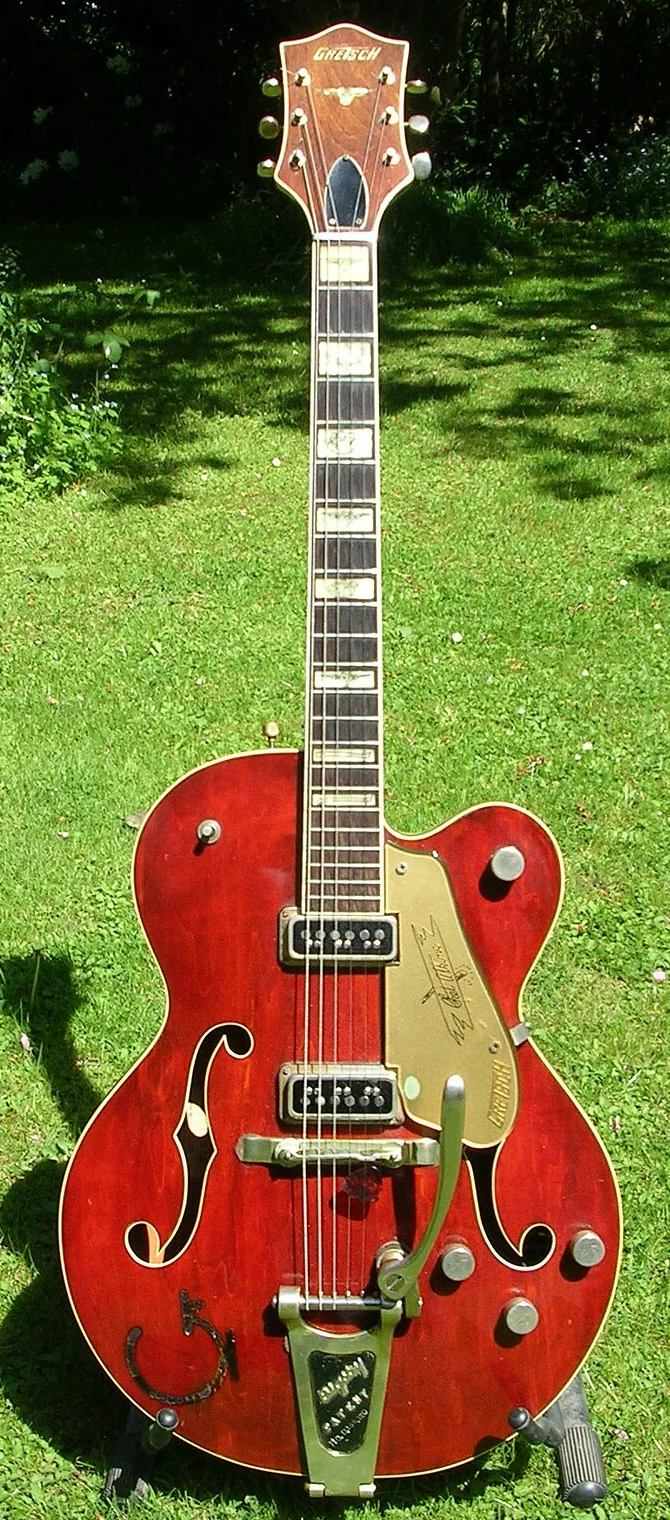
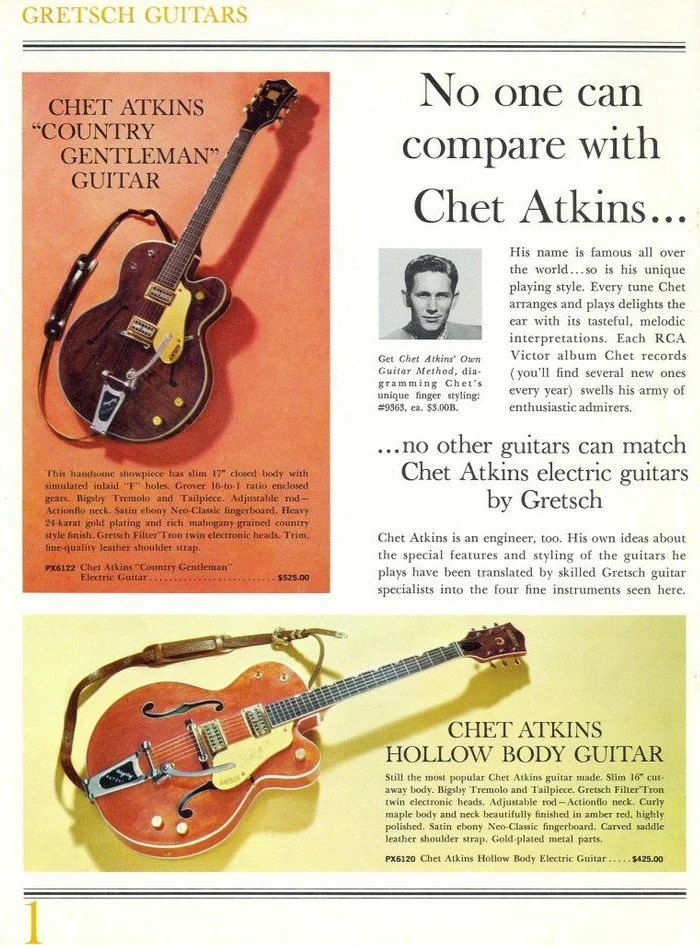
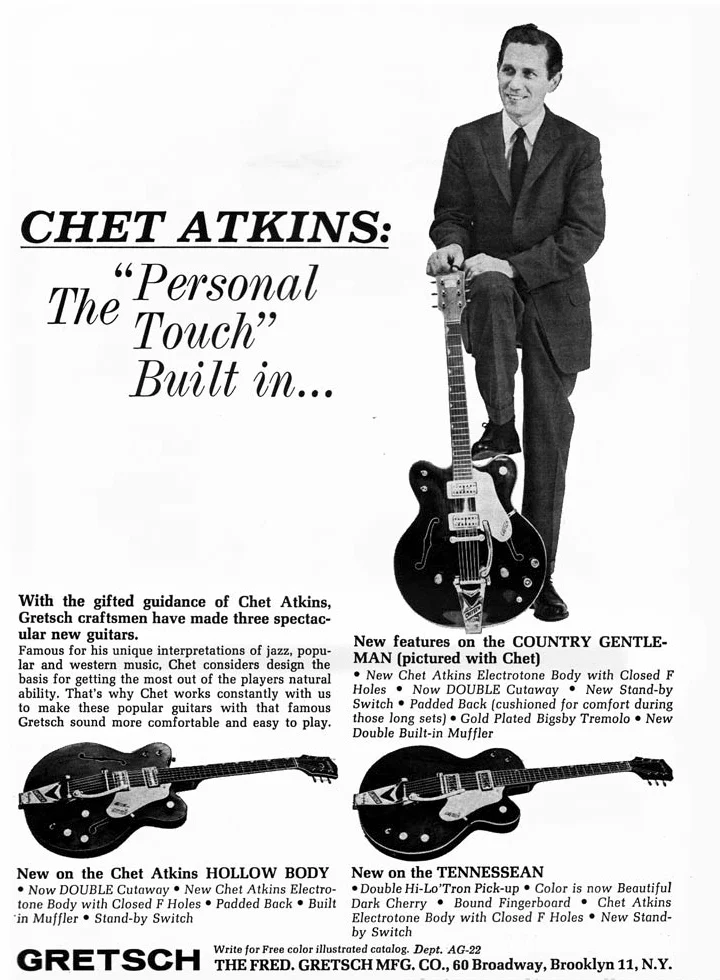
The Gretsch 6120 is a hollow-body electric guitar with f-holes, designed as a signature instrument for virtuoso country guitarist Chet Atkins in the mid-1950s. Gretsch special representative Jimmie Webster approached Atkins in 1954, seeking to replicate Gibson's success with the Les Paul model by creating a branded signature guitar. The resulting instrument featured a 16-inch-wide laminated maple body with distinctive orange and amber red finishes, a 24.5-inch scale neck with 22 frets, and rosewood fretboard. Early models carried DeArmond single-coil pickups; from 1958 onwards, these were replaced with Filter'Tron humbuckers, a change that defined the instrument's sonic character for subsequent decades.
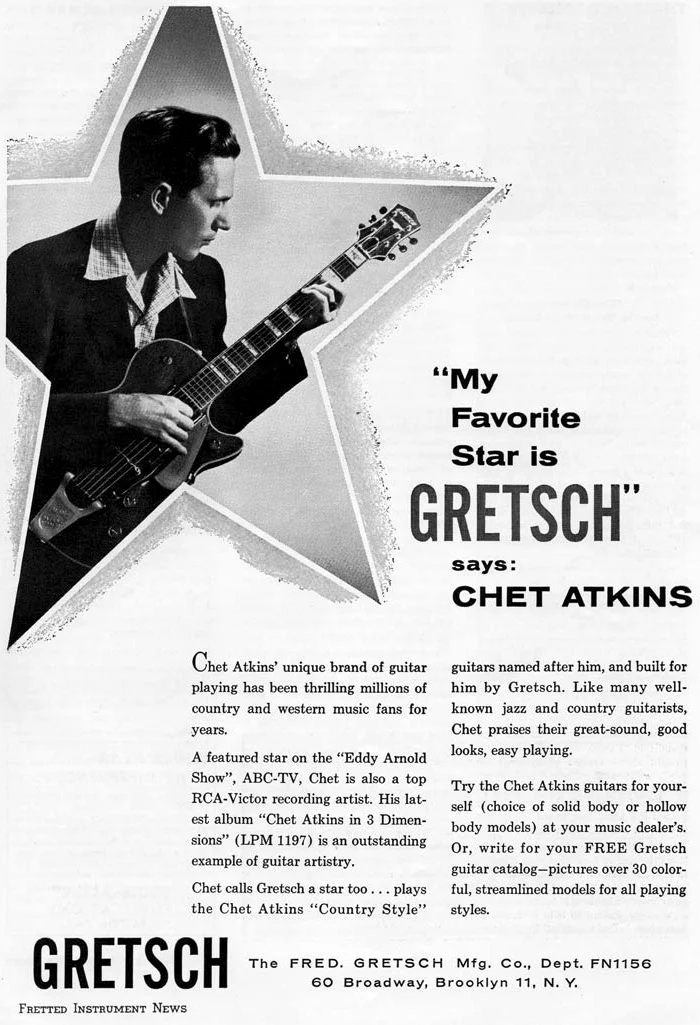
Although developed for country music, the 6120 found its primary audience among rockabilly and rock musicians. Eddie Cochran and Duane Eddy adopted the model in the late 1950s, establishing it as an icon of early rock and roll. The guitar appeared in the hands of Neil Young, Steve Miller, and briefly Eric Clapton and John Lennon during the 1960s. Randy Bachman of the Guess Who and later BTO used a 6120 to compose and record hits including Takin' Care of Business. Pete Townshend of The Who played a 1959 model during the recording of Who's Next and Quadrophenia. By the late 1970s, however, the model had become a forgotten relic, relegated to pawn shops as musical tastes shifted and Gretsch's quality declined under new ownership.

The 6120's cultural resurrection began in the early 1980s when Brian Setzer of the Stray Cats performed with vintage models in the band's music videos, sparking a rockabilly revival and renewed collector demand. This resurgence directly prompted Fred Gretsch to revive his family company in 1989 and return the 6120 to production. Today, Gretsch offers multiple variants including Chet Atkins and Brian Setzer signature models, standard Nashville versions, and a double-cutaway Players Edition. The guitar remains manufactured in Japan and available through American custom shops, maintaining its position as one of rock and roll's most recognizable instruments.
Timeline
- 1954 First made · Disputed Gretsch 6120 enters production in Brooklyn, New York.
- 1958 Designed The fretboard design evolves from block inlays to neoclassic thumbnail inlays.
- 1989 Resumed Wikipedia's Gretsch 6120 article states 'production of the 6120 ceased in the late 1970s' due to changes in musical tastes and deteriorating quality under Baldwin ownership. The Gretsch Wikipedia article states 'In 1989, Gretsch restarted large-scale production of new guitars based on classic Gretsch models.' The stop date is described only as 'late 1970s' without a precise year, so from_year is left null.
Milestones as we found them, not as we've checked them.
From the archive
More like this
-
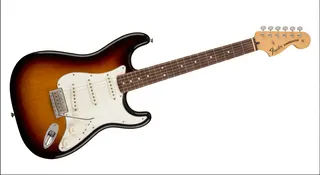 Electric Guitars · since 1954 Fender Stratocaster The electric guitar archetype, continuously manufactured since 1954. Read the entry →
 -
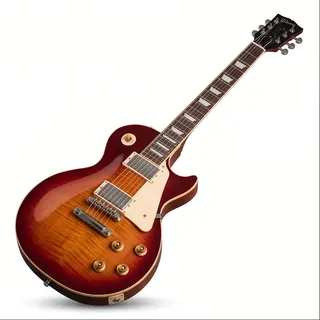 Electric Guitars · since 1952 Gibson Les Paul Solid-body electric guitar in continuous production since 1952. Read the entry →
 -
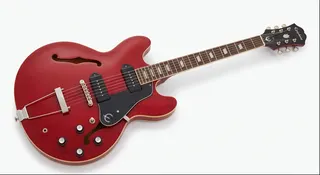 Electric Guitars · since 1961 Epiphone Casino Hollow-body electric guitar in continuous production since 1961. Read the entry →
 -
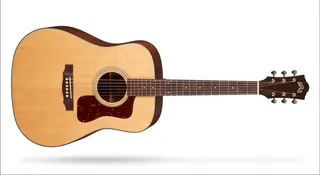 Acoustic Guitars · since 1963 Guild D-40 Dreadnought acoustic guitar in continuous production since 1963. Read the entry →