Fashion · Accessories · Watches
Movado
Movado Museum
Since 1947 · 79 years to 2026 · First made in Neuchâtel, Switzerland

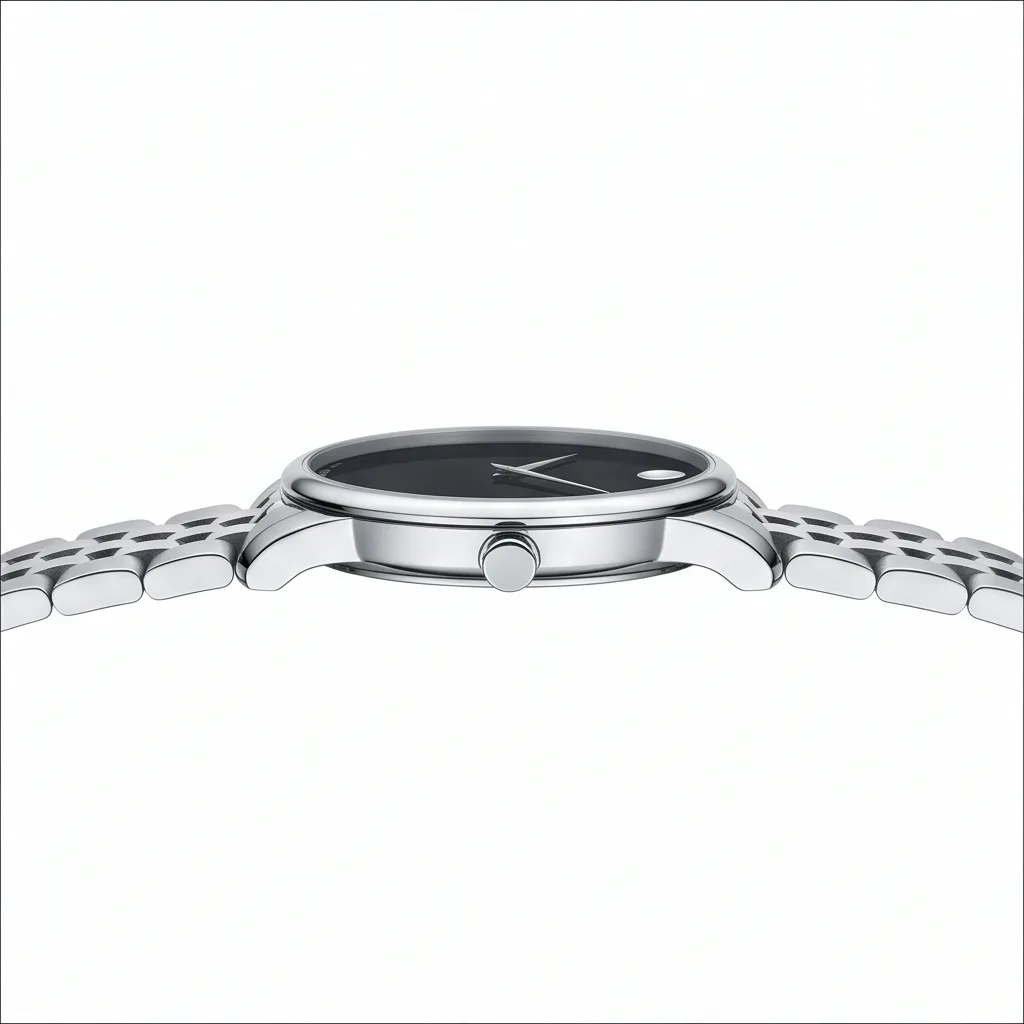

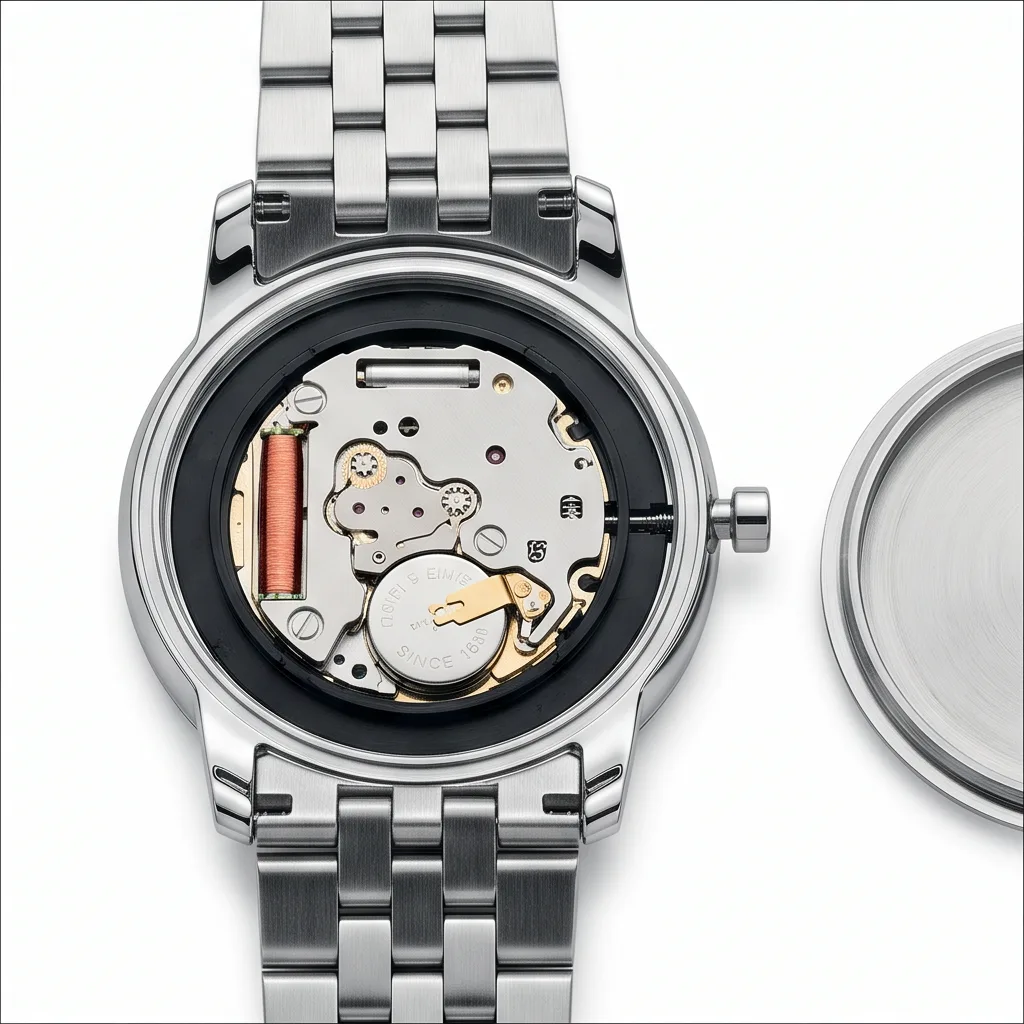
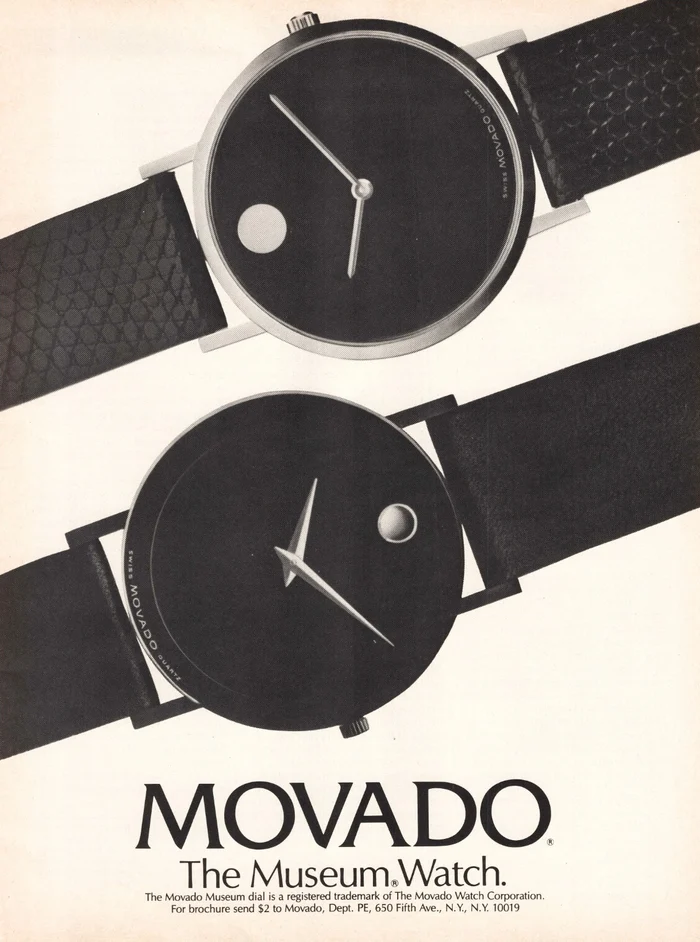
The Museum Dial represents a singular moment in twentieth-century design: the reduction of timekeeping to its essential form. Nathan George Horwitt's 1947 creation strips the watch face to its conceptual minimum—a black dial, two slender hands, and a single applied dot at twelve o'clock representing the sun at its zenith. The inspiration was the sundial, history's first timekeeper, and Horwitt's vision was to return the wristwatch to that primal clarity, removing every ornament and complication that had accumulated over centuries of horological tradition.
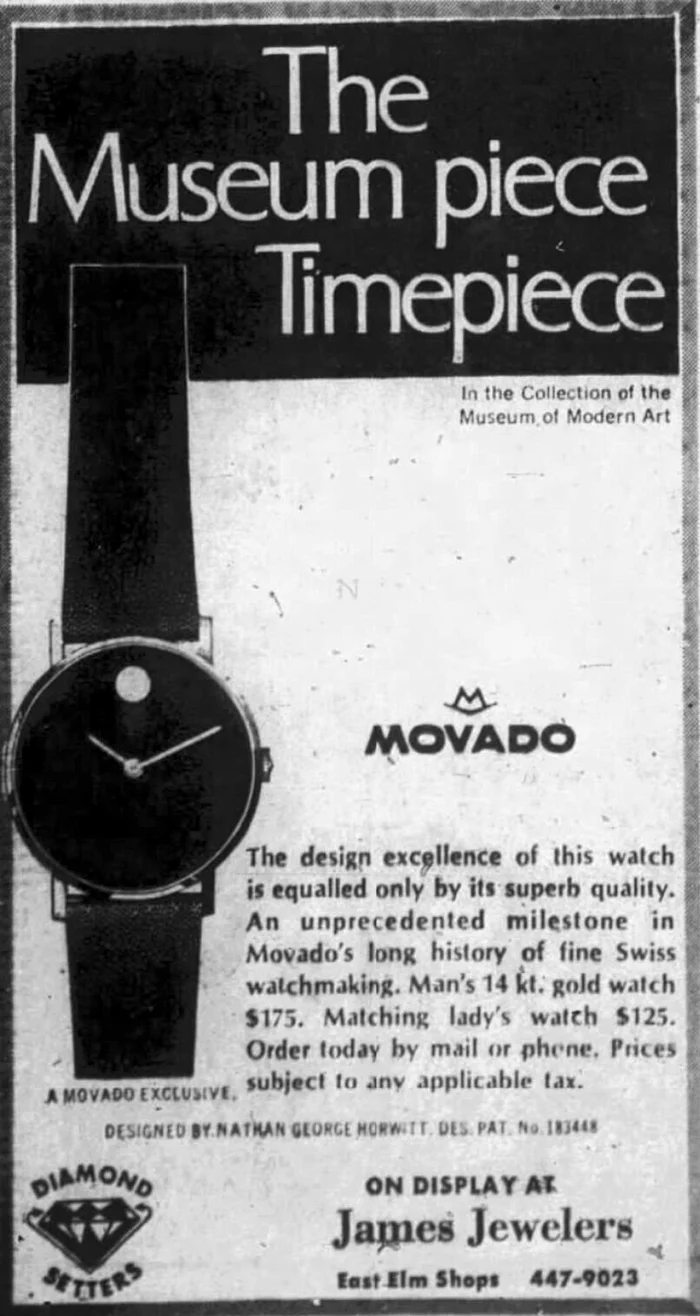
The design's journey to production was unconventional. Horwitt's prototypes, built on Vacheron & Constantin cases, circulated in limited form for years before gaining institutional recognition. In 1960, one prototype entered the permanent collection of the Museum of Modern Art in New York—a credential that transformed the watch from a designer's experiment into a cultural artifact. movado.com notes this was the first watch dial ever accepted into MoMA's collection, forever marking its place in modern design. When Movado began commercial production in 1962, the watch carried both artistic legitimacy and Horwitt's direct involvement through a royalty agreement that continued until his design patent expired in 1972.
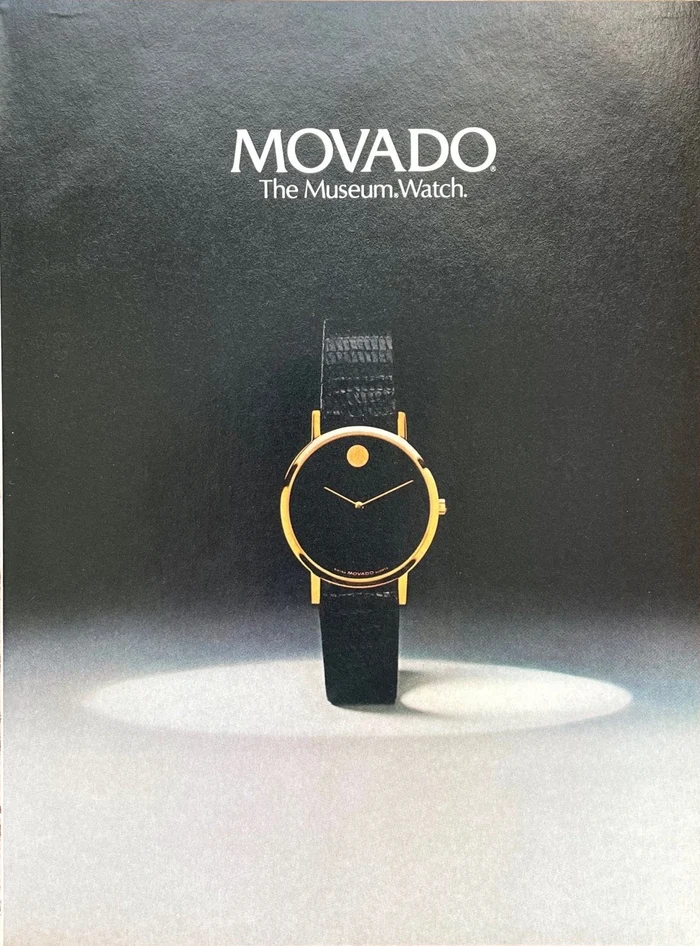
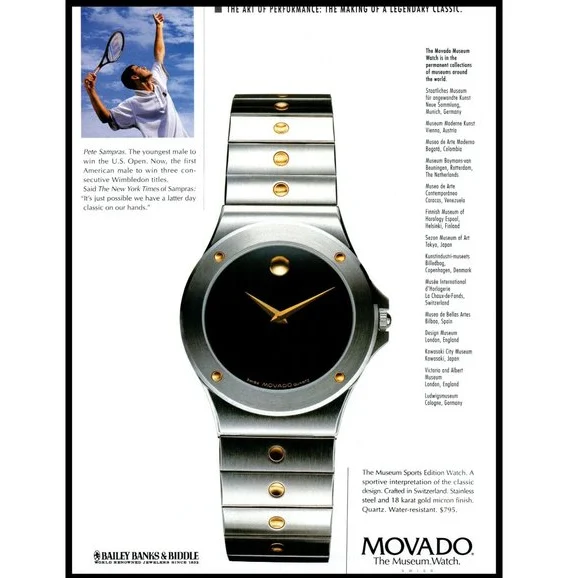
What distinguishes the Museum from fashion-driven watches is its refusal to evolve aesthetically. The dial remains unchanged—a statement of principle rather than stasis. movado.com confirms that contemporary versions employ high-quality materials: sapphire crystals, automatic Swiss movements, mother-of-pearl dials, and diamond accents where specified. The case construction and finishing have advanced, but the face itself remains Horwitt's original conception. This consistency is rare in commercial watchmaking, where design typically cycles through trends. The Museum's endurance suggests that Horwitt identified something fundamental about how humans perceive time—a visual language so economical that it requires no updating.
The watch exists now in multiple iterations, from entry-level quartz versions to elaborate automatic pieces, yet all preserve the core principle: the dot and the hands, nothing more. movado.com reports the design is displayed in 20 museums worldwide, a distribution that reflects both its historical importance and its continued production as a commercial object. Few designs have maintained such dual citizenship—simultaneously a museum piece and a functional commodity—for over sixty years.
Timeline
- 1947 First made · Verified Movado Museum enters production in Neuchâtel, Switzerland.
- 1958 Designed A design patent is filed for the Museum Dial.
- 1960 Released The first commercial version of the Museum watch appears through Neiman-Marcus.
- 1960 Recognised The Museum Dial enters the permanent collection of the Museum of Modern Art.
- 1962 Production Movado begins manufacturing the Museum watch under a formal royalty agreement with Horwitt.
- 1975 Ownership A legal settlement with Horwitt resolves outstanding compensation disputes.
Milestone dates are taken from the production notes behind this entry and have not been checked separately.
From the archive
More like this
-
 Watches · since 1948 Omega Seamaster Water-resistant sports watch born from wartime precision, 1948 to present. Read the entry →
 -
 Watches · since 1953 Rolex Submariner The benchmark diver's watch, continuously refined since 1953. Read the entry →
 -
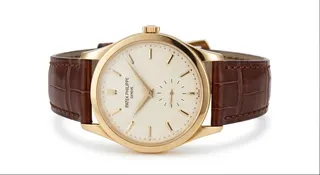 Watches · since 1932 Patek Philippe Calatrava Swiss dress watch embodying Bauhaus minimalism since 1932 Read the entry →
 -
 Watches · since 1965 Vostok Komandirskie Soviet military watch in continuous production since 1965. Read the entry →