Fashion · Accessories · Watches
Patek Philippe
Patek Philippe Calatrava
Since 1932 · 94 years to 2026 · First made in Geneva, Switzerland
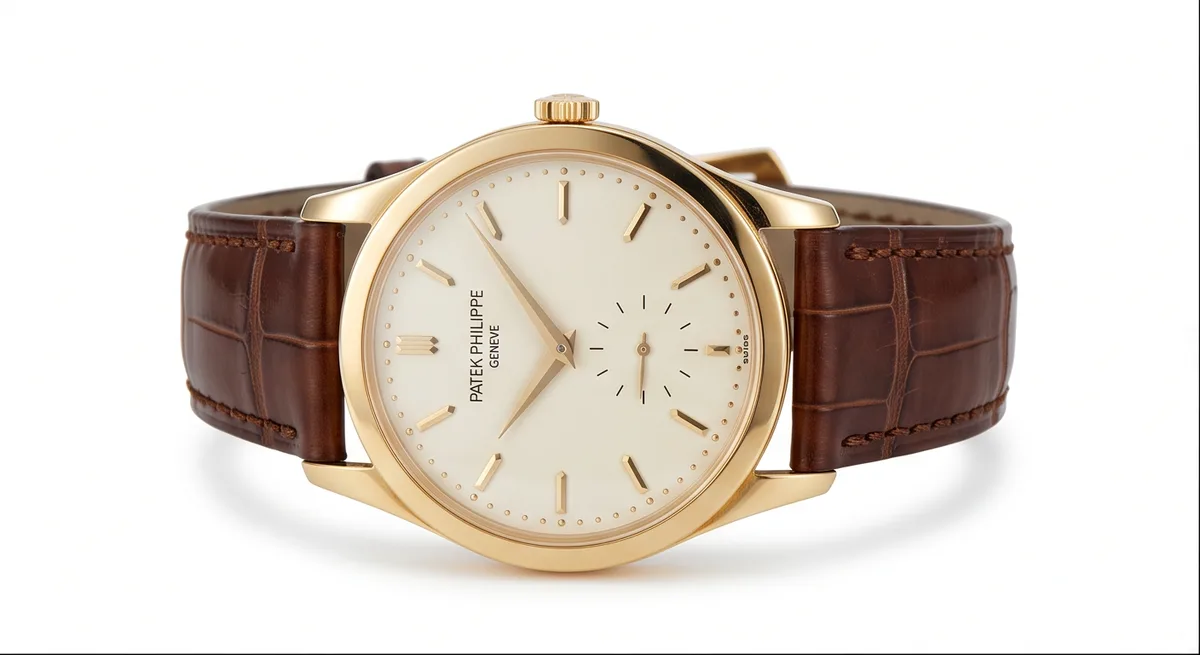
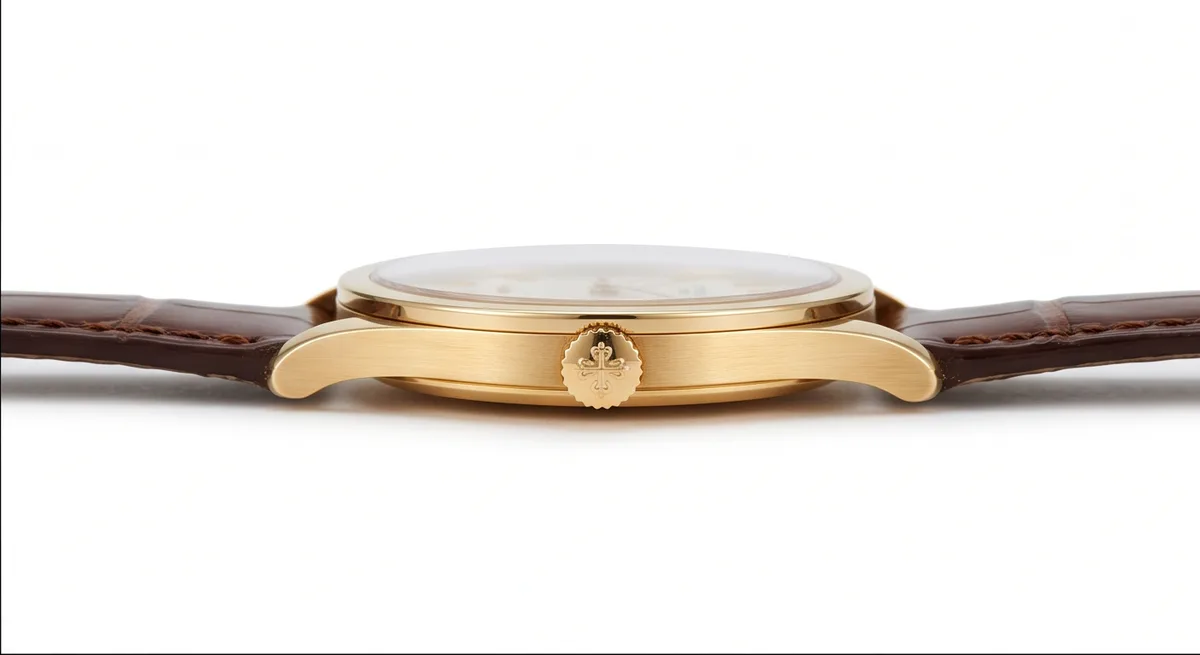
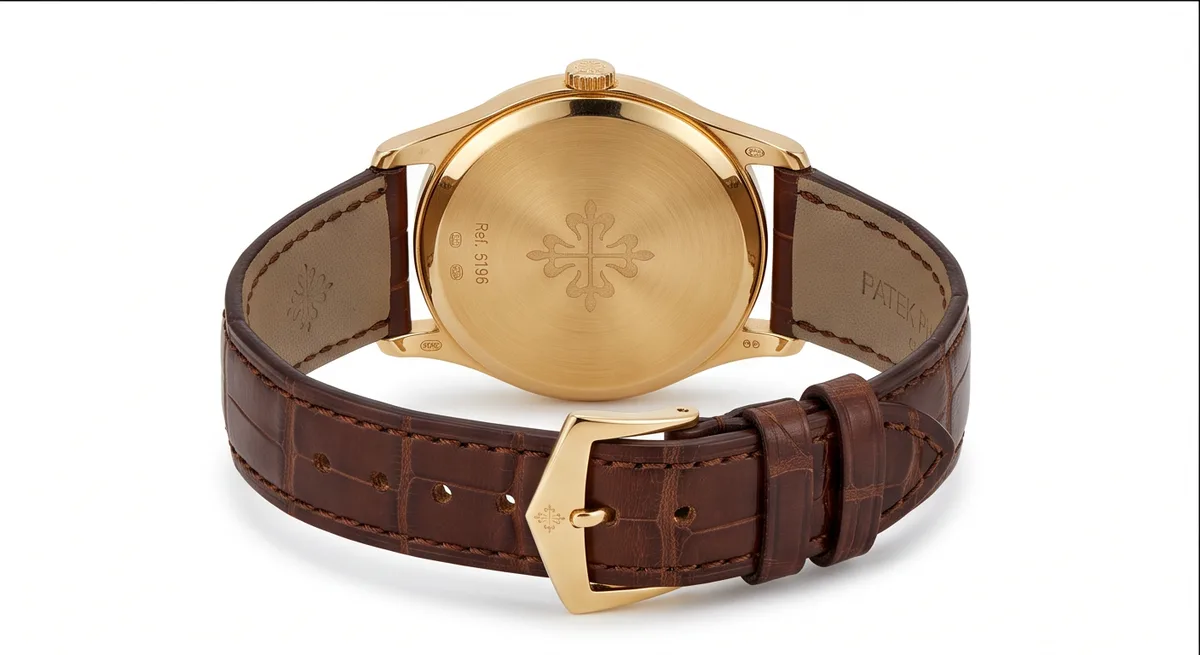
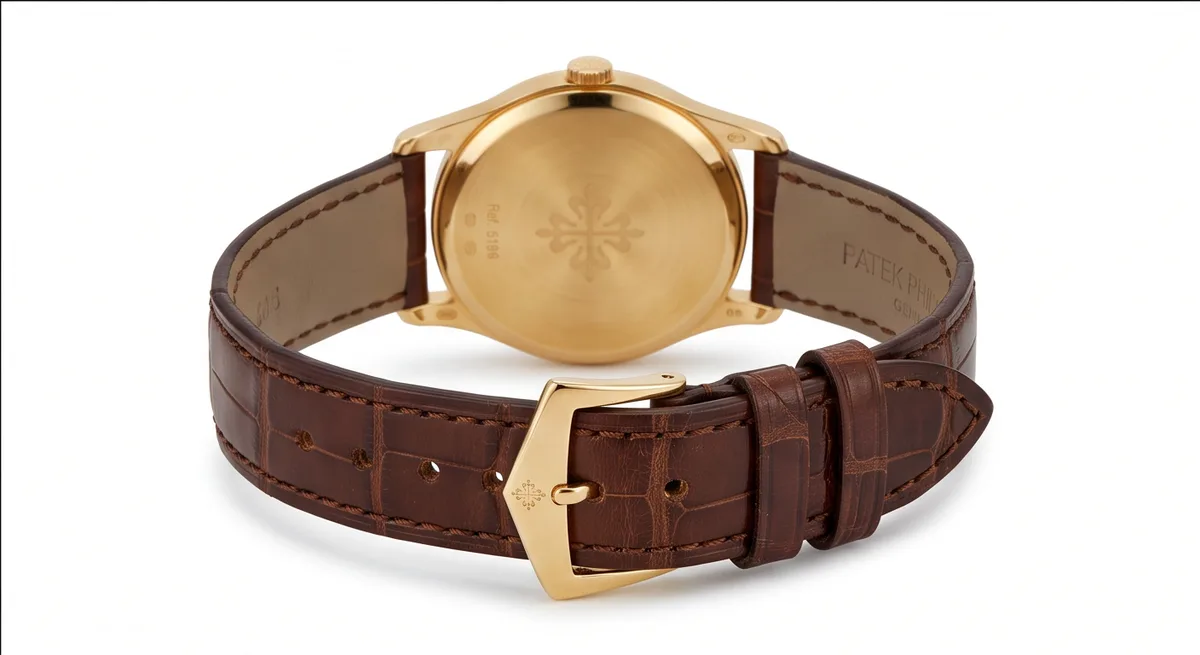
The Patek Philippe Calatrava represents one of watchmaking's most enduring design statements. Launched in 1932 as Reference 96, it emerged from a moment of acute economic crisis and radical aesthetic reorientation. The Stern family, having just acquired Patek Philippe from bankruptcy, rejected the flamboyant Art Deco vocabulary that had dominated luxury watchmaking in the 1920s. Instead, they commissioned a watch that embodied the Bauhaus principle that form follows function—a radical simplification that proved far more complex to execute than ornament. The original Reference 96 measured 31 millimetres in diameter with a dial reduced to essentials: hour markers, Dauphine hands, and a subsidiary seconds display at six o'clock. This restraint was not austerity but precision of purpose.
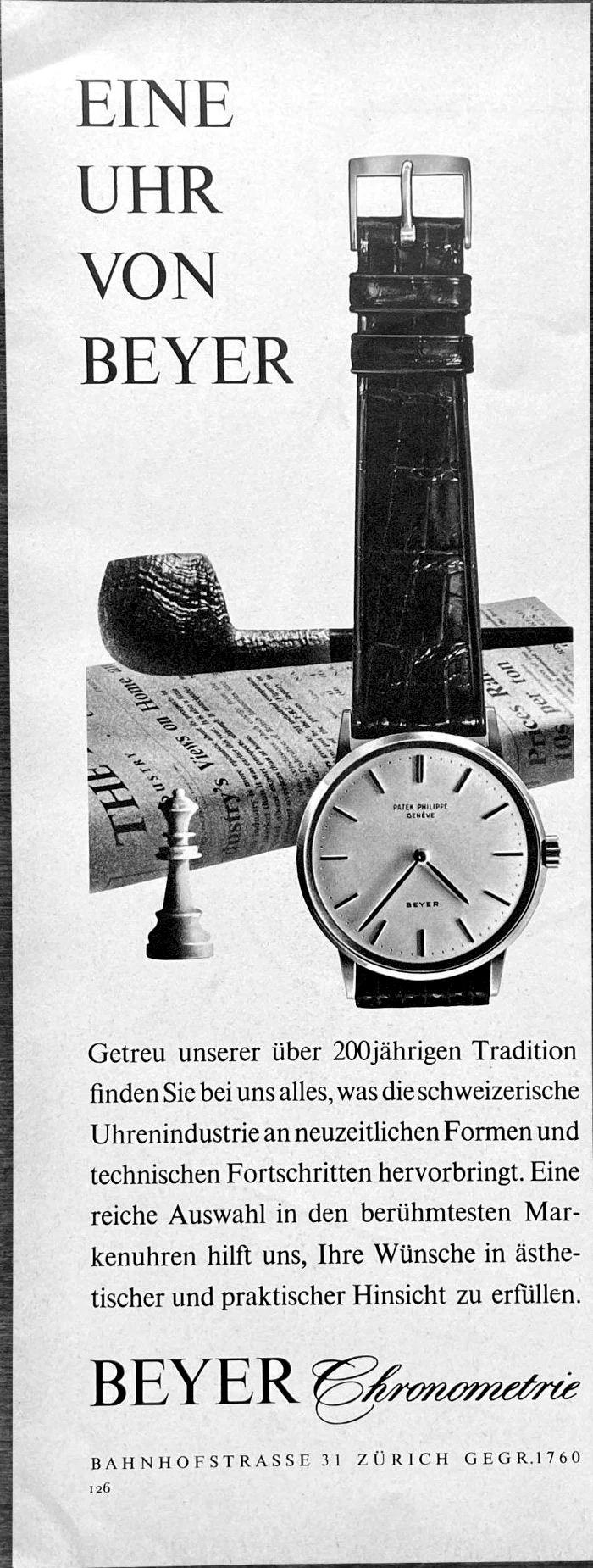
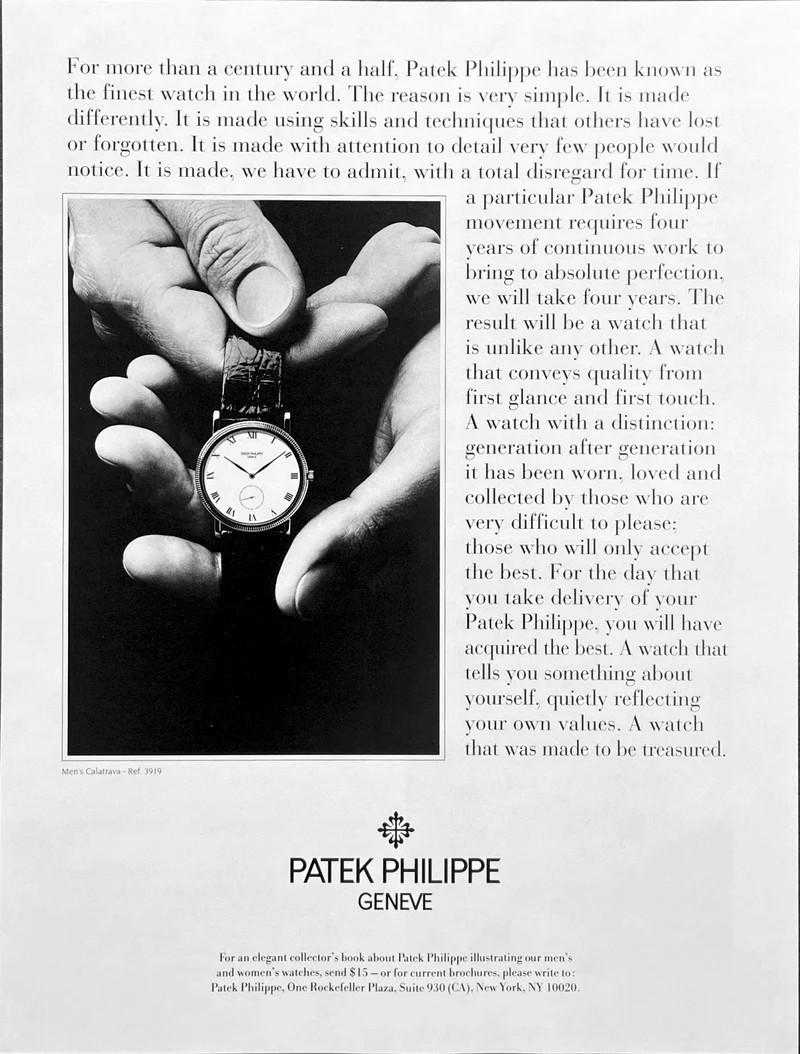
The watch's longevity stems partly from its deliberate timelessness and partly from Patek Philippe's commitment to continuous refinement without stylistic rupture. Over more than nine decades, the Calatrava has evolved through successive references that enlarged the case, introduced automatic movements, added waterproof construction, and incorporated complications ranging from annual calendars to minute repeaters. Yet each iteration has maintained fidelity to the original design language. The guilloché Clous de Paris bezel became a signature element; the proportions and case geometry remained recognisable across generations. This consistency of vision across changing technical capabilities and market conditions distinguishes the Calatrava from fashion-driven product lines.
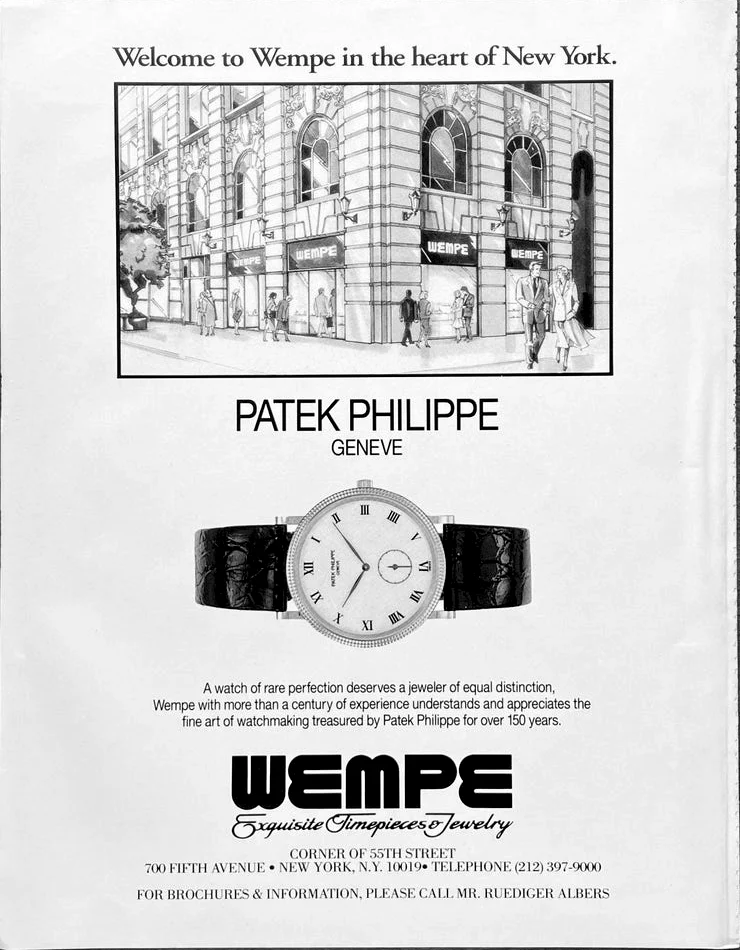
The watch's cultural significance lies in its role as the archetype of the modern dress watch. It established a template that competitors have emulated for decades: the round case, the minimalist dial, the emphasis on legibility and proportion over decoration. Collectors prize certain variants—particularly steel examples from the 1930s and 1940s, which were technically difficult to produce during wartime material rationing and often represented special commissions. The Calatrava's status as a benchmark has only strengthened with time, making it simultaneously a working timepiece, a collector's object, and a reference point for discussions of design restraint in an era of aesthetic excess.
Timeline
- 1932 First made · Verified Patek Philippe Calatrava enters production in Geneva, Switzerland.
- 1934 Production Patek Philippe equips the Calatrava with its in-house Calibre 12-120 movement.
- 1973 Production The Reference 96 ceases continuous production after over four decades.
- 1985 Recognised Patek Philippe officially adopts the name Calatrava for its line of classic dress watches.
Milestones as we found them, not as we've checked them.
From the archive
More like this
-
 Watches · since 1947 Movado Museum A single dot marking time, since 1947. Read the entry →
 -
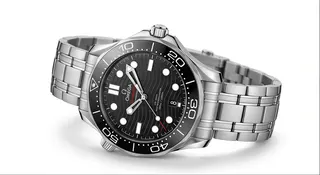 Watches · since 1948 Omega Seamaster Water-resistant sports watch born from wartime precision, 1948 to present. Read the entry →
 -
 Watches · since 1953 Rolex Submariner The benchmark diver's watch, continuously refined since 1953. Read the entry →
 -
 Watches · since 1965 Vostok Komandirskie Soviet military watch in continuous production since 1965. Read the entry →