Musical Instruments · Keys, Amps & More · Microphones
Neumann
Neumann U87
Since 1967 · 59 years to 2026 · First made in Berlin, Germany
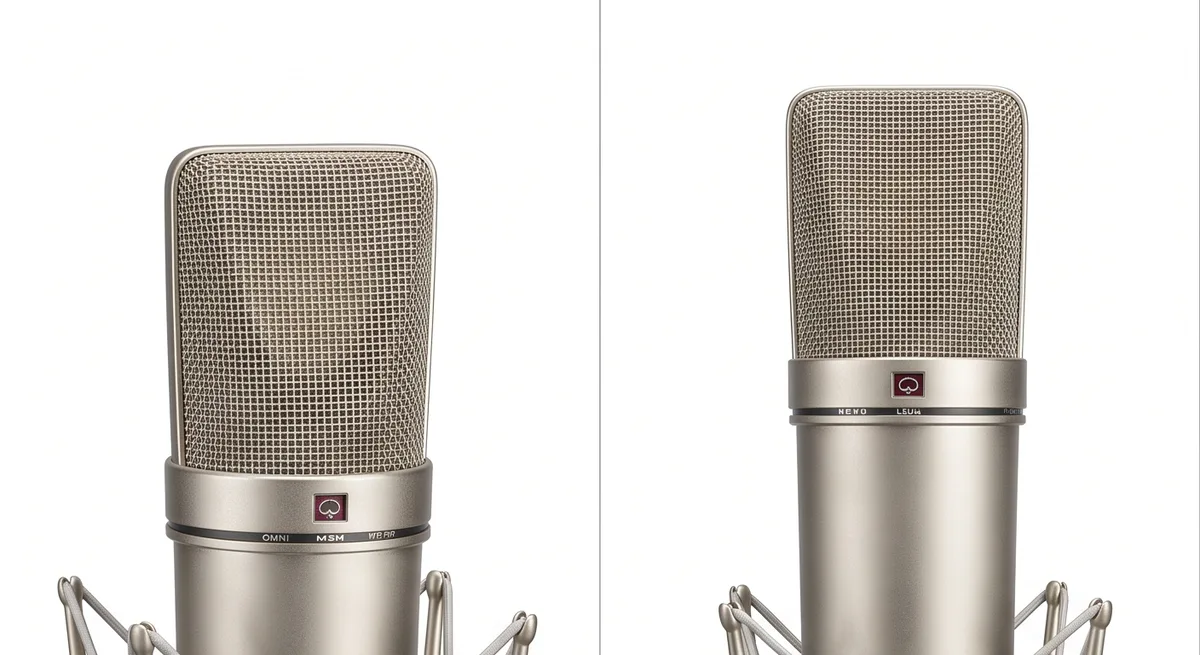
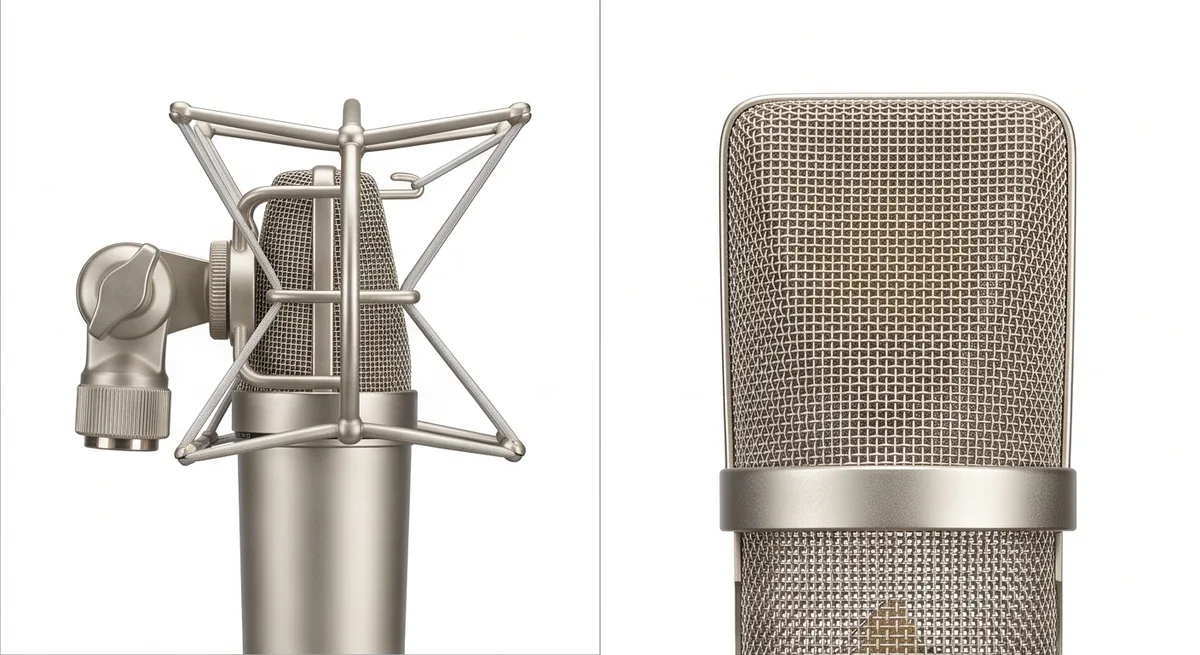
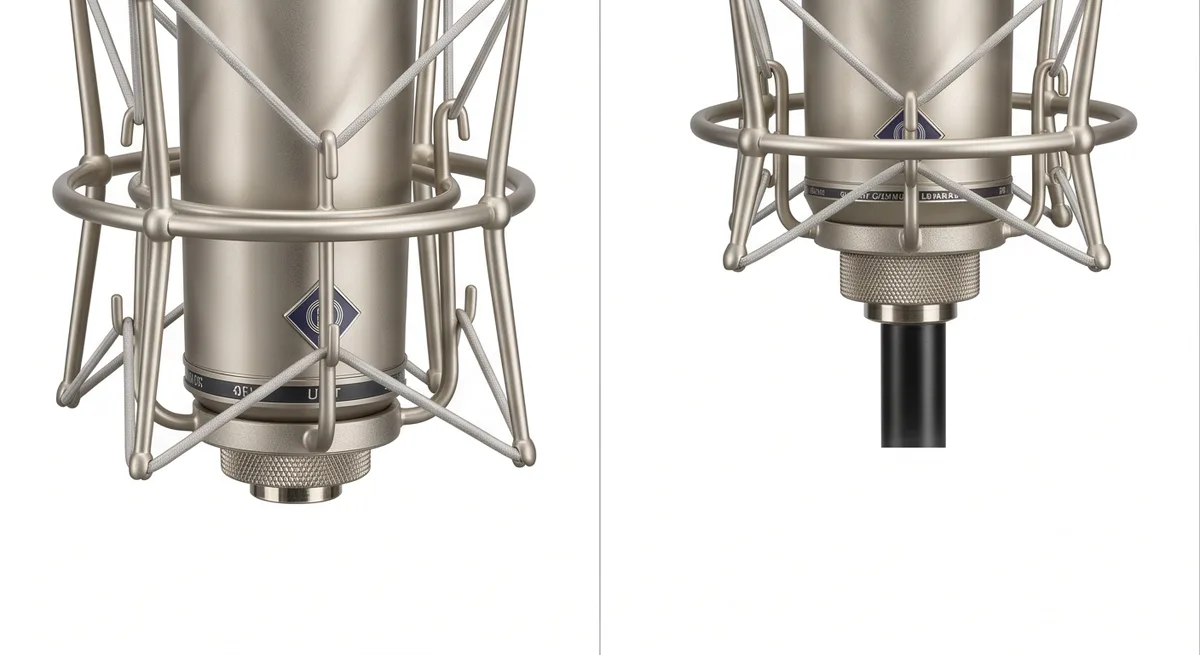
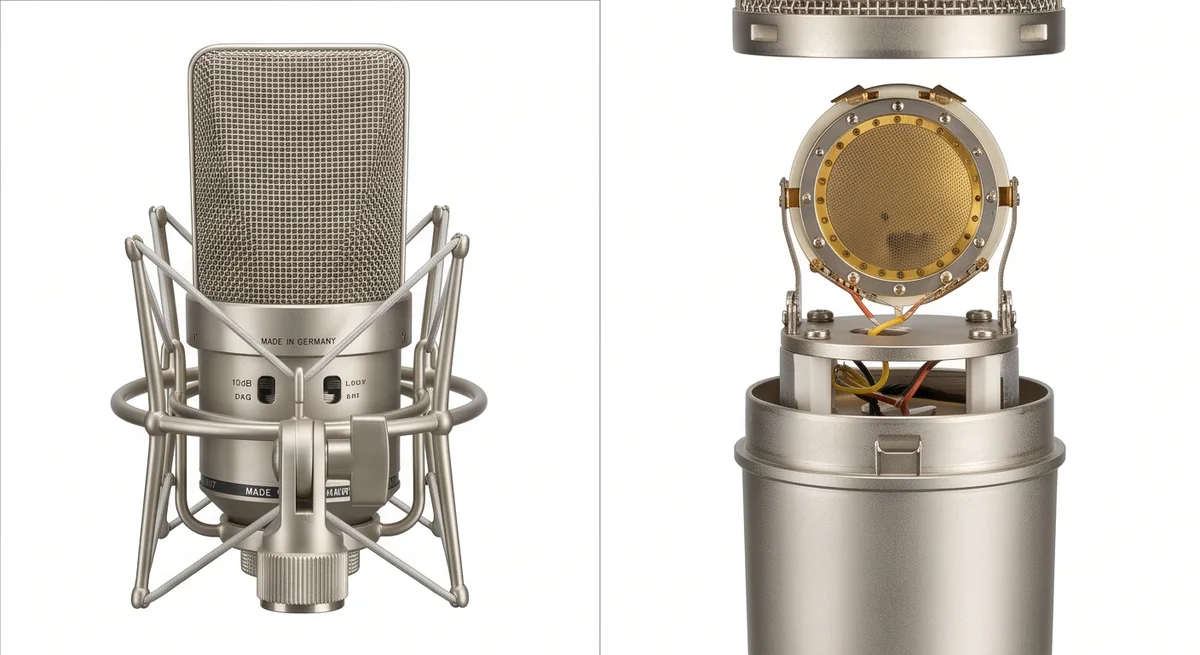
The Neumann U 87 is a large-diaphragm condenser microphone with a dual-diaphragm capsule offering three selectable polar patterns: omnidirectional, cardioid, and figure-eight. Introduced in 1967, it was designed as a transistorized successor to the tube-driven U 67, employing FET (field-effect transistor) circuitry that eliminated the need for separate power supplies or multi-pin cables. The microphone's head amplifier follows the same design principles as its tube-driven predecessor but realizes them through a unique FET circuit with minimal signal path and transformer-balanced output, ensuring signal integrity and high common-mode rejection.
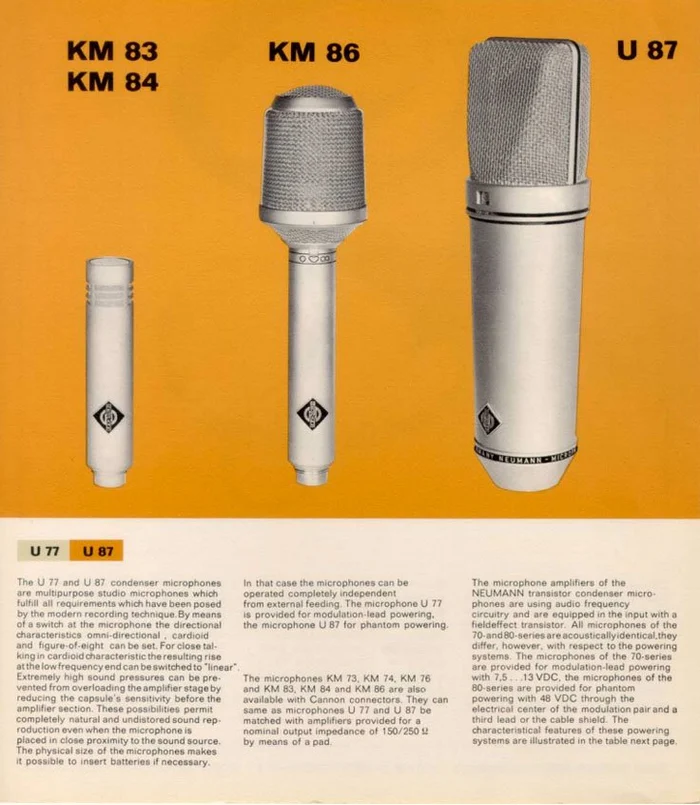
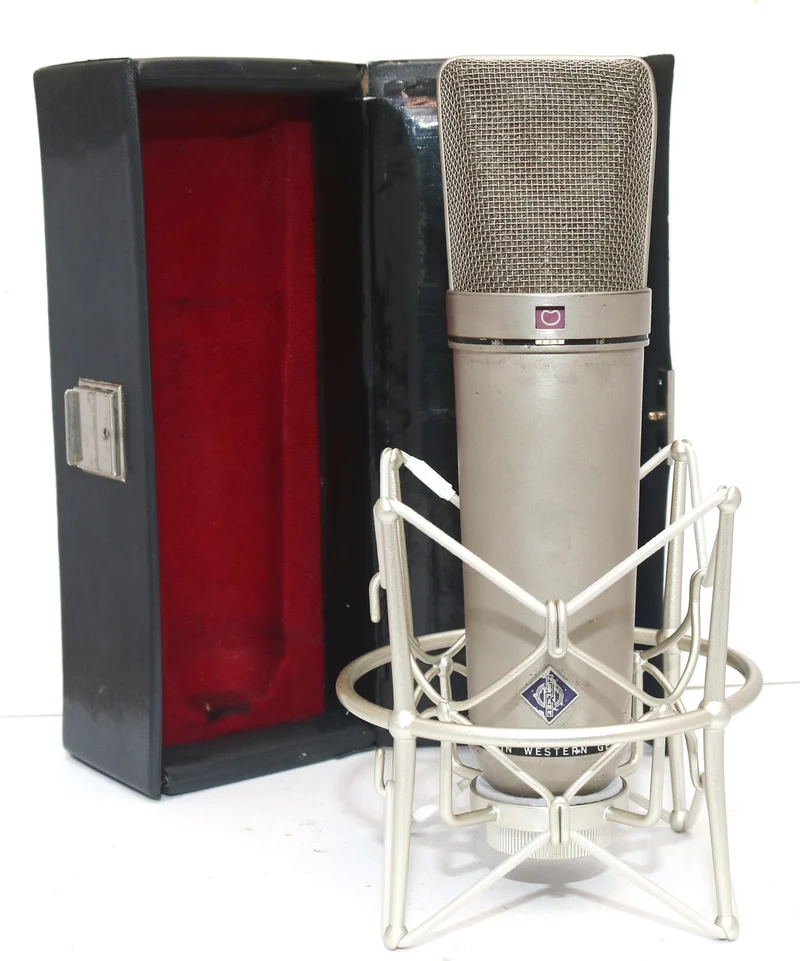
The U 87 was developed for general-purpose studio work—orchestral recording, spot microphone placement, and vocal capture across all music genres and speech applications. Its frequency response remains flat for frontal sound incidence even in the upper range, and a high-pass filter reduces subsonic and low-frequency interference. A 10 dB attenuation switch enables the microphone to handle sound pressure levels up to 127 dB without distortion. The microphone's distinctive appearance—the curved mesh basket and cylindrical body—became immediately recognizable in professional studios worldwide.
The cultural reach of the U 87 extends across recorded music history. It was used on Neil Young's "Heart of Gold," Culture Club's "Do You Really Want to Hurt Me," Aerosmith's "Walk This Way," Don McLean's "American Pie," and numerous other canonical recordings. Radio broadcasters adopted it as a standard for on-air talent. This ubiquity reflects both the microphone's technical competence and the conservative purchasing patterns of professional studios: once a tool proves reliable, replacement becomes unnecessary.
The U 87's endurance rests on a combination of factors. The capsule design proved sufficiently neutral and capable that no fundamental redesign was required. The 1986 revision addressed a practical obsolescence—the unavailability of 22.5-volt batteries—without altering the acoustic character. Neumann's manufacturing approach prioritizes durability over planned obsolescence, with protective coatings and precision machining intended to sustain function across decades. The result is a tool that remains functionally and sonically current despite its age, requiring no replacement to maintain professional standards.
More like this
-
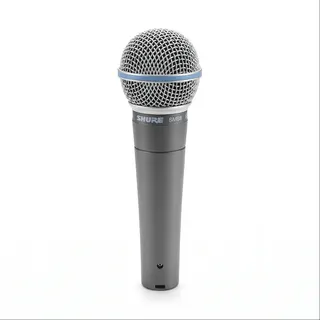 Microphones · since 1966 Shure SM58 The microphone that became the industry standard for live vocal performance. Read the entry →
 -
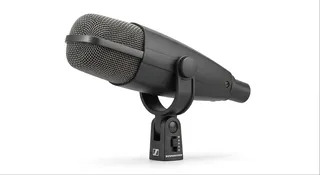 Microphones · since 1960 Sennheiser MD421 German cardioid dynamic microphone, unchanged since 1960. Read the entry →
 -
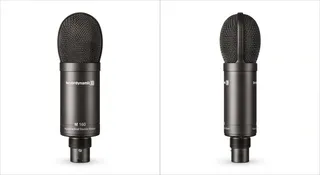 Microphones · since 1957 Beyerdynamic M160 German ribbon microphone, handmade since 1957 Read the entry →
 -
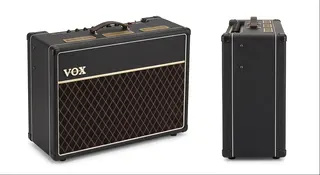 Amps & Pedals · since 1959 Vox AC30 British valve amplifier in continuous production since 1959. Read the entry →