Kitchen & Dining · Cooking & Baking · Knives & Chopping
Opinel
Opinel No. 10
Since 1897 · 129 years to 2026 · First made in Savoie, France
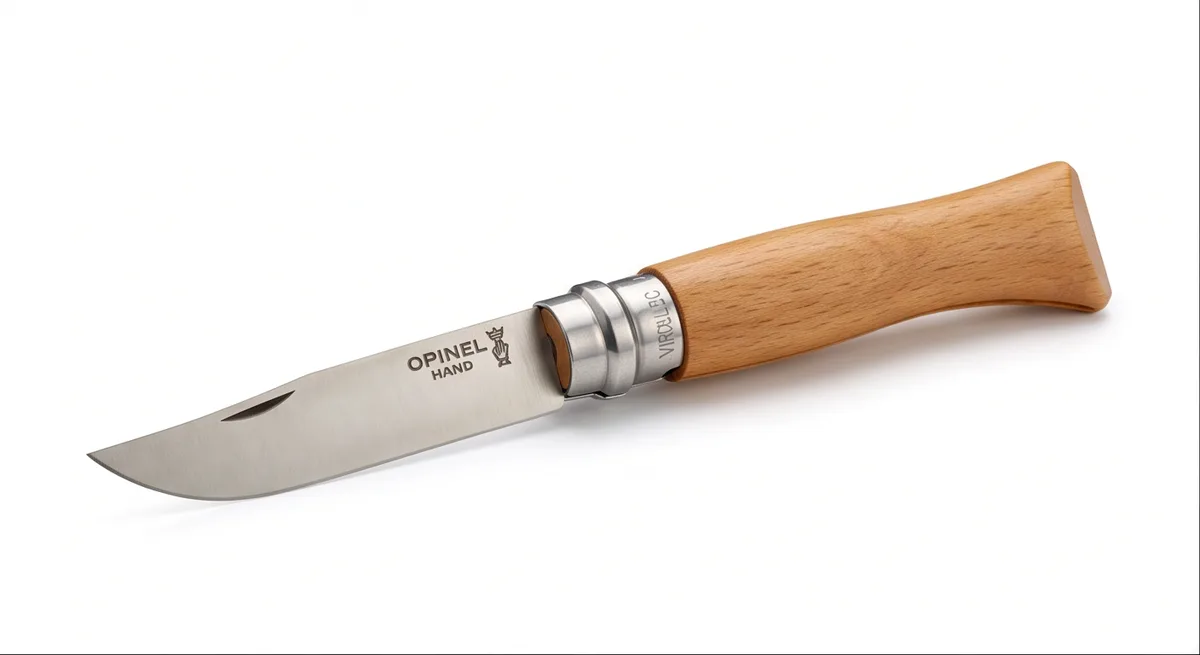
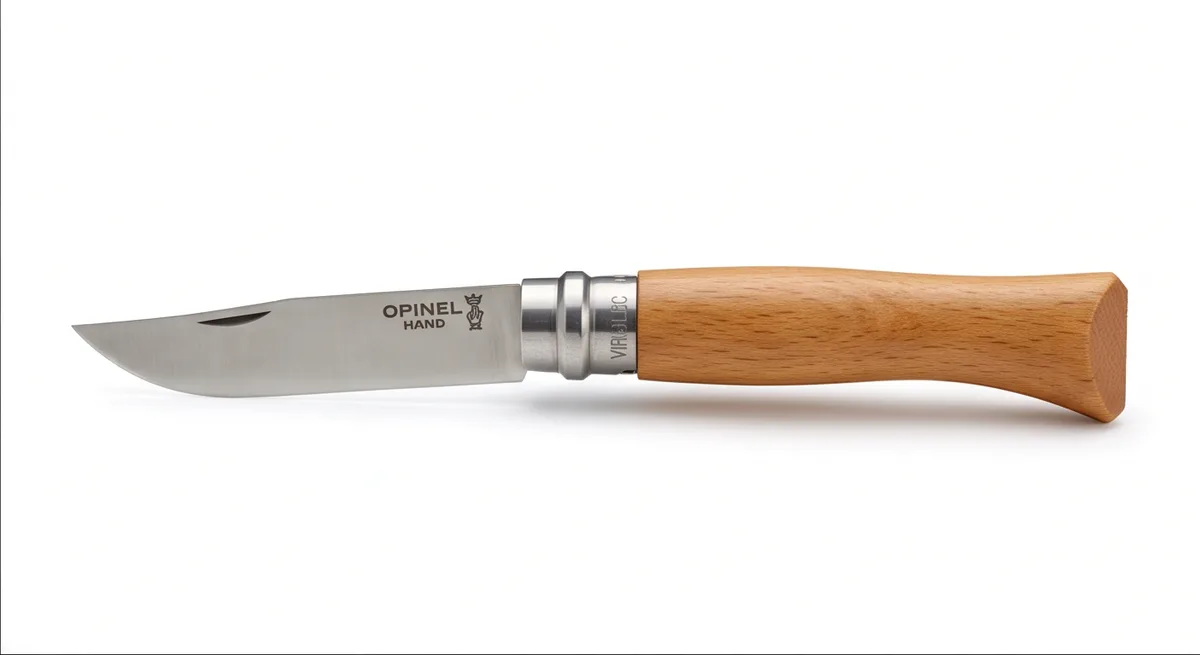
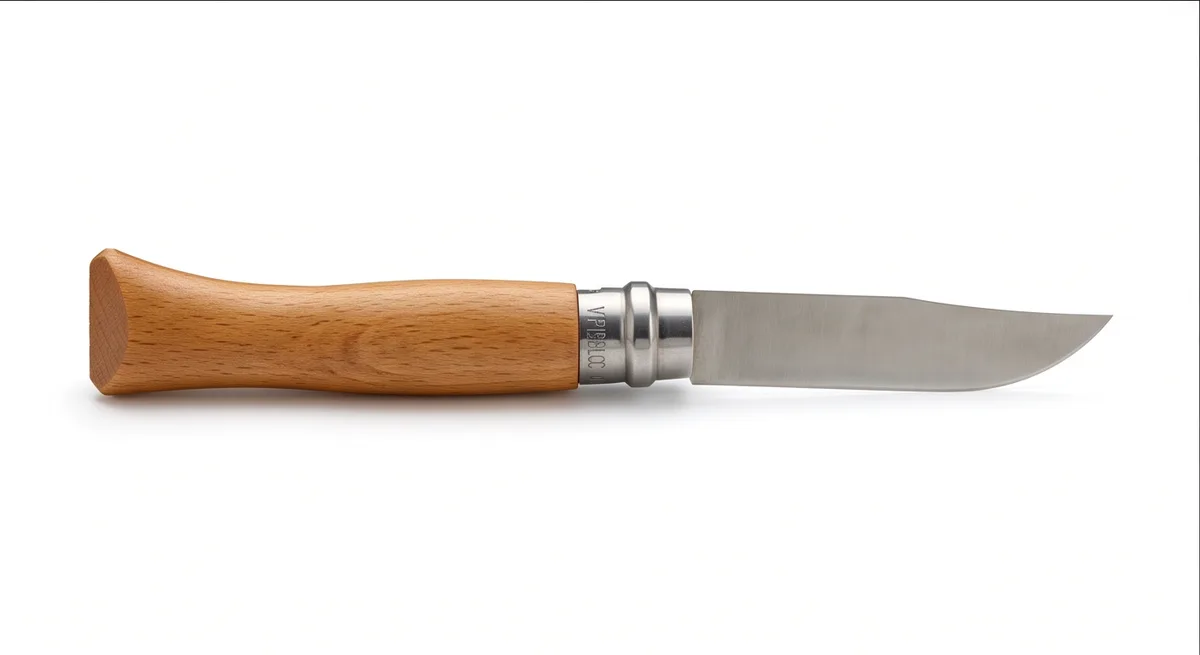
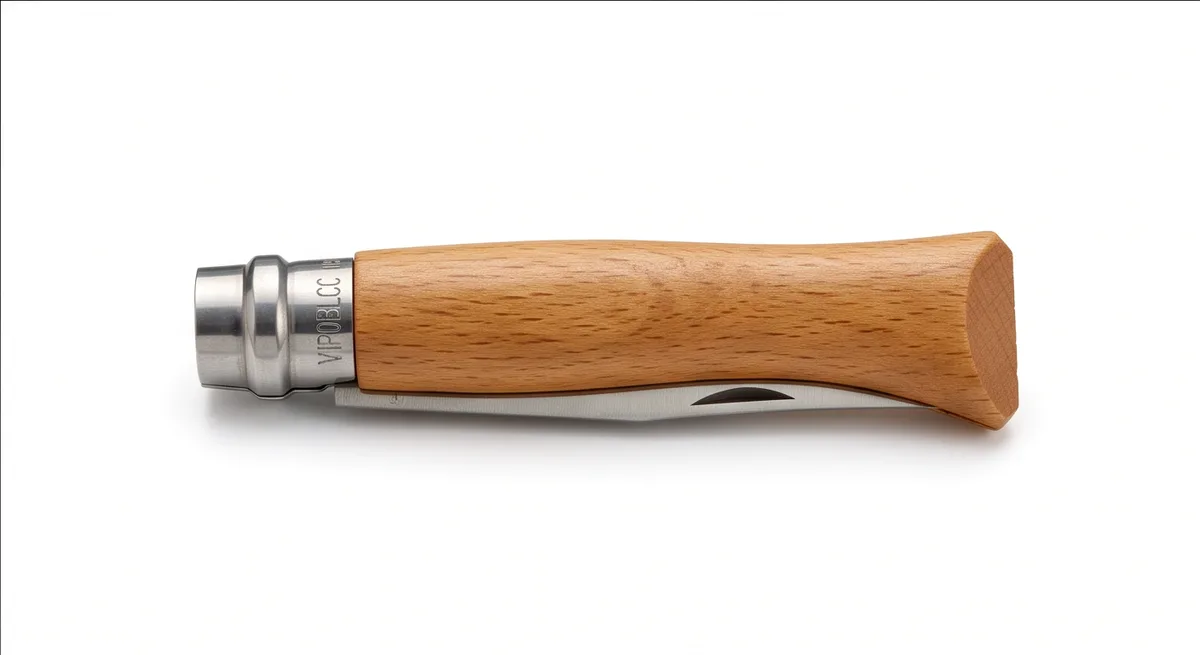
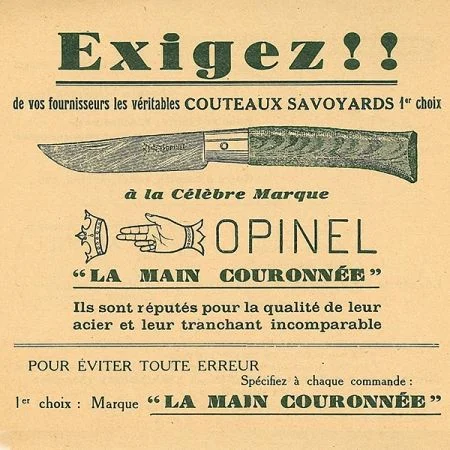
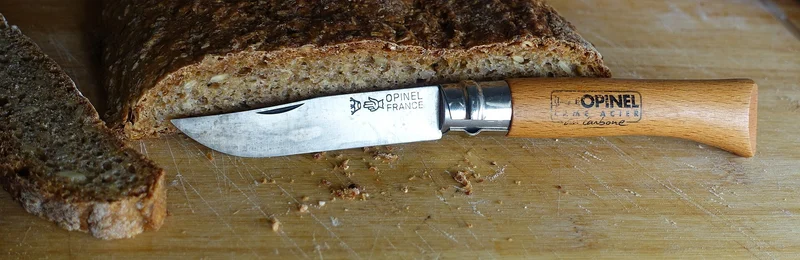
The Opinel No. 10 is a folding pocket knife with a blade approximately 8 centimetres long, designed for general outdoor work and everyday cutting tasks. opinel.com It is one of twelve sizes in a system conceived by Joseph Opinel in 1897, each numbered to indicate its scale and intended use. The knife's handle is made from beech wood, sourced from eco-managed forests in the Jura and Vercors regions of France and finished with protective varnish. opinel.com The blade is cut and stamped from flat steel stock and ground to a distinctive Yatagan profile—inspired by a traditional Turkish saber—which provides both strength and the ability to be resharpened. opinel.com The knife is available in carbon steel, which achieves a hardness of 57 HRC and offers superior edge retention, or stainless steel at 55–57 HRC, which requires no maintenance under normal conditions. opinel.com
The No. 10 is fitted with the Virobloc safety ring, a mechanism invented by Marcel Opinel in 1955 that locks the blade both open and closed, preventing accidental closure during use and securing the knife during transport. opinel.com Since its introduction, the knife has become embedded in French and Savoyard cultural life, referenced in literature and music, and entered the Larousse dictionary in 1989. opinel.com The design has been recognised internationally as a benchmark of industrial simplicity: it was selected by the V&A Museum as one of the 100 most beautiful objects in the world and acquired by the Museum of Modern Art in New York. opinel.com The knife's endurance reflects both the soundness of its original conception and the continuity of manufacture in Savoie, where four generations of the Opinel family and their collaborators have preserved the brand's methods while adapting to changing markets and materials.
Timeline
- 1897 First made · Disputed Opinel No. 10 enters production in Savoie, France.
- 1927 Production A modern factory is built and inaugurated in Cognin, where production continues under Joseph's sons and grandson.
- 1955 Designed Marcel Opinel invents the Virobloc safety ring system, which locks the blade both open and closed.
- 1989 Recognised The Opinel No. 10 enters the Larousse dictionary, marking its cultural significance.
Milestone dates are taken from the production notes behind this entry and have not been checked separately.
From the archive

More like this
-
 Knives & Chopping · since 1897 Opinel No. 6 French pocket knife in continuous production since 1897. Read the entry →
 -
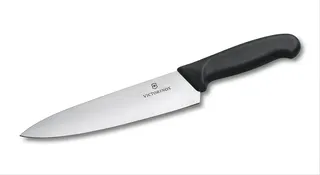 Knives & Chopping · since 1884 Victorinox Fibrox Chef's Knife Swiss cutlery workshop's stamped steel knife, continuously made since 1884. Read the entry →
 -
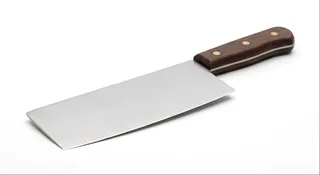 Knives & Chopping · since 1818 Dexter-Russell S5198 Chef's Knife American-made chef's knife, continuously forged since 1818. Read the entry →
 -
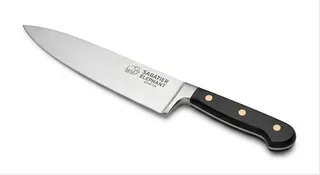 Knives & Chopping · since 1958 Sabatier Elephant Chef's Knife Hand-forged French chef's knife, marked since 1958. Read the entry →