Kitchen & Dining · Cooking & Baking · Knives & Chopping
Sabatier
Sabatier Elephant Chef's Knife
Since 1958 · 68 years to 2026 · First made in Thiers, France
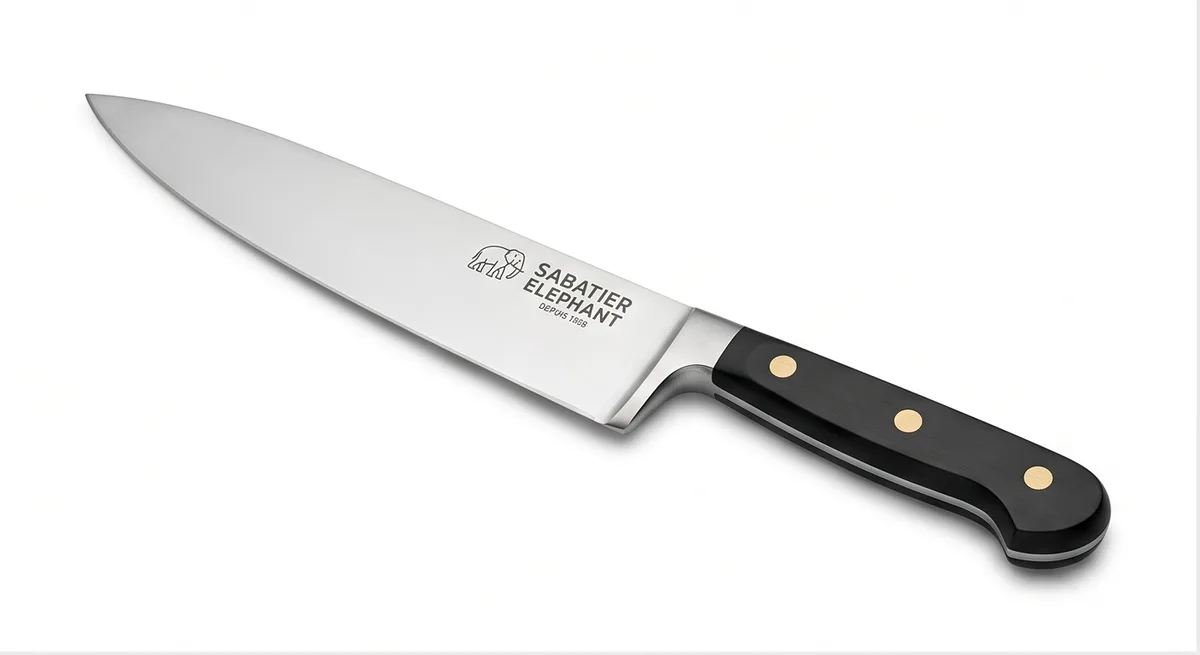
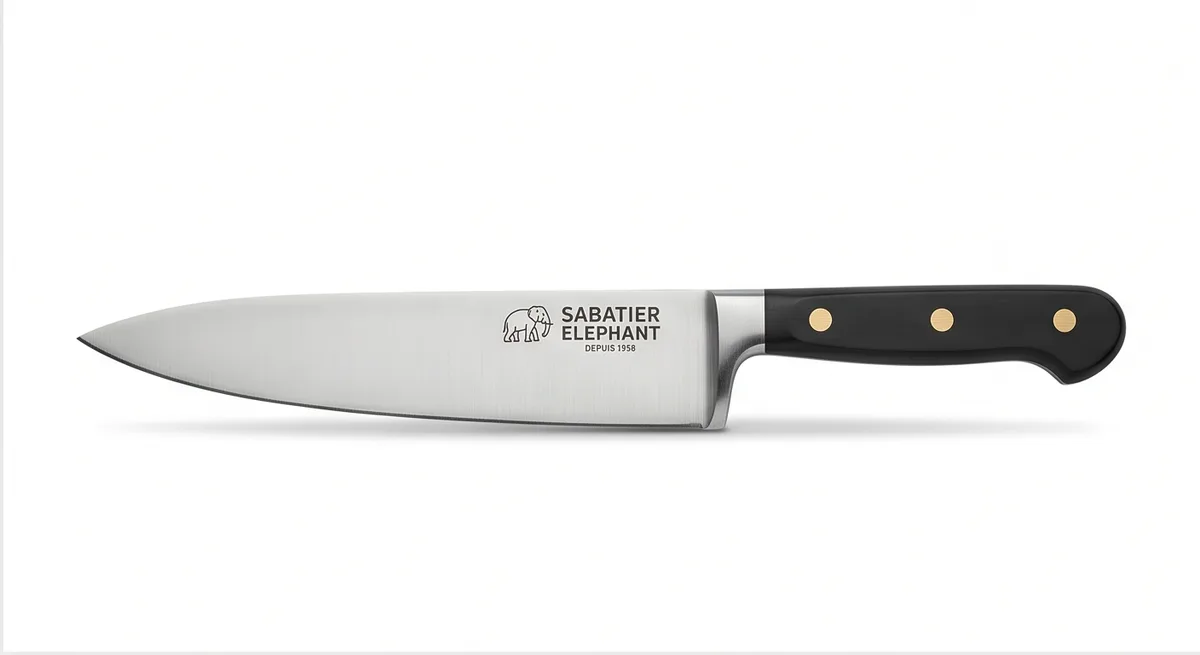
The Sabatier Elephant chef's knife represents a continuous tradition of French cutlery that extends back to the 12th century in Thiers, a region in central France that became the capital of European knife-making. sabatierknifeshop.com The knife itself is the product of Thiers-Issard, founded in 1884 by Pierre Thiers, a master craftsman who combined his own name with that of his wife to create the company that would become the standard-bearer for authentic Sabatier production. sabatierknifeshop.com The Four Star Elephant trademark, introduced in 1958, marks these knives as the work of master craftspeople and distinguishes them from the numerous other manufacturers who use the Sabatier name without the same commitment to quality. sabatierknifeshop.com
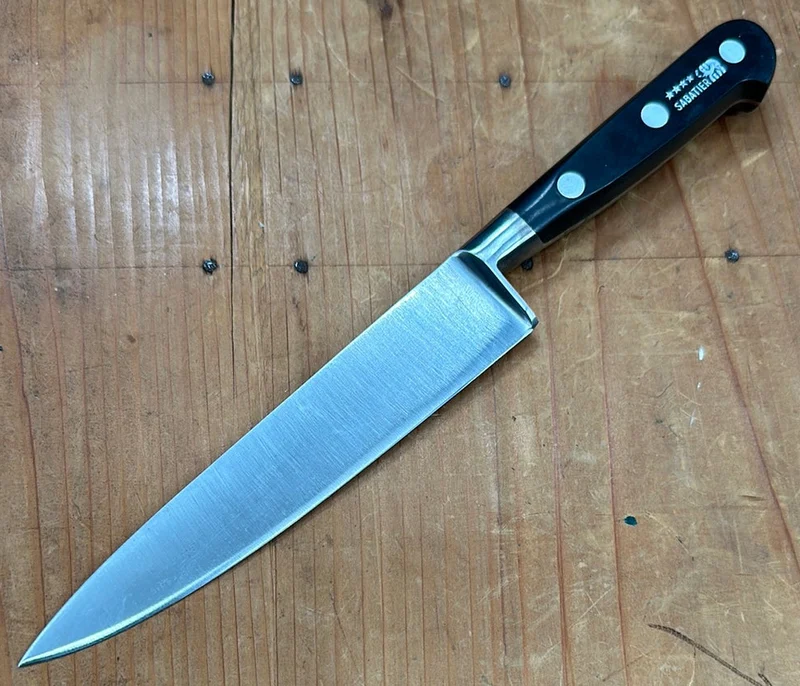
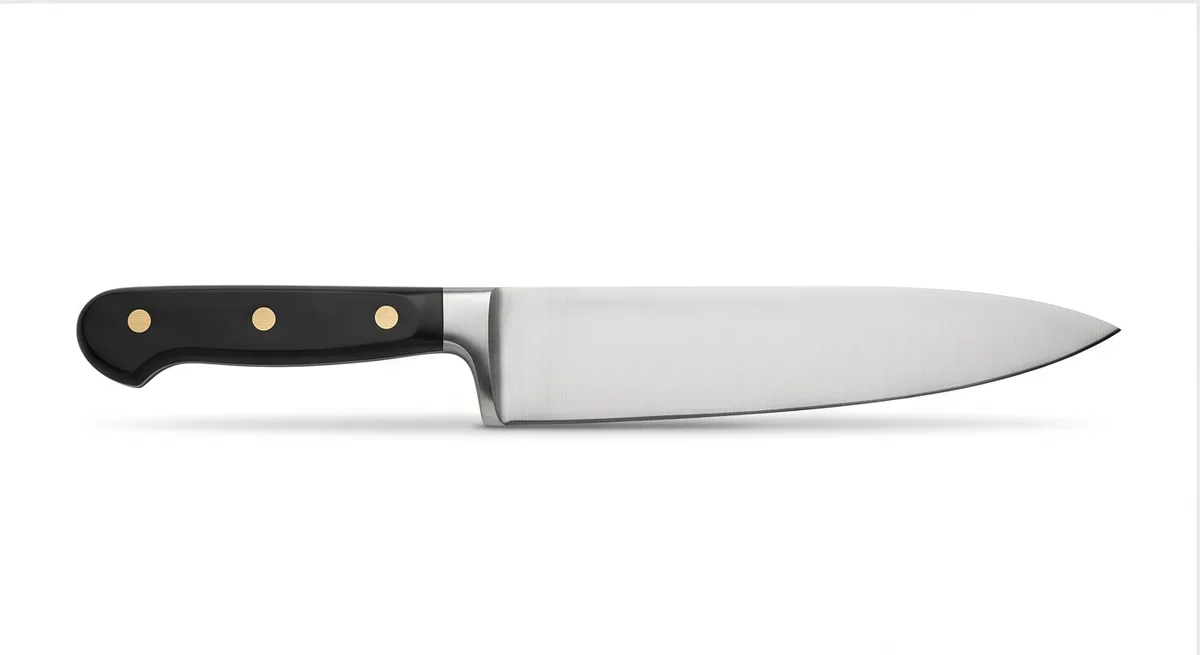
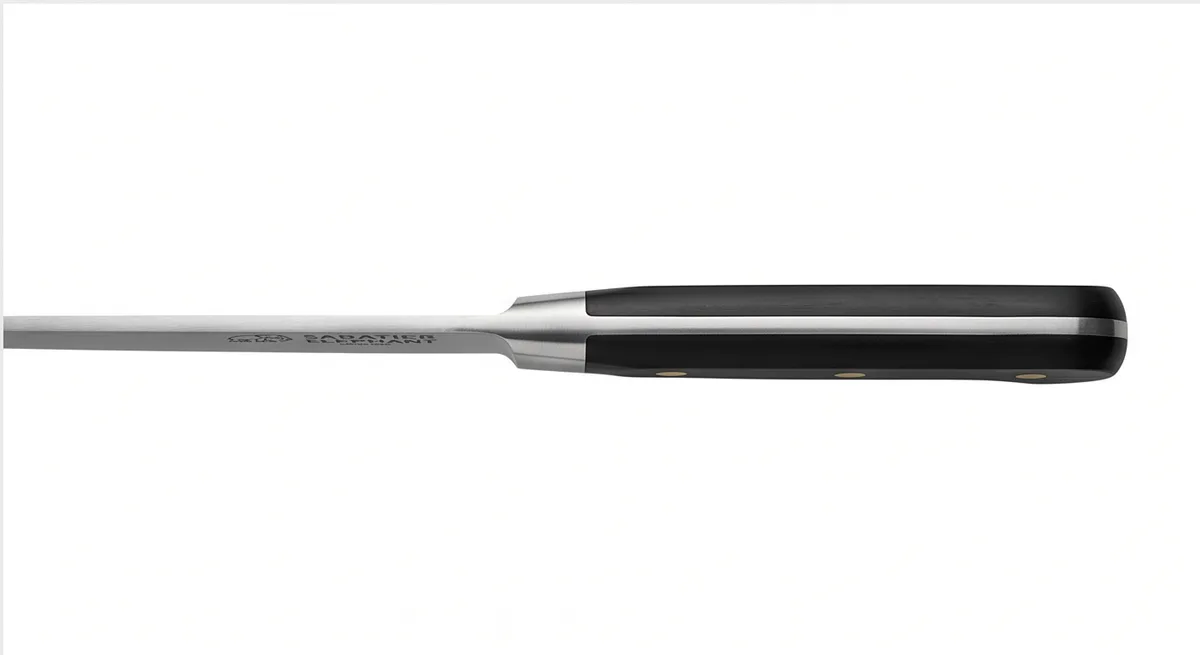
The knife's construction embodies the forging tradition that has defined French cutlery for centuries. The blade is hand-forged from a single piece of 4116 stainless steel, an alloy enriched with chromium, vanadium, and molybdenum that resists corrosion, deformation, and wear more effectively than the Z40C13 used in most kitchen knives. sabatierknifeshop.com After forging, the blade passes through two oil baths for quenching and tempering, then is polished and sharpened by hand on a grinding wheel using leather rollers. knifeleader.eu The full-tang construction—where the steel runs the entire length of the handle—provides structural integrity, while the round bolster and thin guard offer both safety and ergonomic control. knifeleader.eu Handles are individually riveted and adjusted by hand, available in either black nylon or olive wood, materials chosen for their durability and tactile qualities.
The Sabatier Elephant has maintained its position in professional and domestic kitchens since the 1940s, when it first gained popularity in America. sabatierknifeshop.com Each knife that leaves the Thiers-Issard workshop carries the mark of individual craftsmanship—a consequence of the hand-finishing process that ensures no two knives are identical. sabatierknifeshop.com The knife's endurance reflects both the technical superiority of forged construction over stamped alternatives and the cultural authority that French cutlery has maintained in culinary practice. sabatierknifeshop.com The commitment to hand-finishing, despite the availability of modern automation, represents a deliberate choice to preserve the methods that have defined the brand since its inception.
Timeline
- 1958 First made · Disputed Sabatier Elephant Chef's Knife enters production in Thiers, France.
- 1985 Ownership Gille Rayenwaeter purchases the business and maintains production traditions while expanding the product line.
Milestone dates are taken from the production notes behind this entry and have not been checked separately.
More like this
-
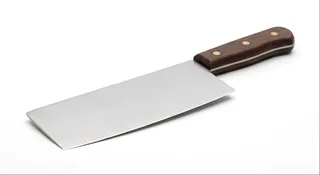 Knives & Chopping · since 1818 Dexter-Russell S5198 Chef's Knife American-made chef's knife, continuously forged since 1818. Read the entry →
 -
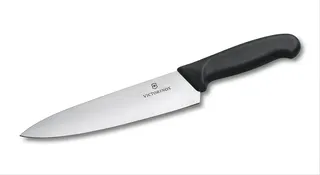 Knives & Chopping · since 1884 Victorinox Fibrox Chef's Knife Swiss cutlery workshop's stamped steel knife, continuously made since 1884. Read the entry →
 -
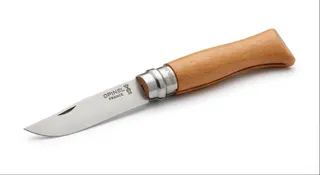 Knives & Chopping · since 1890 Opinel No. 8 French pocket knife in continuous production since 1890. Read the entry →
 -
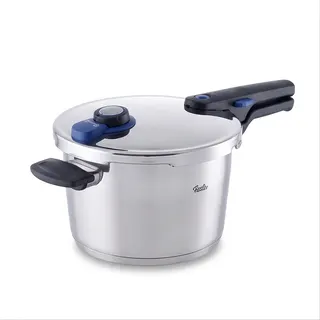 Cookware · since 1953 Fissler Pressure Cooker Safe pressure cooking for the home kitchen, since 1953. Read the entry →