Kitchen & Dining · Cooking & Baking · Knives & Chopping
Opinel
Opinel No. 8
Since 1890 · 136 years to 2026 · First made in Savoie, France
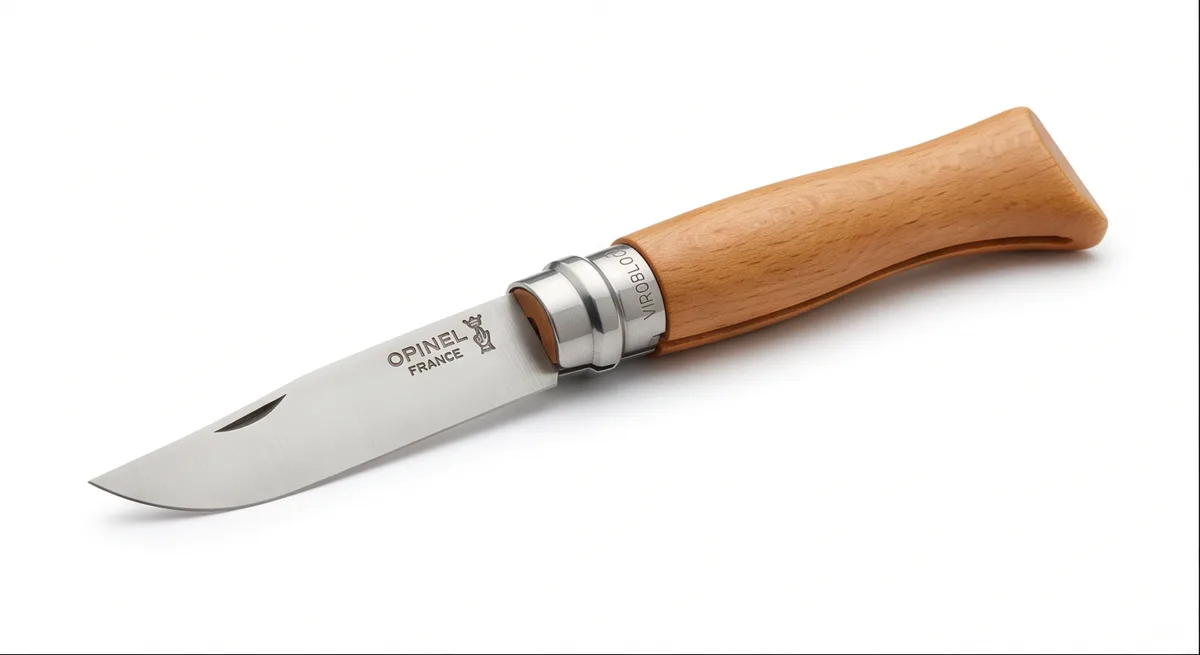
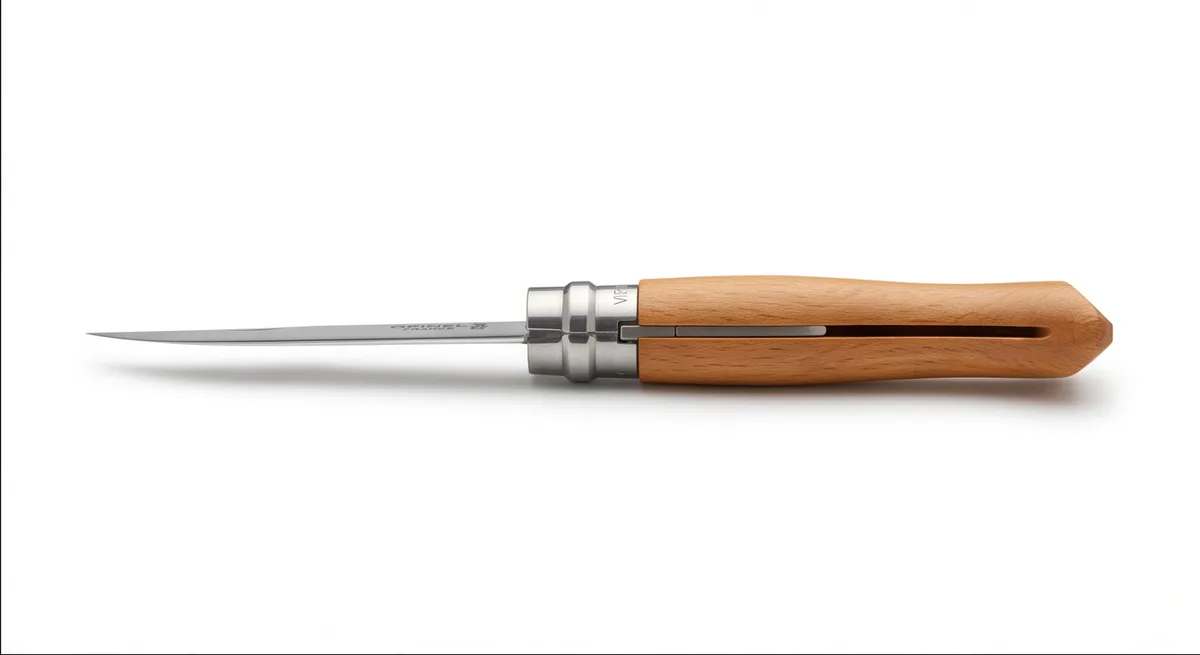
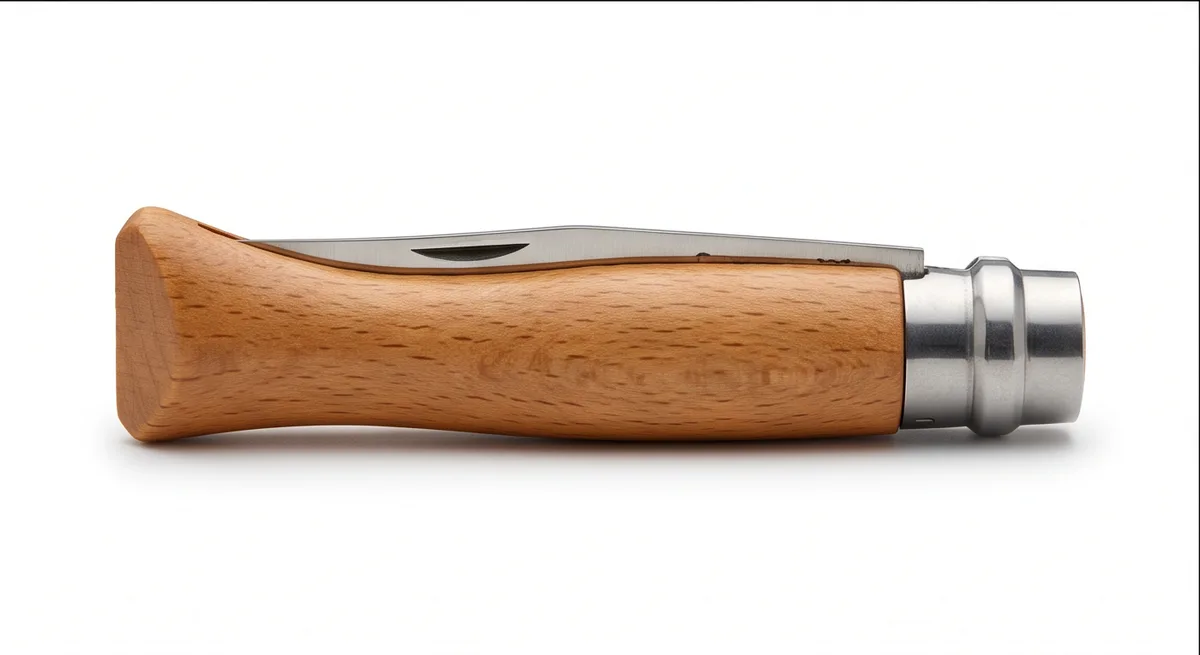
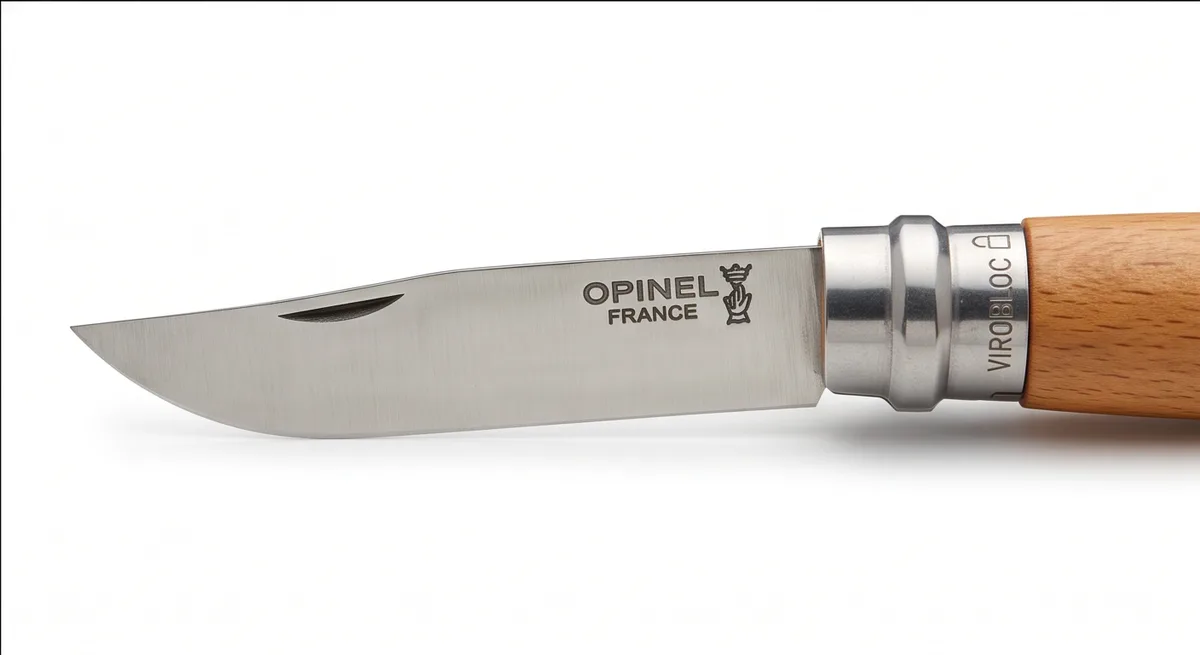
The Opinel No. 8 is a folding pocket knife composed of five essential elements: a Yatagan blade with convex profile, a beechwood haft, a fixed ferrule, a rivet, and a rotating safety ring. The blade measures 8.5 centimetres; the handle, 9 centimetres; the total weight, 45 grams. Its proportions—compact enough to fit securely in the hand, substantial enough for genuine work—account for its emergence as the most popular size in the Opinel range.
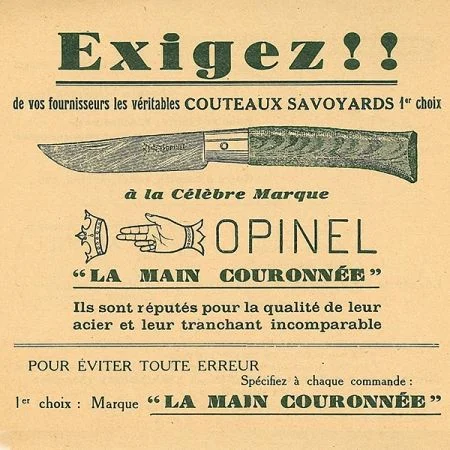
Joseph Opinel's innovation was not stylistic but manufacturing. Working against his father's preference for hand-forged tools, he applied modern machinery to knife production, developing hydraulic-powered processes that could produce handles at speed without sacrificing the object's essential character. The design has remained virtually unchanged for over 136 years. The blade is stamped with the Crowned Hand, Opinel's mark of authenticity. The handle is varnished beechwood, sourced from PEFC-certified forests in the Jura and Vercors. In 1955, Marcel Opinel added the Virobloc safety ring, allowing the blade to lock both open and closed—a refinement that addressed practical concerns without altering the knife's fundamental form.
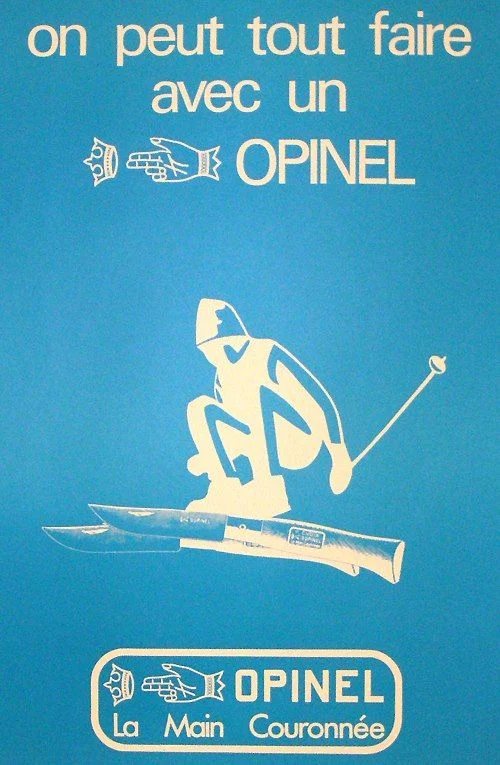
The No. 8 crossed from regional tool to cultural object through sheer longevity and utility. It has been used at table and in field, for cutting dried sausage and for sculpture, gardening, and repair work. Passed down through generations, it became an integral part of Savoyard and French heritage. In 1985, the Victoria and Albert Museum recognized it as one of the hundred best-designed objects in the world, alongside the Porsche 911 and the Rolex watch. It entered the permanent collection of the Museum of Modern Art in New York. Today, Opinel manufactures approximately 15 million knives annually, the No. 8 remaining the flagship model. The knife is available in high-carbon steel (XC90) and stainless steel (Sandvik 12C27M), with handle options ranging from standard beechwood to exotic woods and horn.
Timeline
- 1890 First made · Disputed Opinel No. 8 enters production in Savoie, France.
- 1927 Production A modern factory is built and inaugurated at Cognin, on the outskirts of Chambéry.
- 1955 Designed Marcel Opinel adds the Virobloc safety ring, allowing the blade to lock both open and closed.
- 1985 Recognised The Victoria and Albert Museum recognizes the No. 8 as one of the hundred best-designed objects in the world.
- 2003 Production The production site at La Revériaz in Chambéry becomes the main headquarters.
Milestone dates are taken from the production notes behind this entry and have not been checked separately.
More like this
-
 Knives & Chopping · since 1884 Victorinox Fibrox Chef's Knife Swiss cutlery workshop's stamped steel knife, continuously made since 1884. Read the entry →
 -
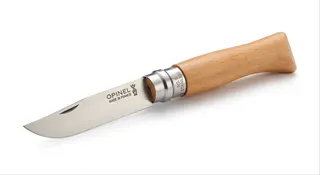 Knives & Chopping · since 1897 Opinel No. 6 French pocket knife in continuous production since 1897. Read the entry →
 -
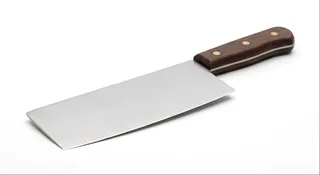 Knives & Chopping · since 1818 Dexter-Russell S5198 Chef's Knife American-made chef's knife, continuously forged since 1818. Read the entry →
 -
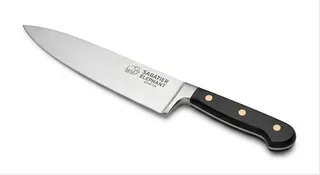 Knives & Chopping · since 1958 Sabatier Elephant Chef's Knife Hand-forged French chef's knife, marked since 1958. Read the entry →