Stationery & Office · Writing · Pens
Staedtler
Staedtler Mars Eraser
Since 1967 · 59 years to 2026 · First made in Nuremberg, Germany
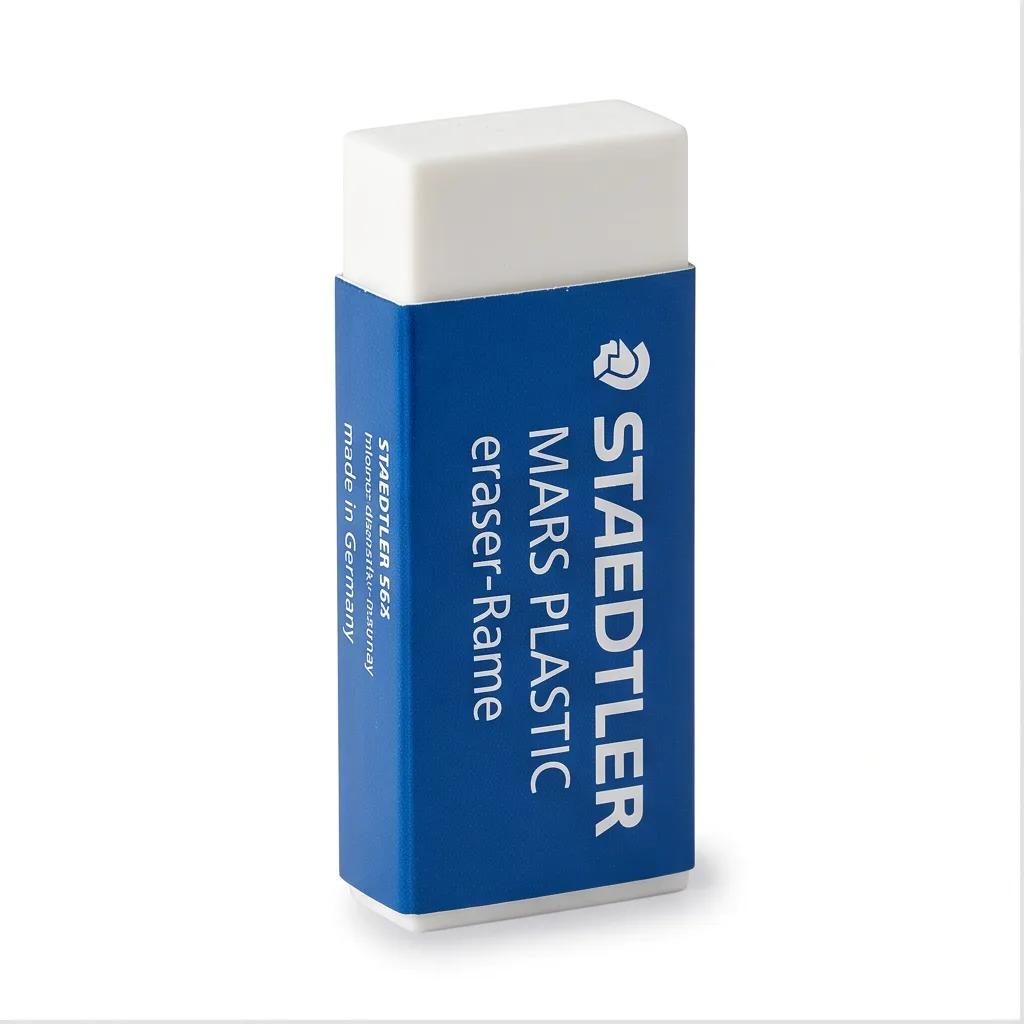
The Staedtler Mars Plastic eraser represents a pivotal moment in eraser technology. Before the 1960s, erasers were predominantly made from natural rubber—a material that, despite its effectiveness at removing pencil marks, caused smudging and deteriorated rapidly over time. Natural rubber erasers also contained latex, which posed allergic risks. Staedtler's shift to polyvinyl chloride in 1960, and the introduction of the Mars Plastic line in 1967, offered a superior alternative: an eraser that maintained its elasticity indefinitely, resisted aging, and performed consistently across decades of storage.
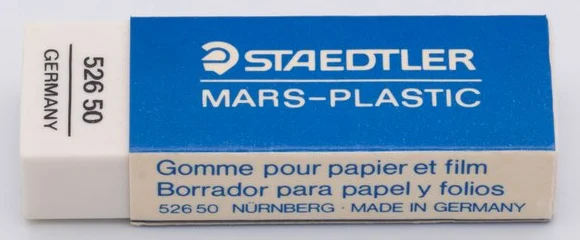
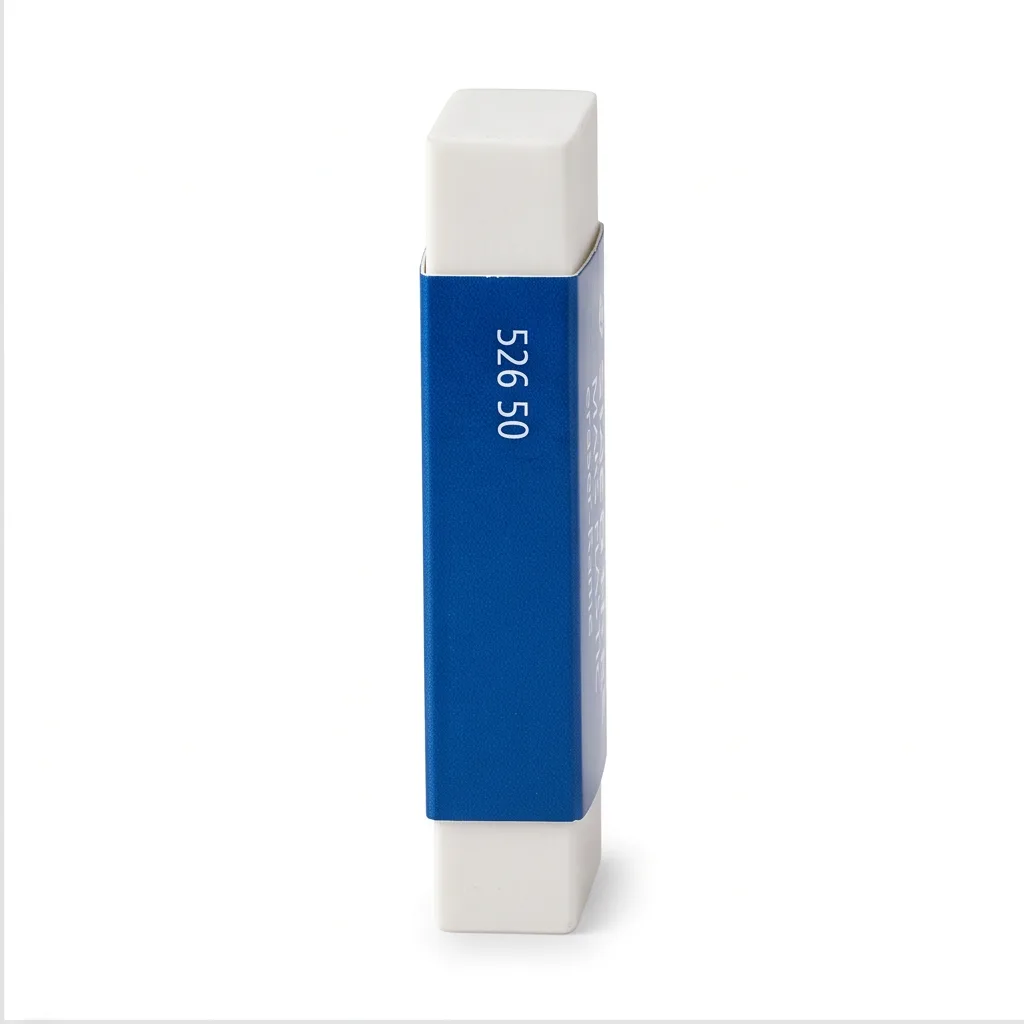
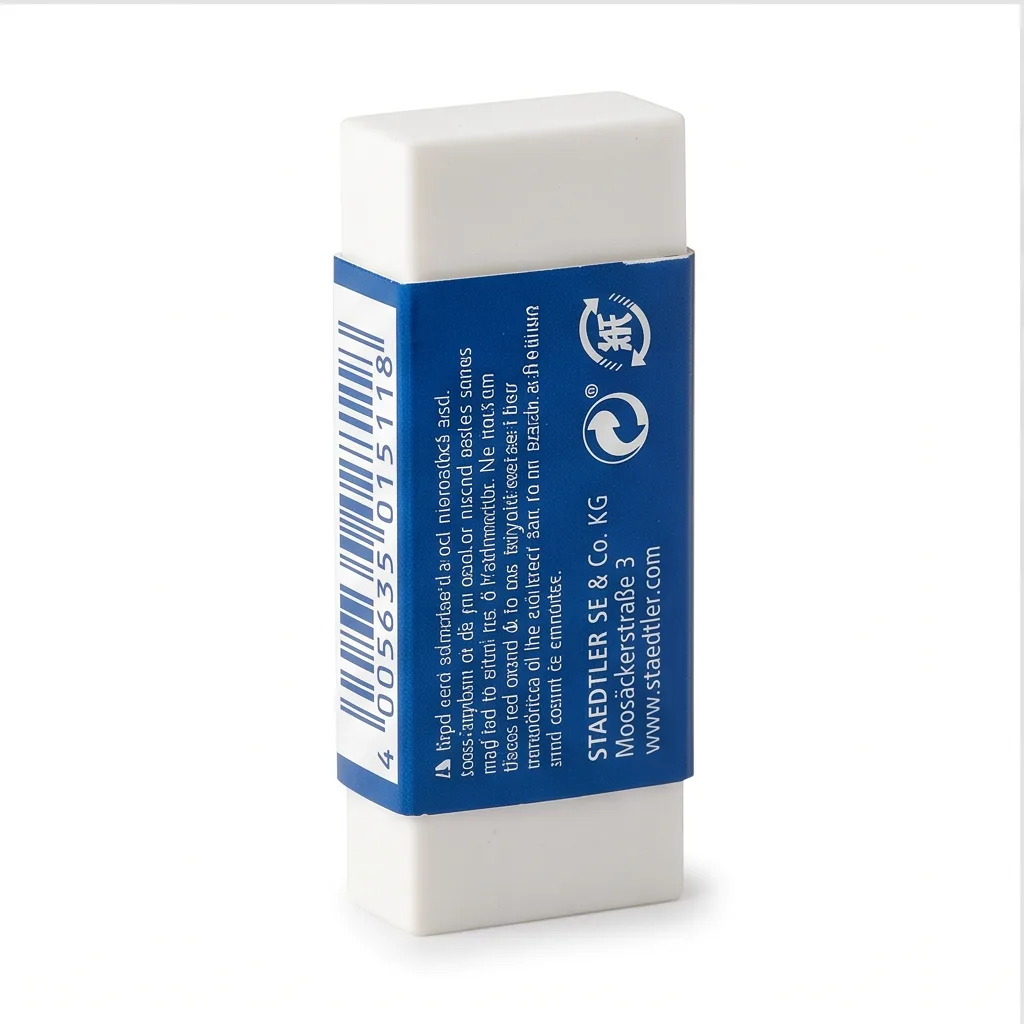
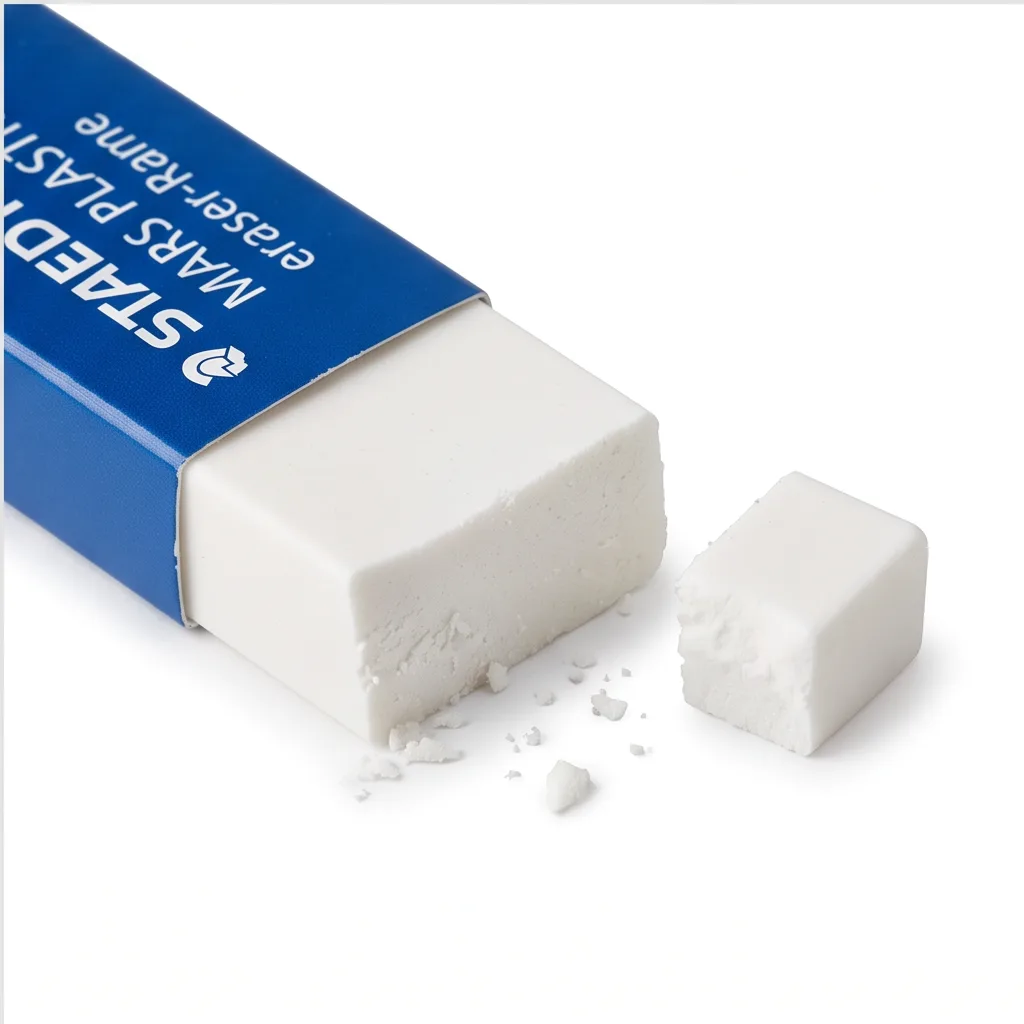
The Mars Plastic 526 50 is composed of polyvinyl chloride with calcium carbonate fillers, supplemented by chalk or kaolin and special softening agents. The formula contains no heavy metal pigments and is both latex-free and phthalate-free. The eraser's neutral pH of 7.66 and sulfur-free composition make it suitable for archival and conservation work. Its design—often featuring a sliding sleeve for convenient handling—reflects decades of refinement aimed at minimizing crumbling while maximizing erasing precision.
The eraser's endurance stems from its fundamental reliability. It removes graphite marks cleanly from paper and matte drafting film without discoloration, performs equally well on wallpaper and PVC surfaces, and produces minimal waste. Unlike natural rubber erasers, which require replacement every few years, the Mars Plastic eraser remains functional after long storage periods. This combination of material stability, consistent performance, and practical versatility has made it a standard tool in offices, studios, and conservation laboratories worldwide. The product's continuous production in Nuremberg since 1967 reflects not fashion or marketing, but the simple fact that it solves a problem better than its predecessors and has never been substantially improved upon.
Timeline
- 1900 Designed The Mars eraser trademark is registered at the imperial patent bureau.
- 1967 First made · Disputed Staedtler Mars Eraser enters production in Nuremberg, Germany.
Milestone dates are taken from the production notes behind this entry and have not been checked separately.
More like this
-
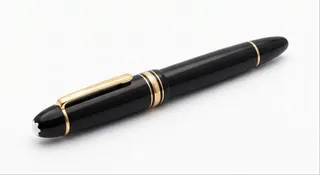 Pens · since 1924 Montblanc Meisterstück German fountain pen in continuous production since 1924. Read the entry →
 -
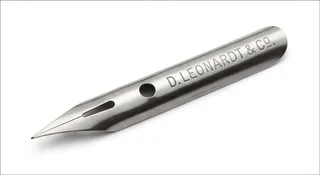 Pens · since 1856 Leonardt Dip Pen Nib The steel nib that outlasted an empire of makers. Read the entry →
 -
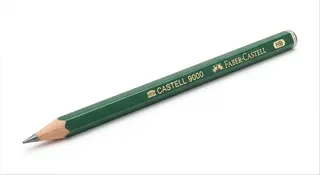 Pens · since 1905 Faber-Castell Castell 9000 The artist's pencil since 1905, refined but unchanged. Read the entry →
 -
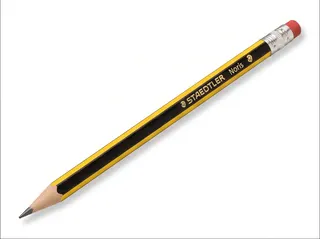 Pens · since 1901 Staedtler Noris Pencil The yellow-and-black striped pencil in continuous production since 1901. Read the entry →