Musical Instruments · Guitars & Basses · Bass Guitars
Fender
Fender Precision Bass
Since 1951 · 75 years to 2026 · First made in Fullerton, California
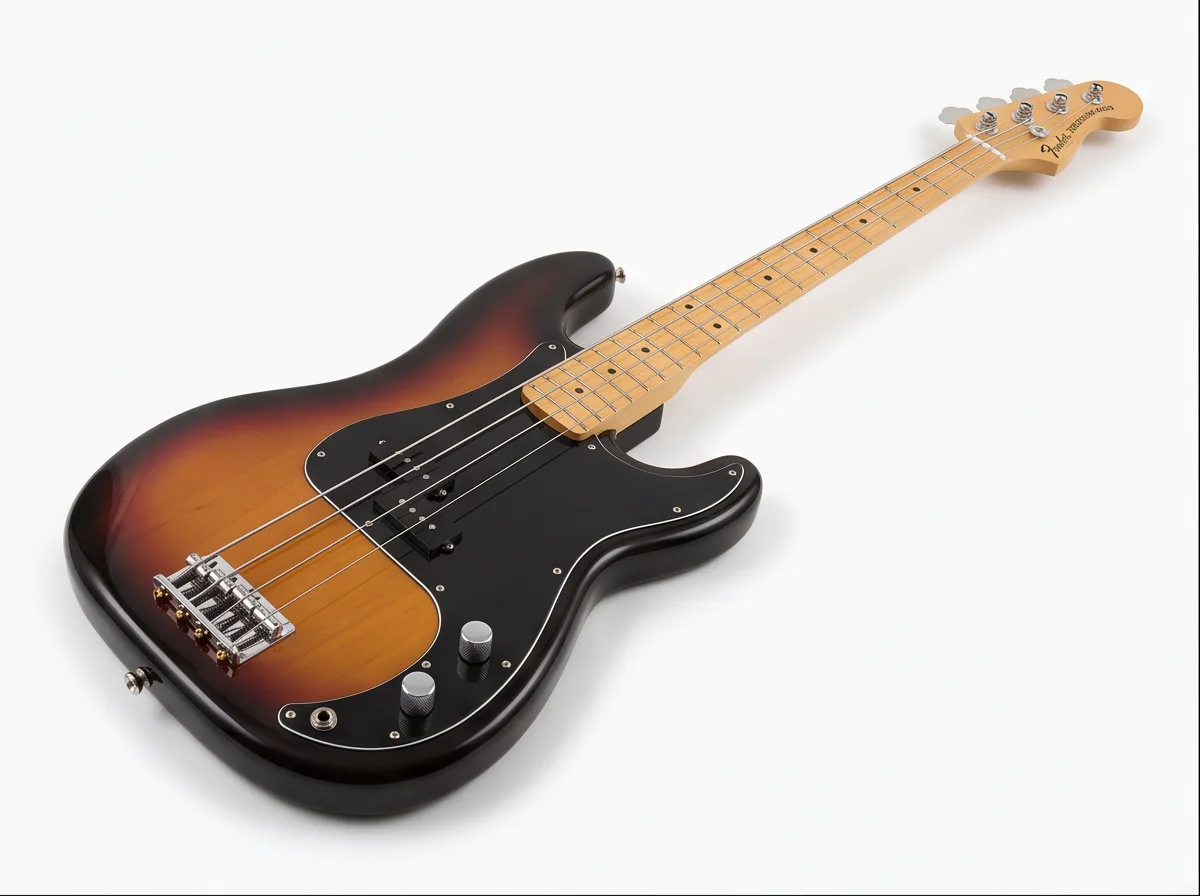
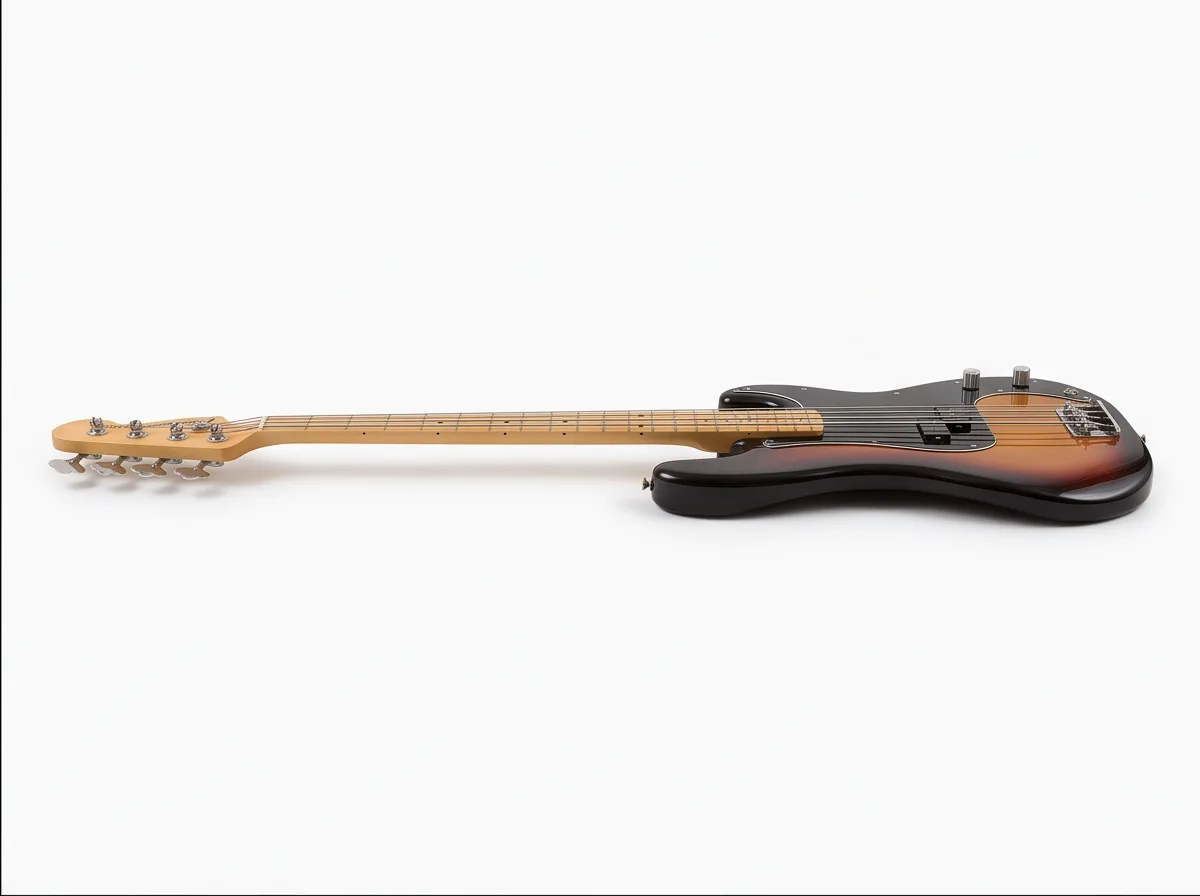
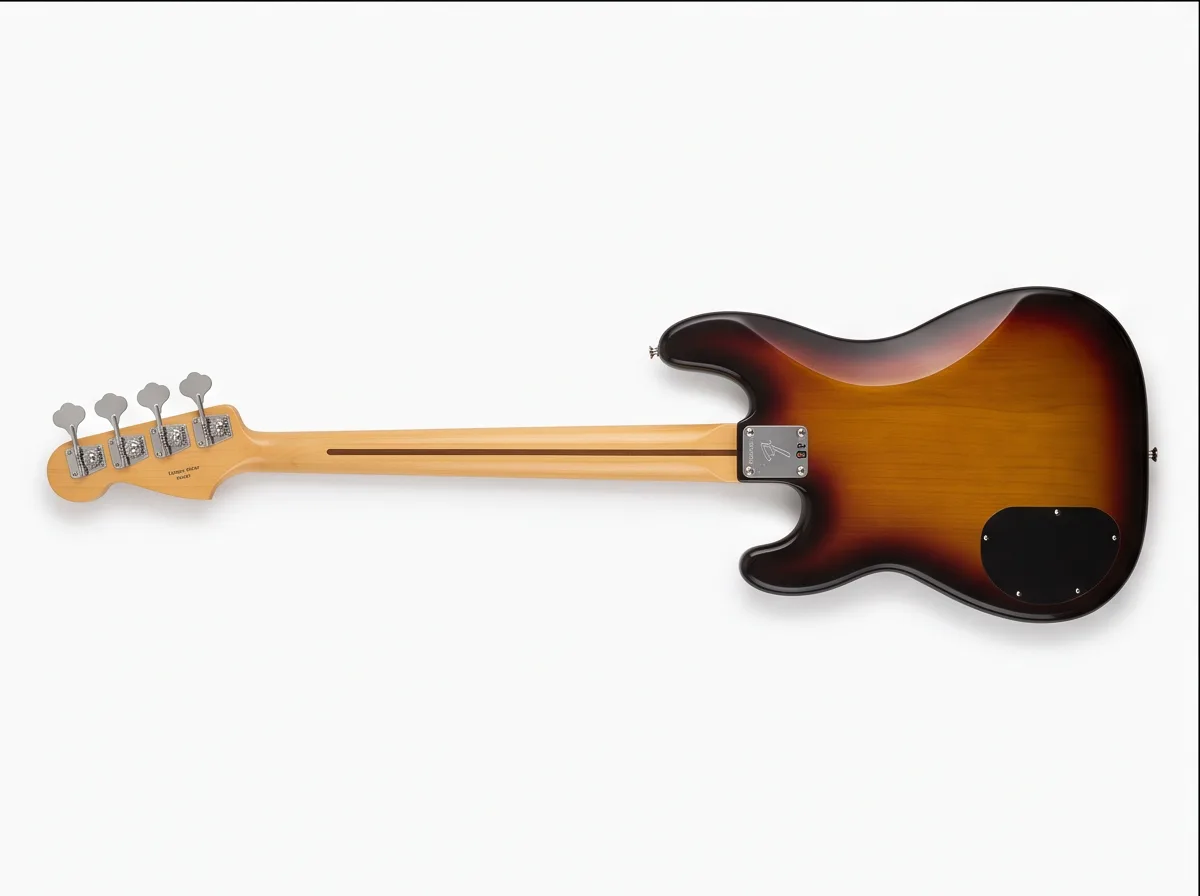
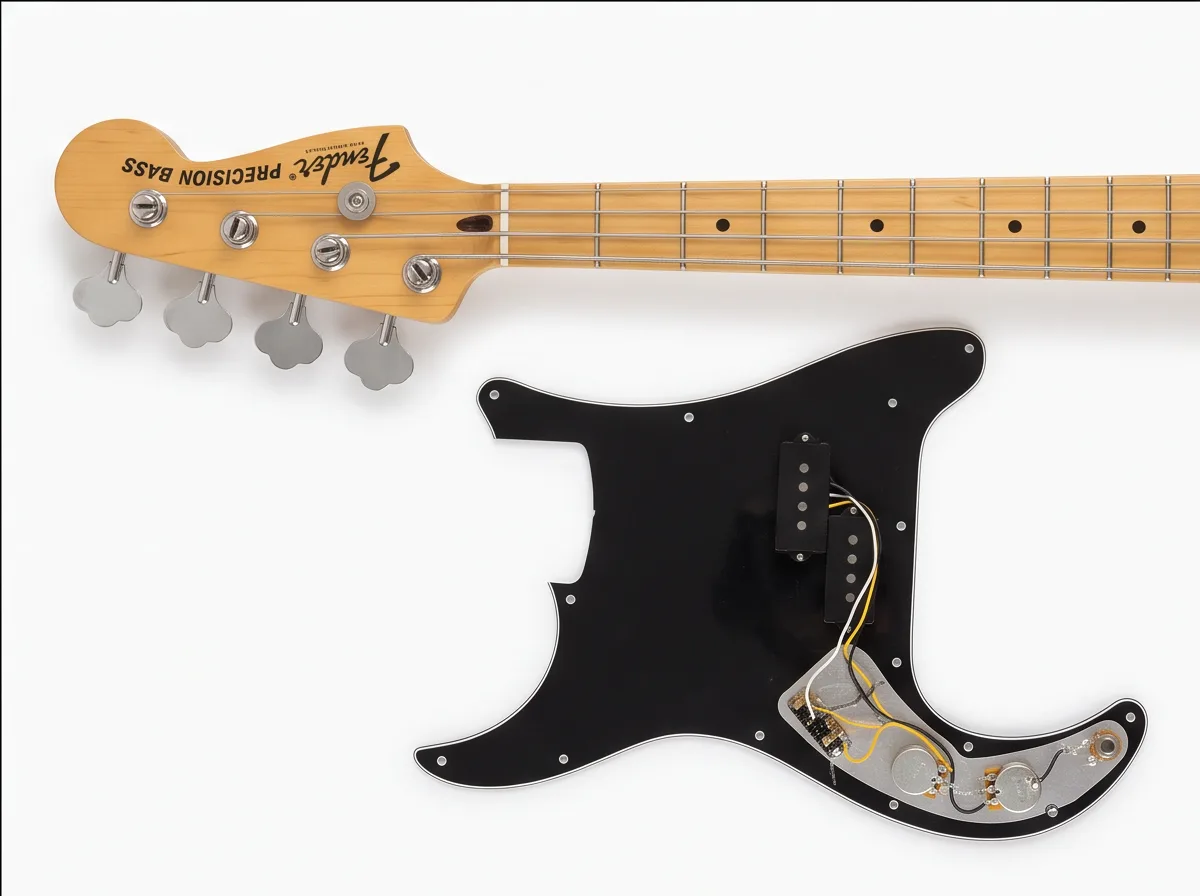
The Precision Bass was not inevitable. Before 1951, electric bass guitars did not exist. Leo Fender's invention solved a specific problem: upright bass players needed the fretted precision and amplified volume that their acoustic instruments could not provide. The first commercial unit, produced in October 1951, established the template that would define the instrument for seven decades.
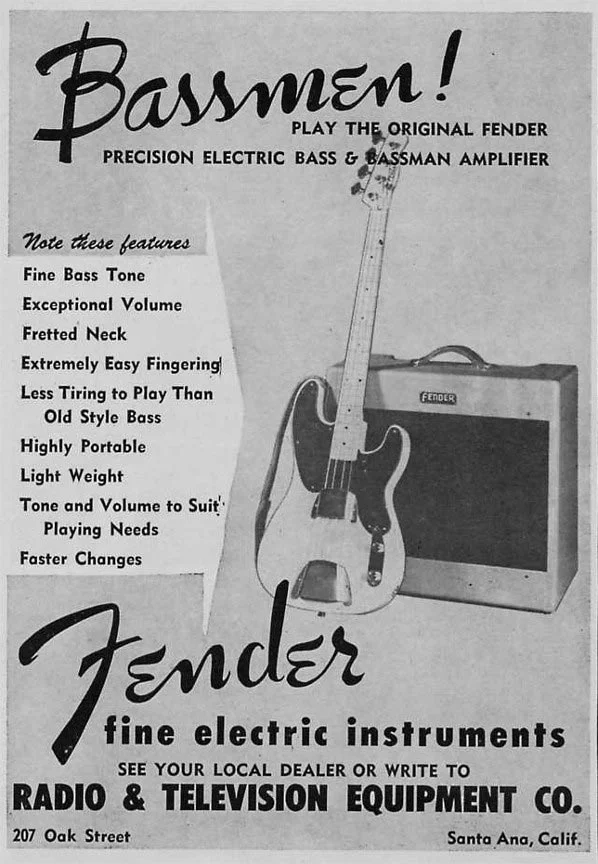
The original design borrowed liberally from Fender's successful Telecaster guitar—the headstock shape, neck plate, potentiometers, and control layout—but reimagined for bass. The body, a two-piece ash construction, featured two "horns" rather than one, providing the balance necessary for the long, heavy neck required of a bass guitar. The scale length was set at 34 inches after careful experimentation. A single pickup, black pickguard, and string-through-body bridge completed the specification. The instrument was available only in blonde finish and retailed for $199.50.
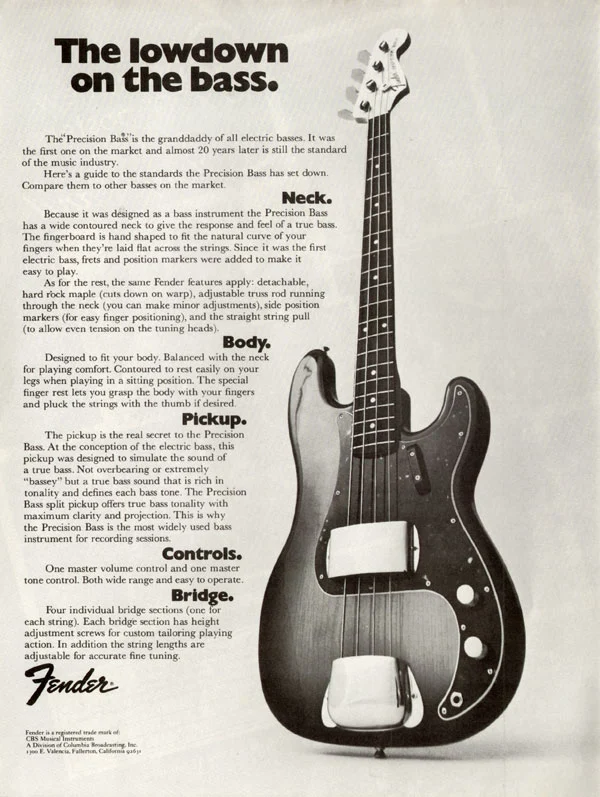
The 1957 revision proved definitive. The split-coil pickup—two coils wound in opposite directions to cancel hum—became the Precision Bass's sonic signature. The Stratocaster-style headstock, integrated pickguard assembly with gold-anodized aluminum facing, and individual threaded bridge saddles for precise intonation adjustment followed. This configuration has remained fundamentally unchanged. The body was refined with contoured edges and forearm relief, borrowed from the Stratocaster's ergonomic innovations. Alder became standard for sunburst finishes, chosen for its workability rather than tonal properties.
The Precision Bass became the foundational instrument of recorded music. Its fretted neck allowed bassists to play with the precision and consistency that studio work demanded. It appeared on countless landmark recordings across rock, soul, funk, and pop. The instrument weathered corporate mismanagement, factory relocations, and manufacturing upheaval—yet production never ceased. By the 2000s, nearly identical in outward appearance to its 1957 ancestor, the Precision Bass remained the world's premier bass guitar, a status it retains today. Few instruments have maintained such design continuity while remaining in continuous production across seven decades and multiple manufacturing regimes.
Timeline
- 1951 First made · Verified Fender Precision Bass enters production in Fullerton, California.
- 1952 Recognised The Precision Bass makes its trade show debut at the NAMM Show.
- 1953 Designed Fender receives a patent for the Precision Bass.
- 1957 Designed The split-coil pickup, Stratocaster-style headstock, and integrated pickguard assembly are introduced.
- 1982 Production Fender establishes a manufacturing facility in Japan to maintain output during American reorganization.
- 1985 Ownership A management buyout ends CBS ownership of Fender.
- 1987 Production Production resumes in the newly acquired Corona, California factory with the American Standard Precision Bass.
Milestones as we found them, not as we've checked them.
From the archive
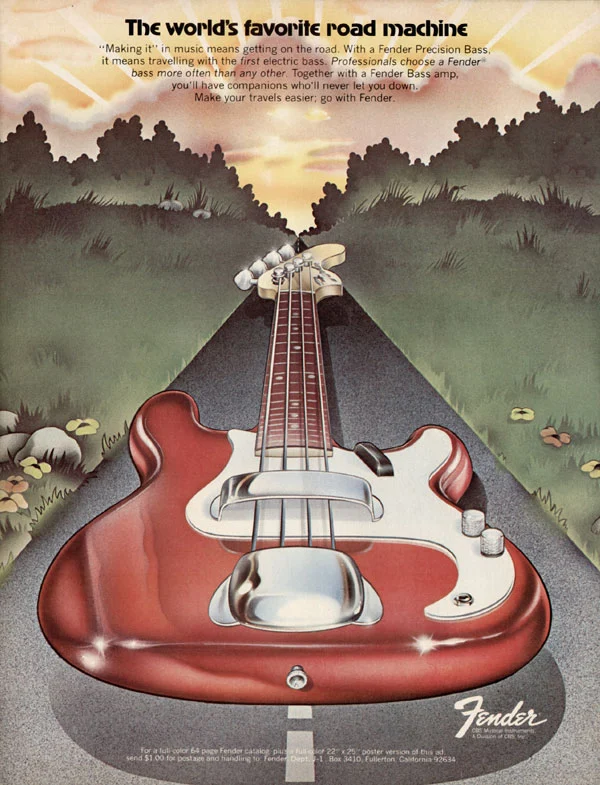
More like this
-
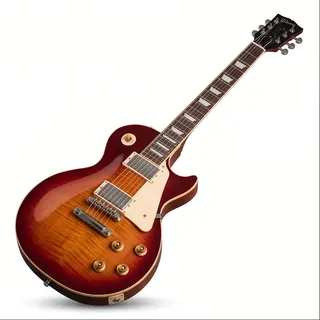 Electric Guitars · since 1952 Gibson Les Paul Solid-body electric guitar in continuous production since 1952. Read the entry →
 -
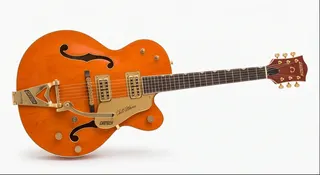 Electric Guitars · since 1954 Gretsch 6120 Hollow-body electric guitar in continuous production since 1954. Read the entry →
 -
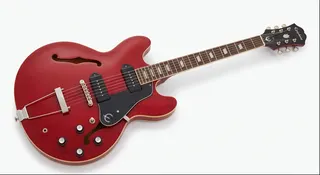 Electric Guitars · since 1961 Epiphone Casino Hollow-body electric guitar in continuous production since 1961. Read the entry →
 -
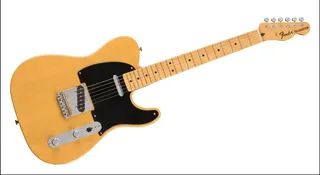 Electric Guitars · since 1950 Fender Telecaster The first mass-produced solid-body electric guitar, still in production. Read the entry →