Musical Instruments · Guitars & Basses · Acoustic Guitars
Gibson
Gibson J-45
Since 1942 · 82 years to 2026 · First made in Kalamazoo, Michigan
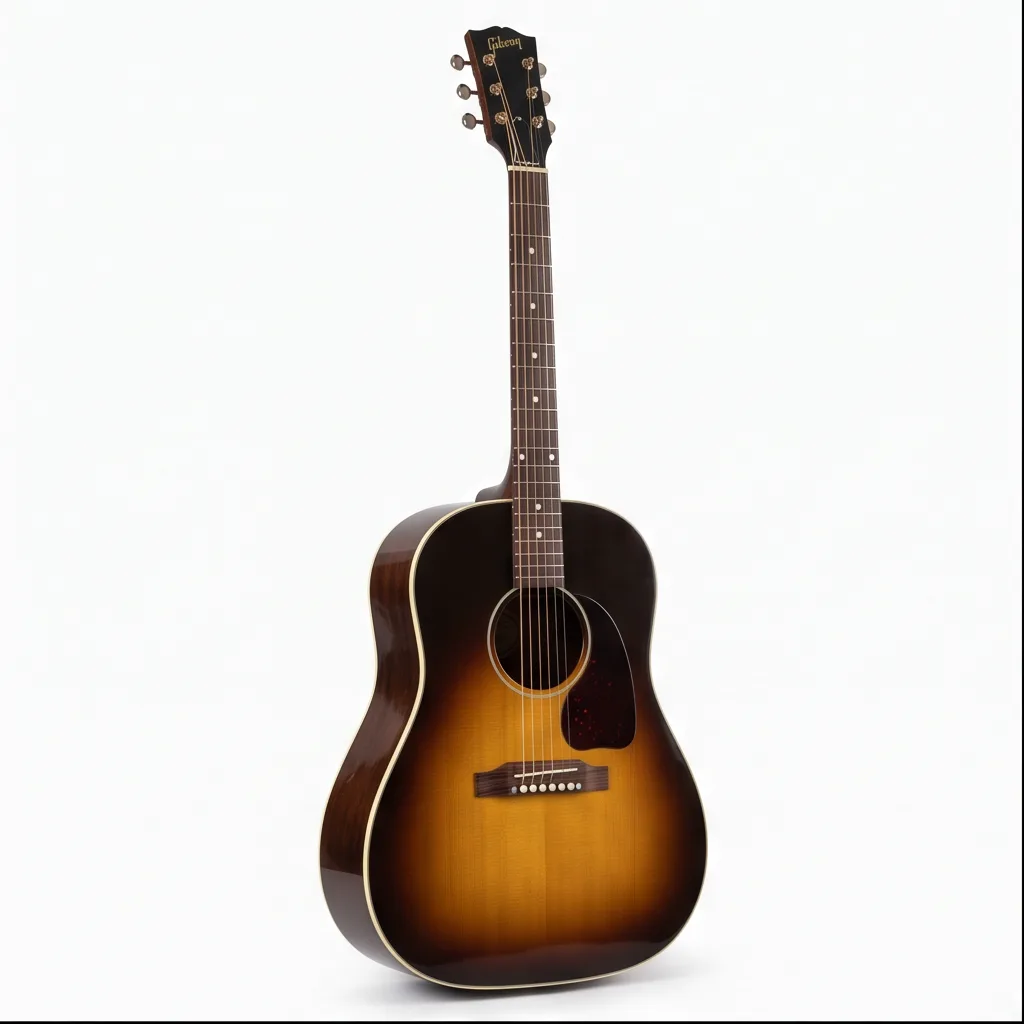
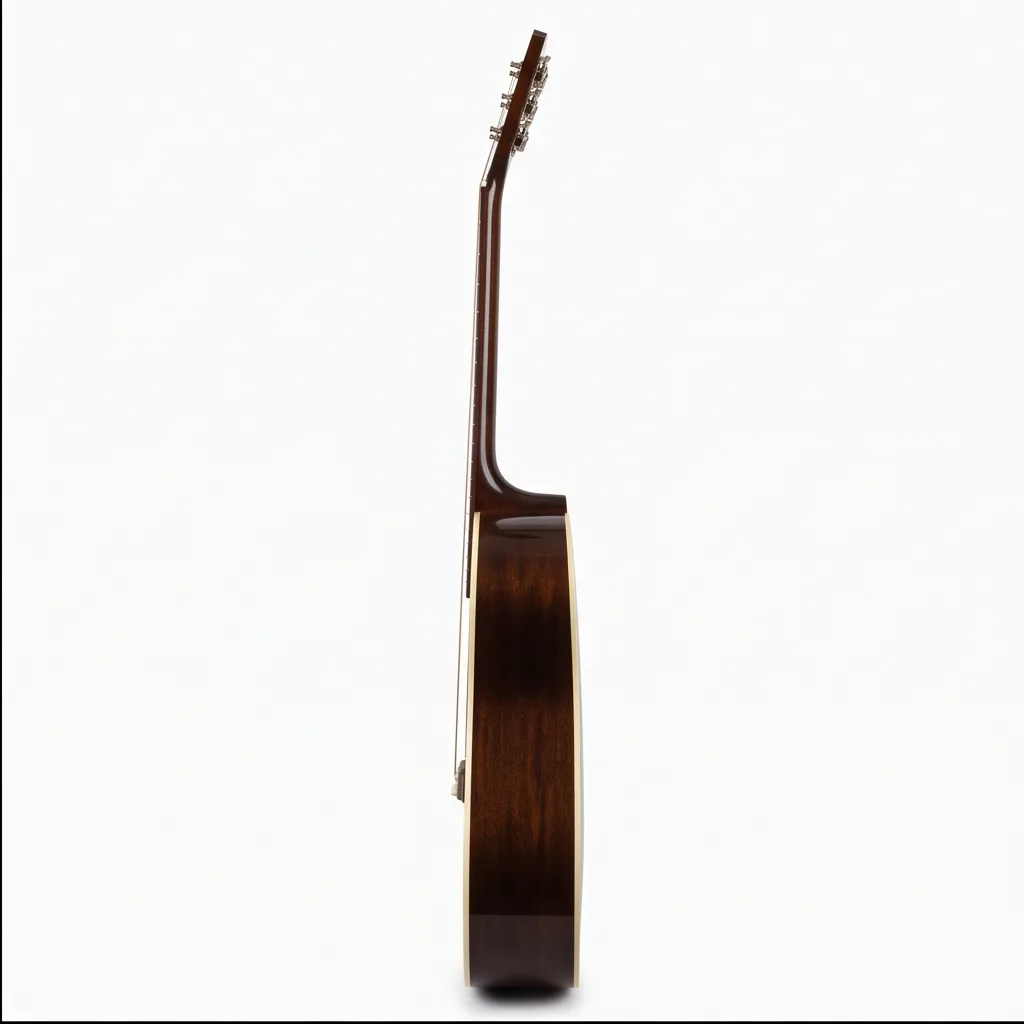
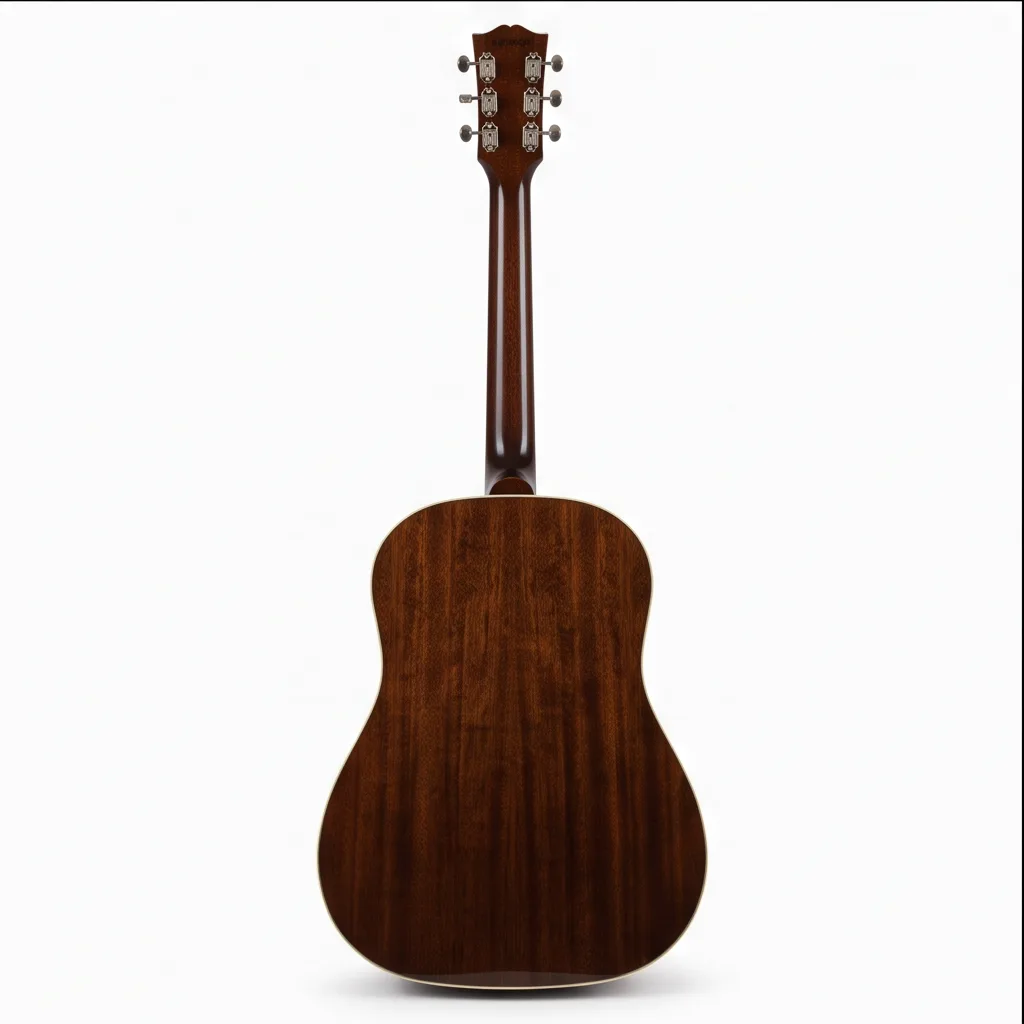
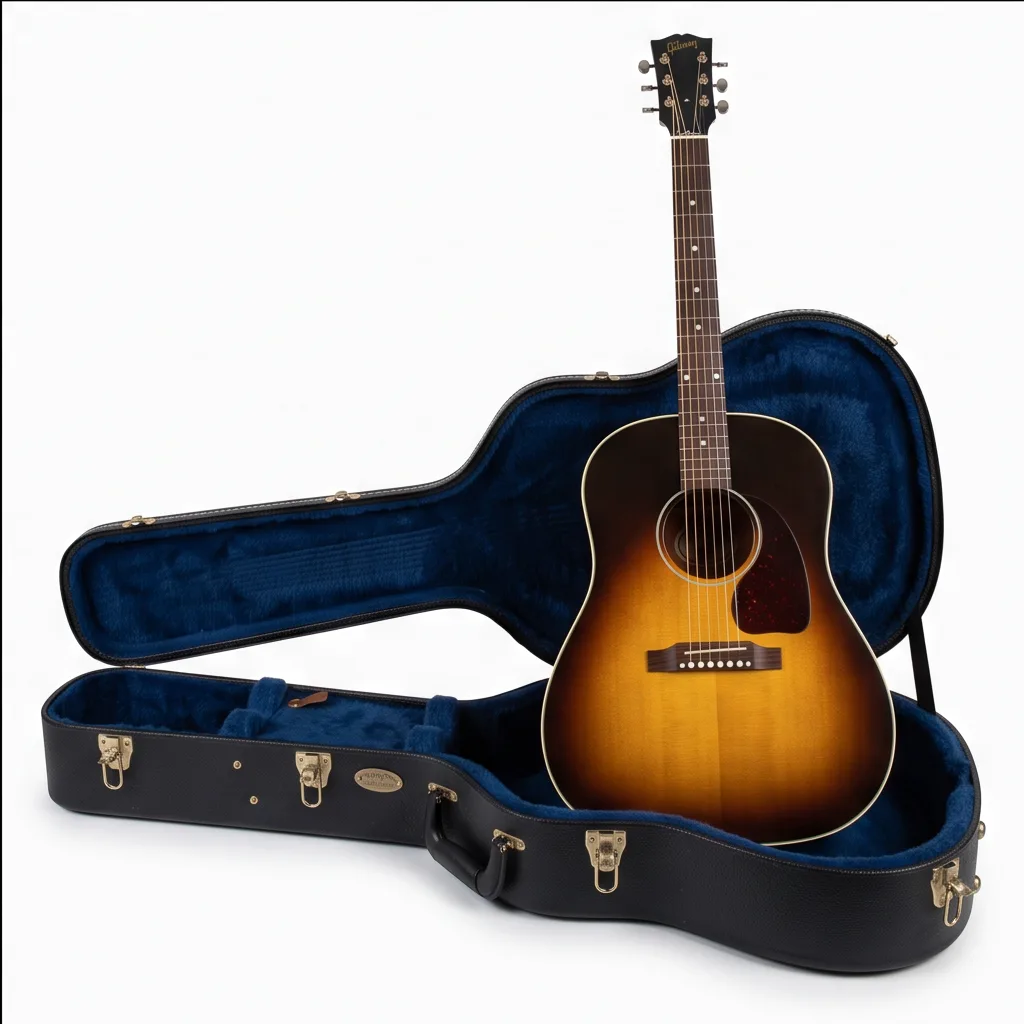
The Gibson J-45 emerged in 1942 as a refinement of Gibson's earlier jumbo designs, arriving at a moment of national crisis. Its name derived from its original $45 price tag, the J-45 was conceived as a workhorse instrument—unpretentious, durable, and capable of producing the warm, mid-rich tone that would define American acoustic music for generations. The design inherited the round-shoulder body shape Gibson had pioneered in the early 1930s, a departure from the square-shouldered dreadnoughts that dominated the market. This geometry proved consequential: the rounded shoulders offered greater clarity and balance than their angular counterparts, while the domed top and back, created through subtly radiused internal bracing, generated a distinctive midrange resonance that became the instrument's signature.
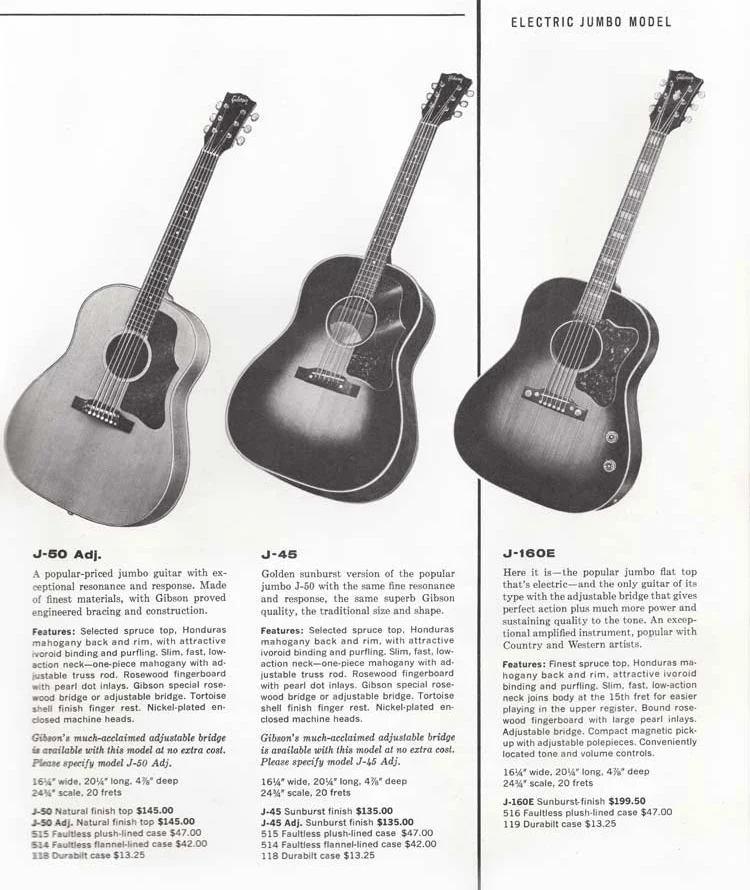
The original specification called for a mahogany neck, back, and sides paired with a Sitka spruce top and Brazilian rosewood fretboard and bridge. These materials were chosen for their tonal properties and availability, though wartime scarcity forced Gibson's hand. The company's women workers—who comprised much of Gibson's workforce during the war years and produced at least 25,000 guitars—sometimes assembled instruments from whatever materials remained in stock, occasionally resulting in all-North American wood construction. When peacetime returned and materials became plentiful again, Gibson standardized the design by 1947, establishing specifications that would remain largely unchanged through the 1950s and 1960s.
The J-45's cultural ascendancy was neither accidental nor immediate. The instrument appeared in the hands of Buddy Holly, Bob Dylan, and countless country and folk musicians, becoming the default choice for singer-songwriters and studio professionals. Its reputation rested not on marketing but on acoustic performance: the combination of materials, bracing geometry, and body proportions produced a guitar that recorded well, projected clearly in ensemble settings, and aged gracefully. When Gibson's later modifications—square shoulders in 1968, plastic bridges in the early 1960s—proved unpopular, the company's eventual return to vintage specifications in the 1990s vindicated the original design. Today's J-45s, handcrafted in Montana using traditional joinery and hide glue, represent an unbroken lineage to an instrument born during wartime rationing, refined through decades of use, and sustained by the simple fact that it works.
Timeline
- 1942 First made · Verified Gibson J-45 enters production in Kalamazoo, Michigan.
- 1944 Ownership Chicago Musical Instrument Company acquires Gibson.
- 1968 Designed Gibson switches the J-45 to a square-shouldered body shape.
- 1970 Ownership The Norlin Corporation acquires Gibson.
- 1982 Paused guitarhq.com states 'Gibson J-45 guitar discontinued 1982. Re-introduced with different specs 1984.' tcgakki.com corroborates that 'production was temporarily discontinued in 1982.' This was a deliberate commercial decision by Gibson, not a wartime or external interruption, spanning at least one full year.
- 1984 Designed Gibson restores the original slope-shoulder design to the J-45.
- 1984 Resumed Production resumes.
Milestone dates are taken from the production notes behind this entry and have not been checked separately.
More like this
-
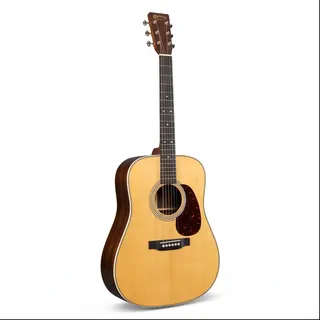 Acoustic Guitars · since 1931 Martin D-28 The dreadnought acoustic that defined a century of guitar-making. Read the entry →
 -
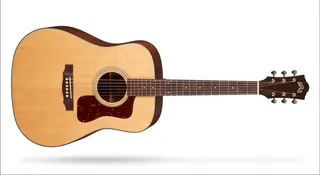 Acoustic Guitars · since 1963 Guild D-40 Dreadnought acoustic guitar in continuous production since 1963. Read the entry →
 -
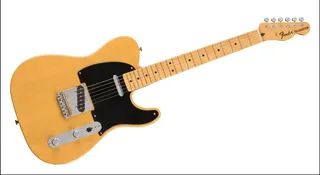 Electric Guitars · since 1950 Fender Telecaster The first mass-produced solid-body electric guitar, still in production. Read the entry →
 -
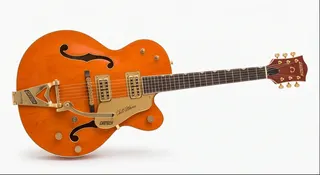 Electric Guitars · since 1954 Gretsch 6120 Hollow-body electric guitar in continuous production since 1954. Read the entry →