Fashion · Bags · Suitcases & Travel Bags
Rimowa
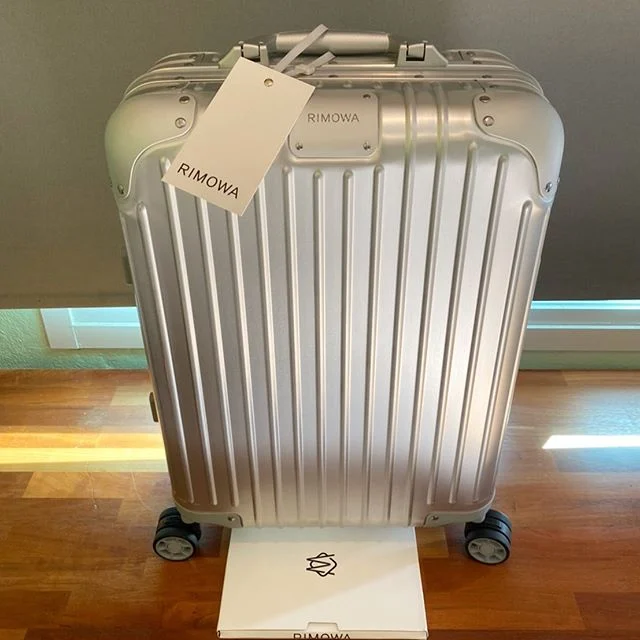
Rimowa Original
Since 1950 · 76 years to 2026 · First made in Cologne, Germany
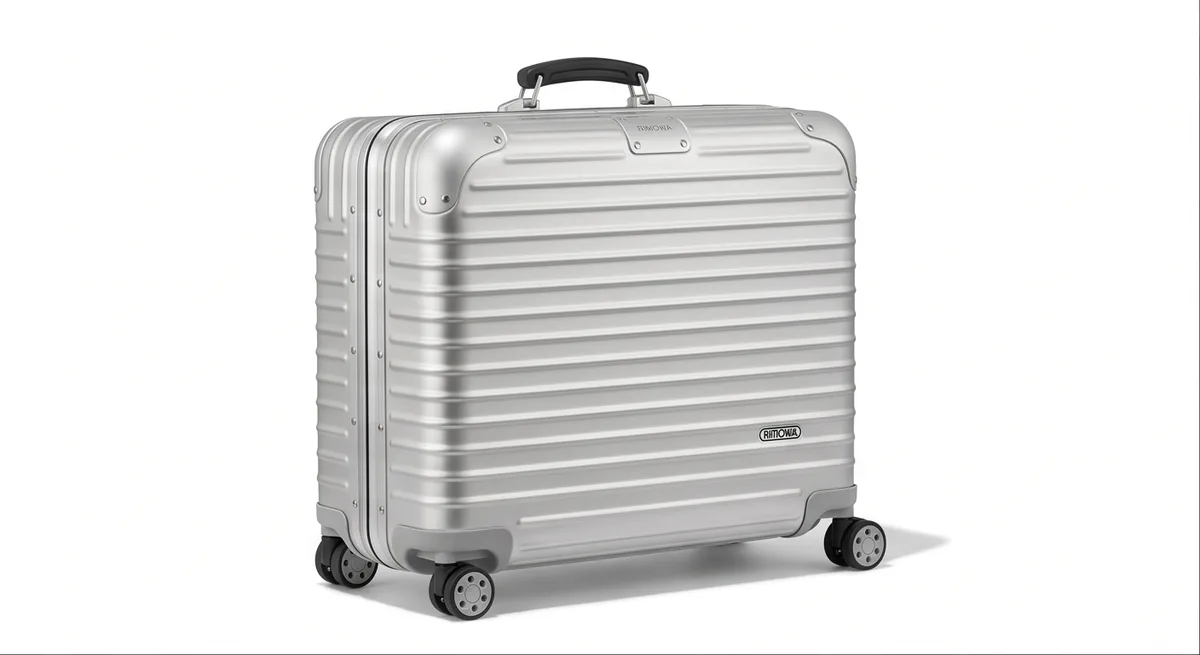
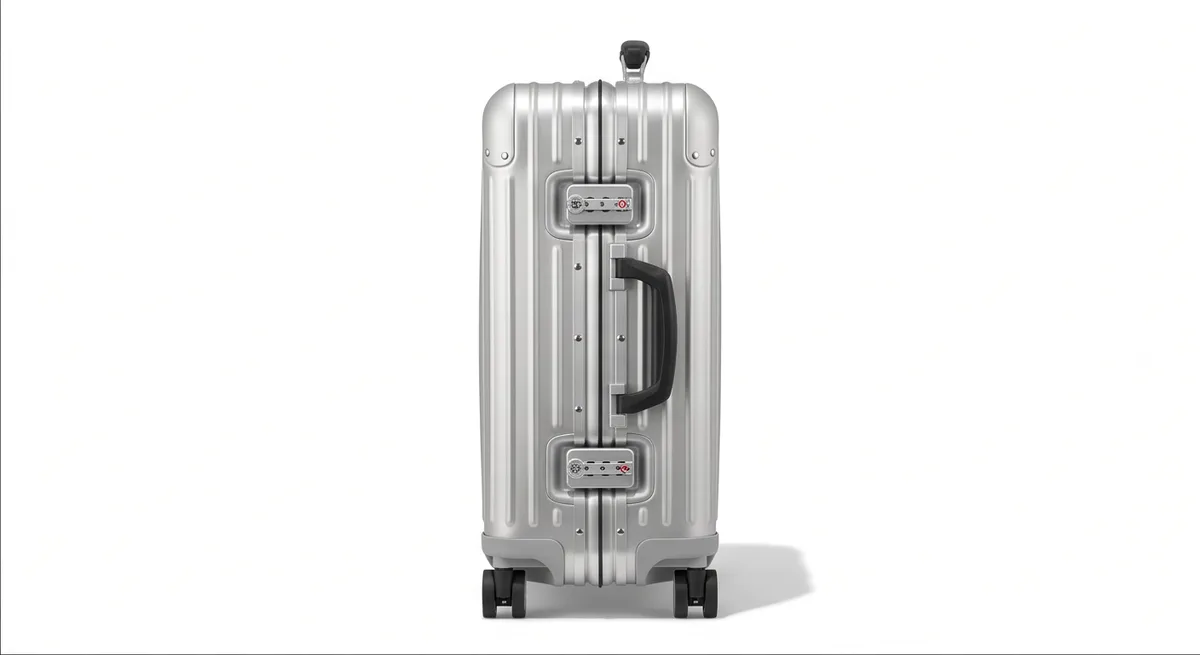
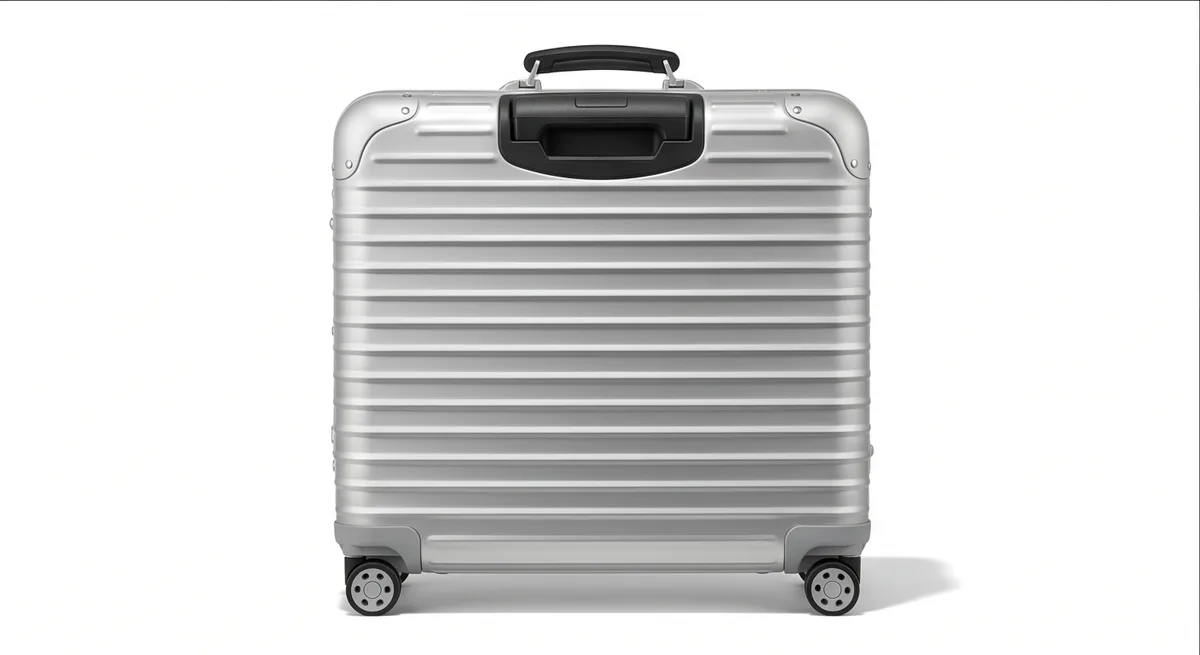
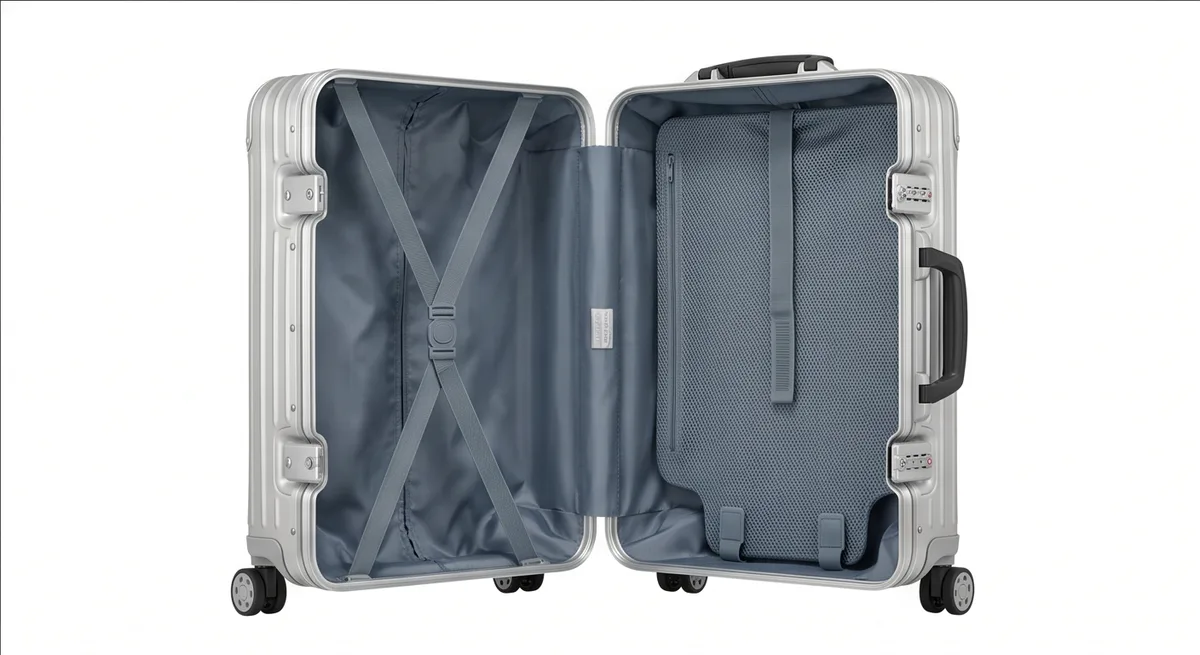
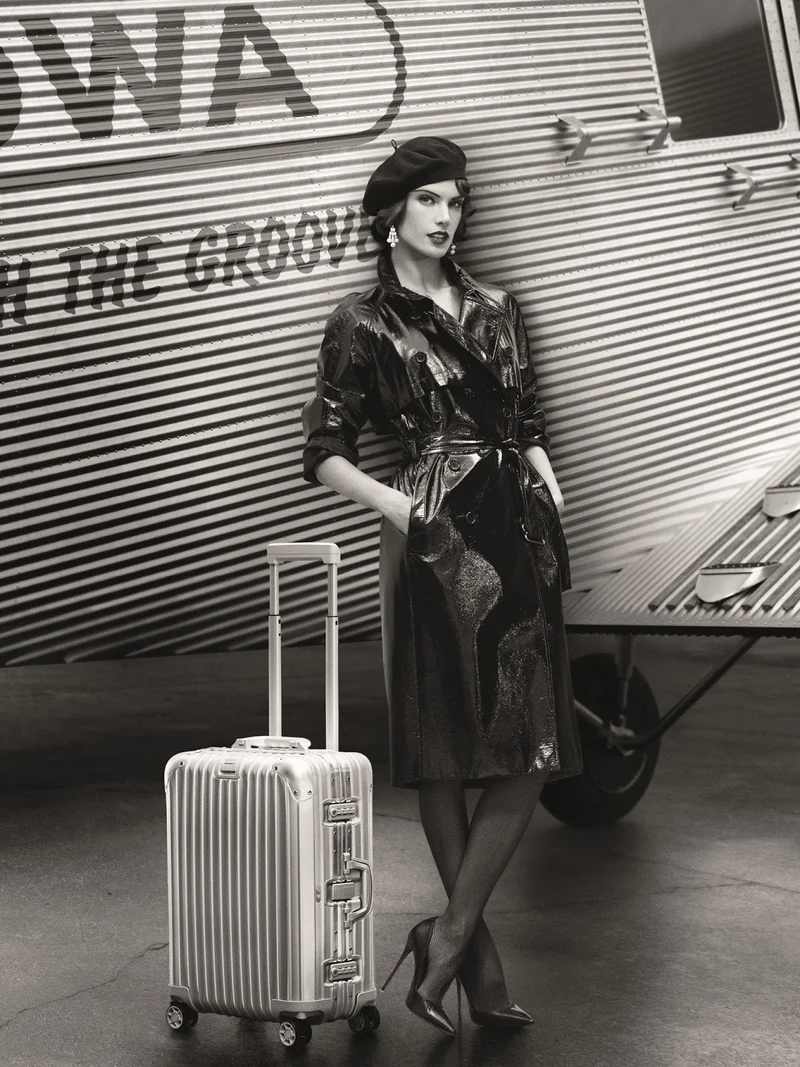
The Original is a box of anodised aluminium, silver in its plainest form, its two shells pressed with evenly spaced parallel ribs that run around the case like the skin of an old aeroplane. That is where they came from. The grooves borrow the corrugated metal of Junkers aircraft, which used ribbing to stiffen thin aluminium; on a suitcase they do the same, letting a light sheet keep its shape. The case opens in two halves and today rolls on Rimowa's Multiwheel system, with a telescopic handle; the cabin size measures 55 by 40 by 23 centimetres.
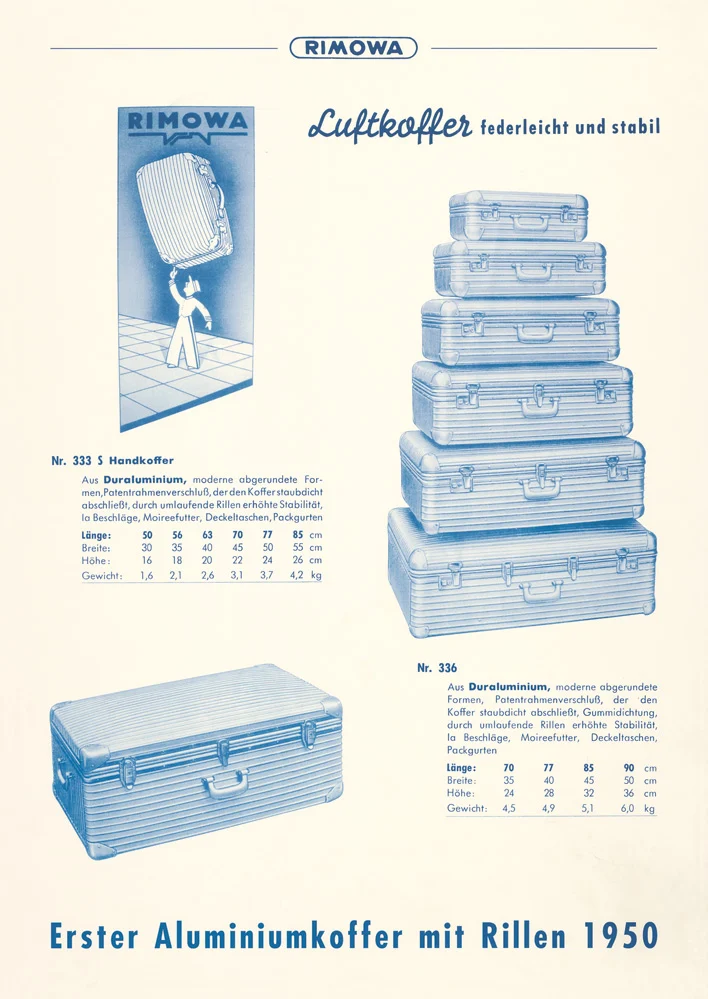
Rimowa began in 1898 as Paul Morszeck's trunk-making workshop in Cologne, working in wood, leather and cardboard. His son Richard, who gave the firm its name from the first syllables of his own and the German for trademark, built an aluminium suitcase in 1937, still smooth-sided. During the war the factory and its stock were destroyed, all but the aluminium; Rimowa afterwards made cases in light metal alone, and in 1950 added the grooves.

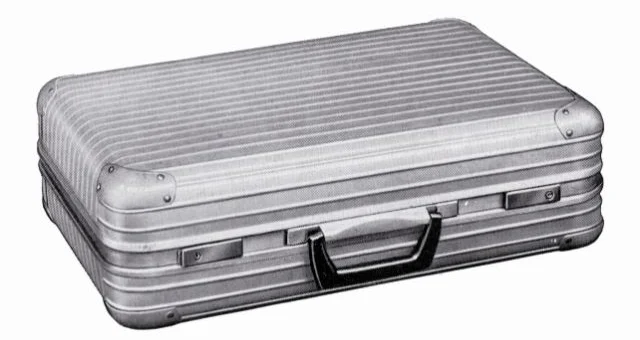
They did not catch on at once. Dieter Morszeck later recalled that five years after the war women in particular disliked a case that looked like the corrugated-iron huts of the hungry years. The grooved case found its following first with tropical travellers and lovers of the technical, then with photographers and advertising people: the company made polycarbonate cases moulded with the same ribs from 2000, but the aluminium case never left the range, sold for decades as Topas.
LVMH bought control of Rimowa in 2016-17, and in 2018, with a new identity for the company's hundred-and-twentieth year, Topas became the Original. The grooves are protected as a trademark. A Stiftung Warentest trial in 2016 rated the aluminium case poorly against Rimowa's own polycarbonate, faulting its weight and the dents left by a drop test. Some owners, Morszeck has said, will not part with an old case because its dents carry the memory of their journeys.
Timeline
- 1950 First made · Claimed Rimowa Original enters production in Cologne, Germany.
- 2000 Designed Rimowa introduces polycarbonate cases moulded with the same grooves; the aluminium line continues beside them.
- 2017 Ownership LVMH completes its purchase of 80 per cent of Rimowa, its first German house.
- 2018 Designed With a new identity for the company's 120th year, the Topas aluminium line is renamed Original.
- 2022 Production Rimowa introduces a lifetime guarantee on all its suitcases.
Milestones as we found them, not as we've checked them.
From the archive
More like this
-
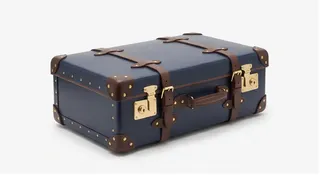 Suitcases & Travel Bags · since 1897 Globe-Trotter Original Paper pressed until it can bear an elephant, made by hand since 1897. Read the entry →
 -
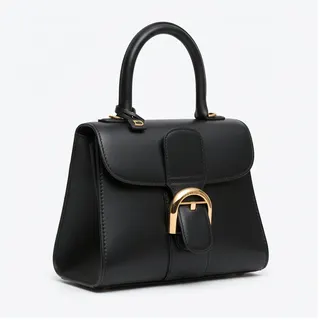 Handbags · since 1958 Delvaux Brillant Bag Sixty-four leather pieces, hand-assembled since 1958. Read the entry →
 -
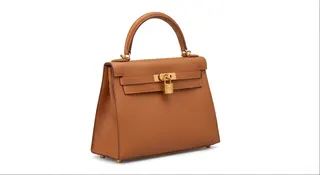 Handbags · since 1935 Hermès Kelly A riders' bag made small for women in 1935, renamed for a princess. Read the entry →
 -
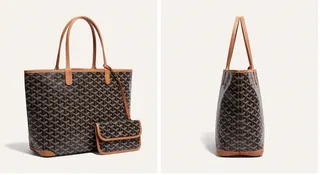 Handbags · since 1930 Goyard St. Louis Tote Reversible canvas tote, designed as a beach bag in 1930. Read the entry →