Fashion · Clothing · Jackets & Coats
Filson
Filson Cruiser
Since 1914 · 112 years to 2026 · First made in Seattle, Washington
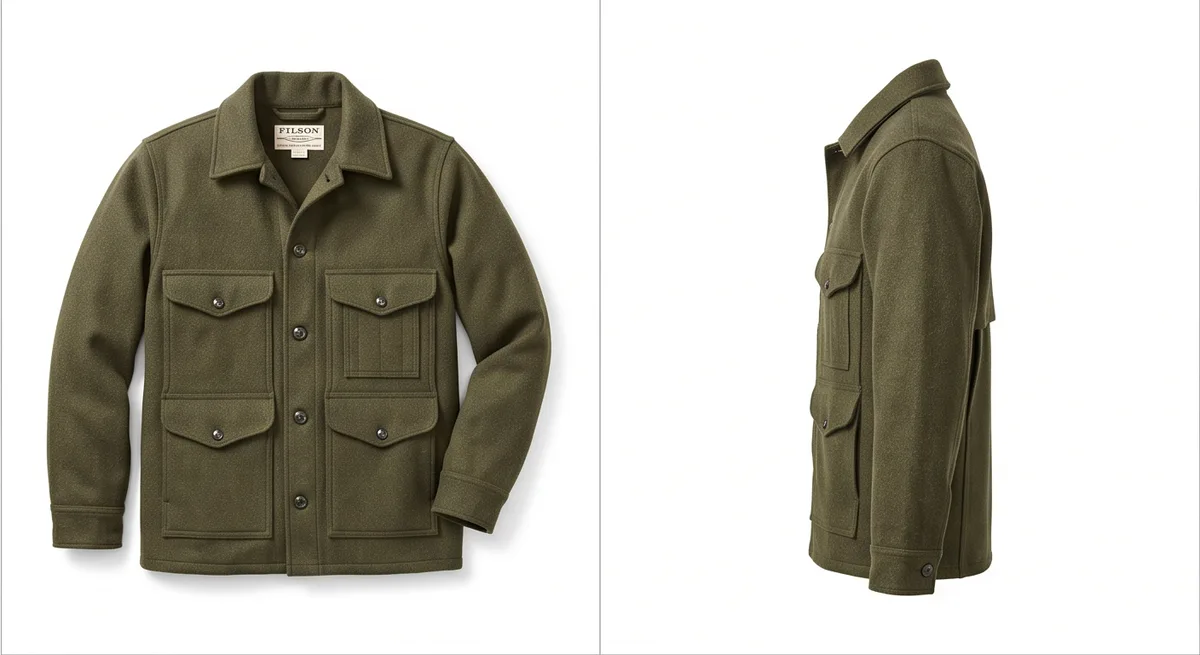
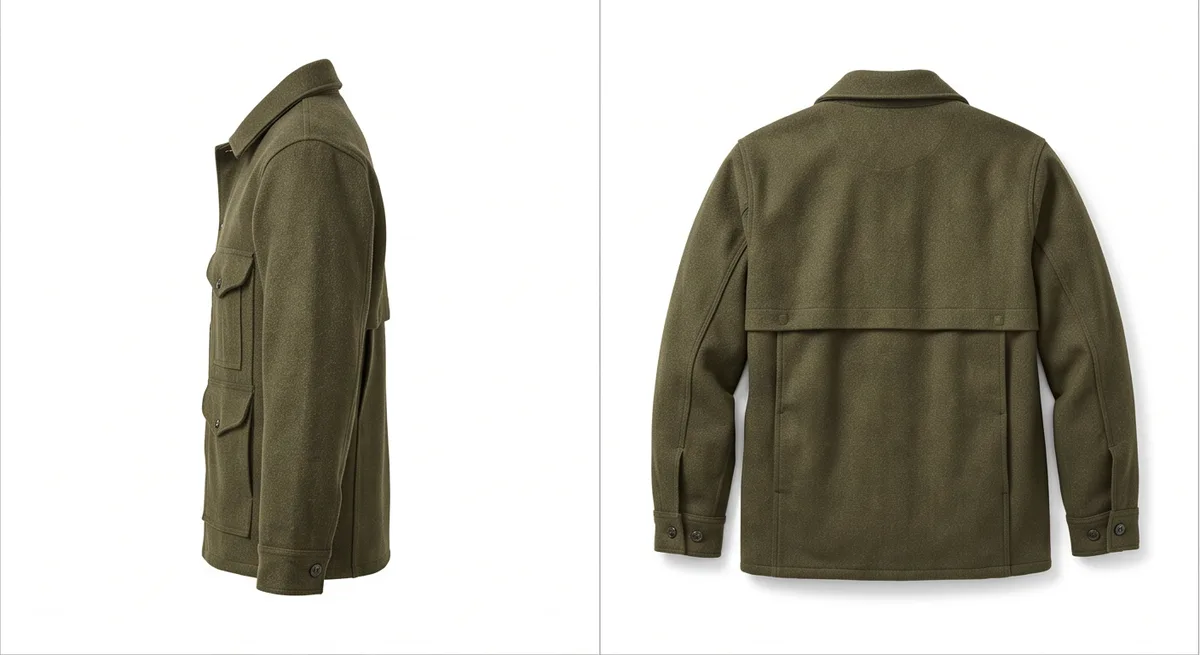
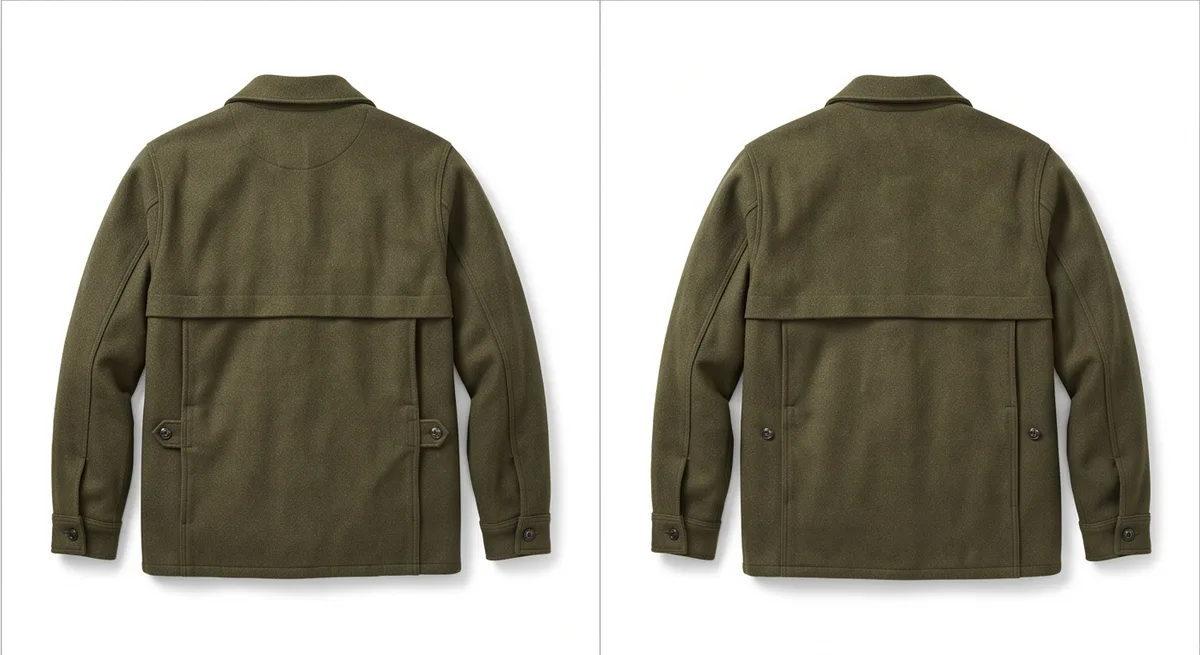
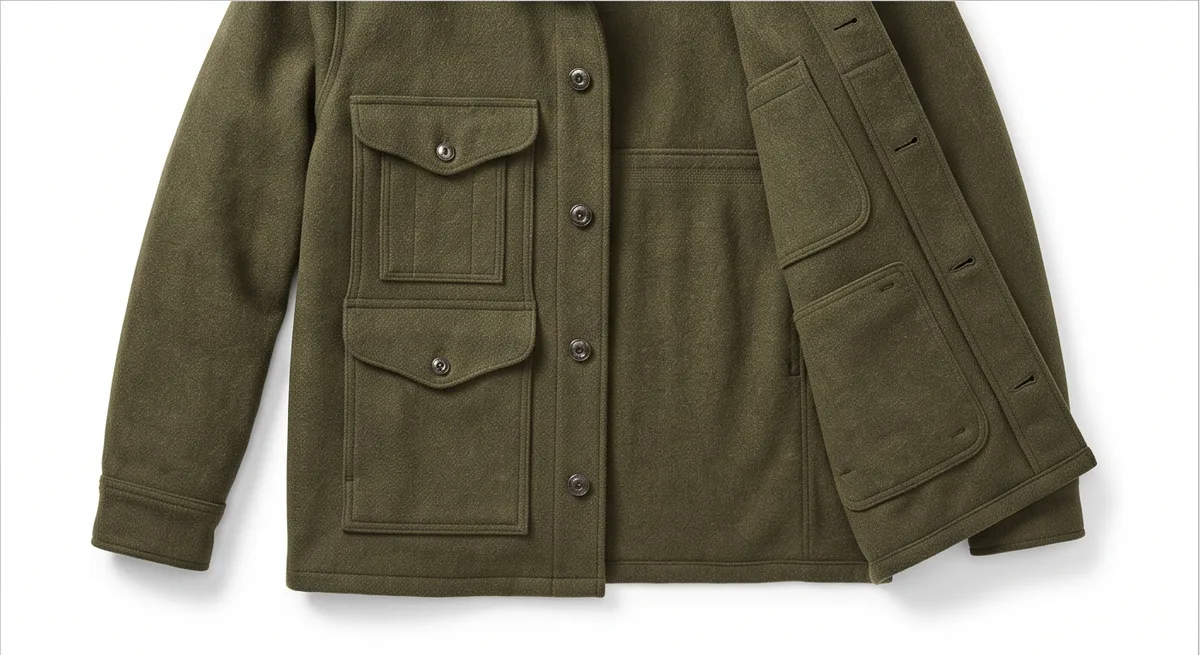
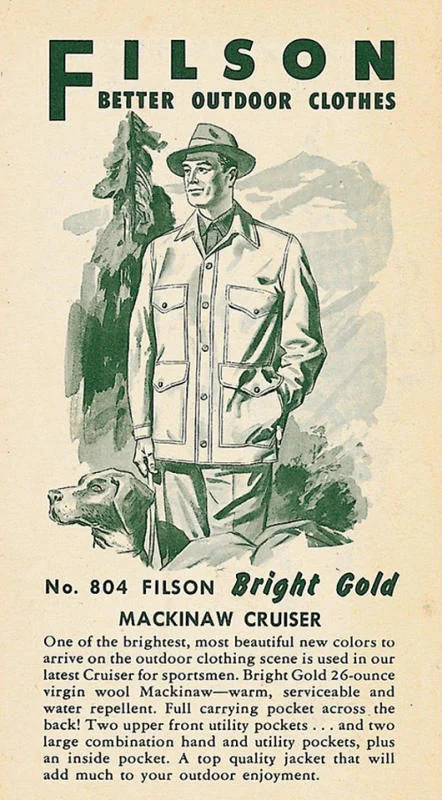
The Filson Cruiser emerged from a specific need: protecting men surveying timber stands in the Pacific Northwest's relentless rain and dense forest. Patented in 1914 by Clinton C. Filson, the design placed function before fashion, with front pockets sized for notepads, compasses, and small tools, and a full-width back pocket for maps and survey charts. The double-layer wool back panel provided extra insulation where a working man needed it most. Built from 26-ounce Mackinaw wool, the jacket shed snow, blocked wind, and retained warmth even when wet—properties that made it indispensable in conditions where staying dry was impossible.
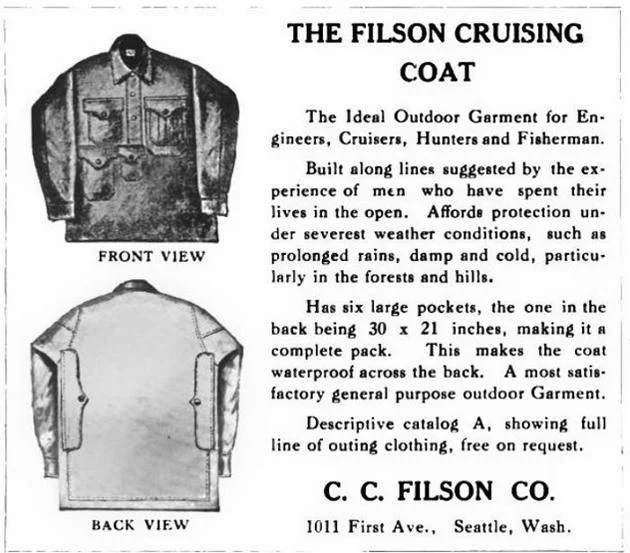
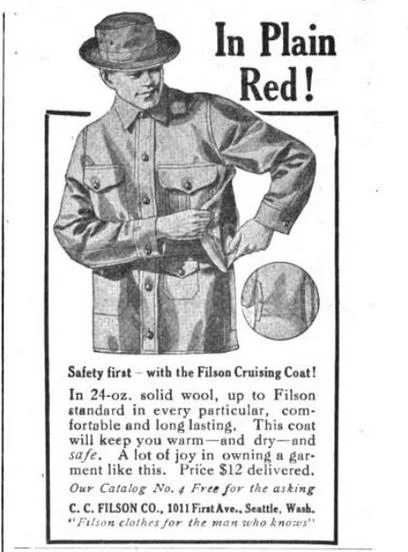
The Cruiser's utility transcended its original purpose. By the 1920s it had become standard attire in U.S. Forest Service camps, and by the 1930s it was favored by hunters, outdoorsmen, and Civilian Conservation Corps workers. The design proved so effective that competitors immediately began copying it; Filson's 1927 patent lawsuit reflected the jacket's market dominance. The company eventually abandoned litigation, allowing the pattern to enter the public domain, yet the Filson version remained the benchmark. Generations of lumberjacks, guides, and surveyors wore the jacket for decades, often passing it to the next generation with minimal deterioration.
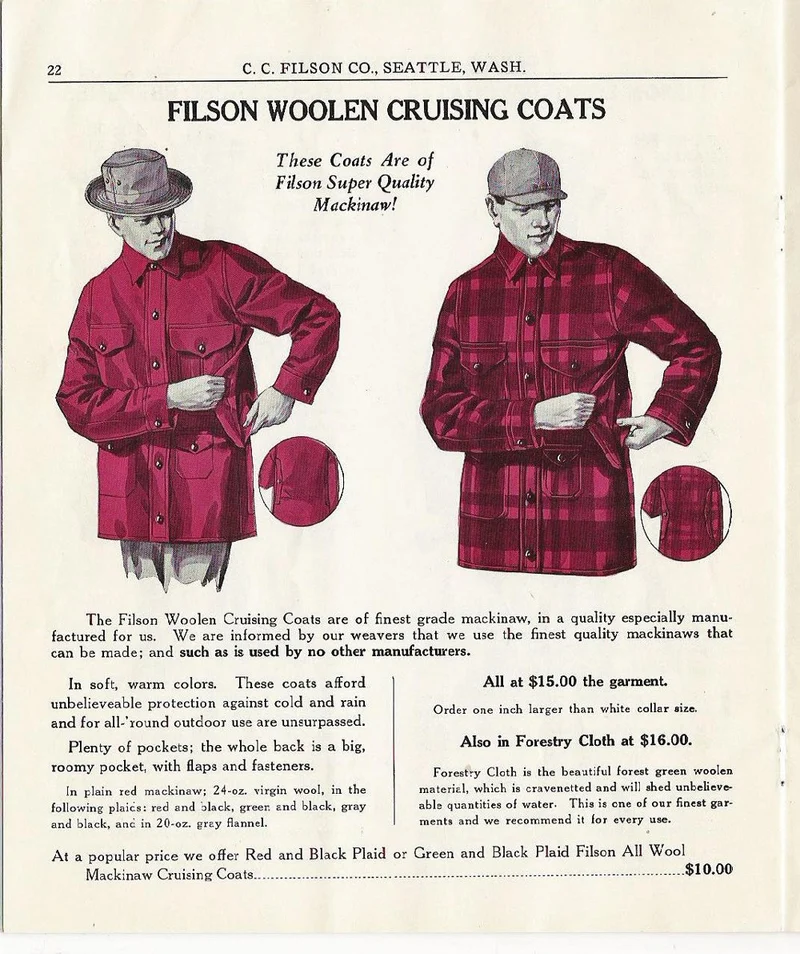
Production evolved without abandoning principle. In the 1920s, Filson introduced a waxed cotton variant called Tin Cloth, imported from England, which offered waterproofing and durability for those who needed lighter weight. The 1970s brought streamlined pocket construction and new wool weights for varied climates. Later decades saw camouflage options, down-insulated versions, and shorter cuts, each responding to user feedback rather than fashion cycles. Throughout these modifications, the essential architecture remained: multiple pockets, double-layer construction where it mattered, and materials chosen for performance in harsh conditions.
The U.S. Forest Service continues to authorize Cruiser jackets for personnel today, more than a century after the patent. This institutional continuity—rare for any garment—reflects something beyond durability: the Cruiser solved a problem so completely that subsequent generations found no reason to solve it differently. It remains one of the most imitated jackets on the market, a distinction that speaks less to fashion influence than to the absence of meaningful competition.
Timeline
- 1914 First made · Verified Filson Cruiser enters production in Seattle, Washington.
- 1927 Ownership Filson files a lawsuit to protect the Cruiser pattern from duplication.
- 1972 Production Filson introduces new fabric weights for broader temperature ranges.
- 2002 Production Filson partners with Pendleton Woolen Mills to produce camouflage variants.
- 2015 Recognised The U.S. Forest Service continues to issue Cruiser jackets as standard wear for all personnel.
Milestone dates are taken from the production notes behind this entry and have not been checked separately.
From the archive
More like this
-
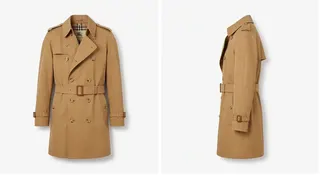 Jackets & Coats · since 1914 Burberry Trench Coat Military necessity transformed into civilian standard, 1914 to present. Read the entry →
 -
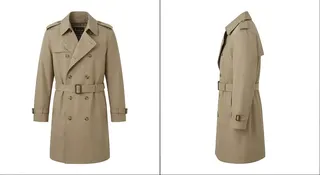 Jackets & Coats · since 1923 London Fog Trench Coat American waterproof trench coat, refined since 1954. Read the entry →
 -
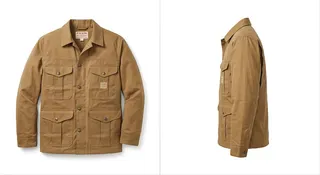 Jackets & Coats · since 1920 Filson Tin Cloth Jacket Waxed cotton jacket in continuous production since 1920. Read the entry →
 -
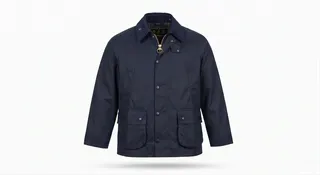 Jackets & Coats · since 1980 Barbour Bedale Short waxed jacket designed for riding, 1980 to present. Read the entry →