Fashion · Clothing · Jackets & Coats
Filson
Filson Tin Cloth Jacket
Since 1920 · 106 years to 2026 · First made in Seattle, Washington
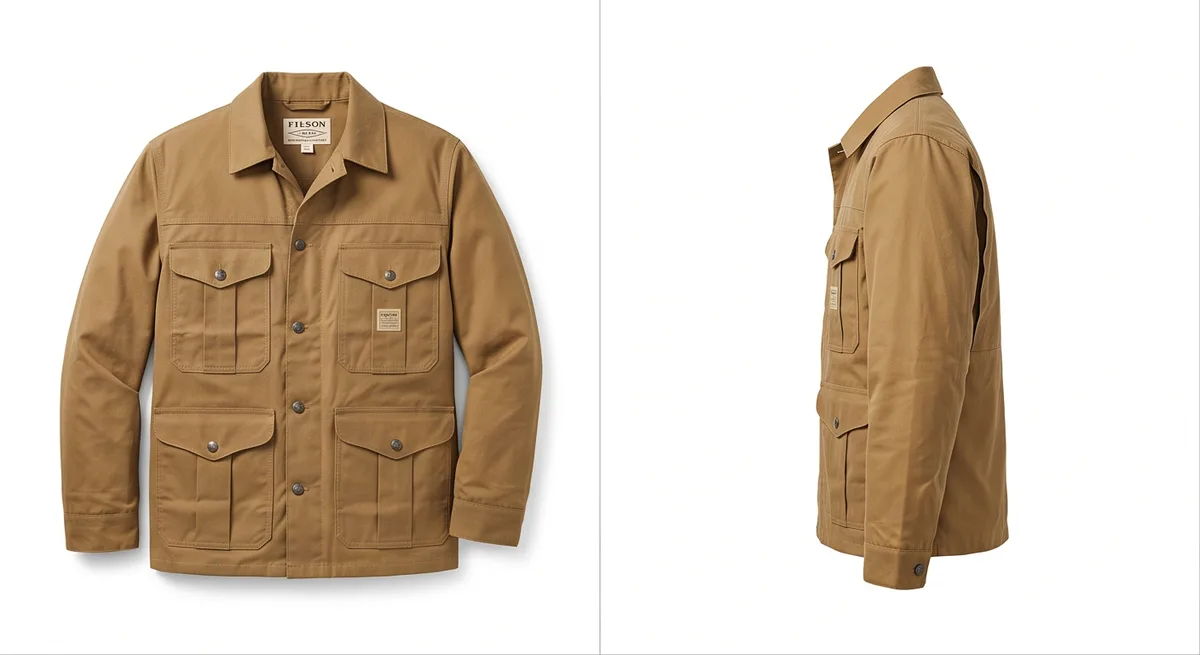
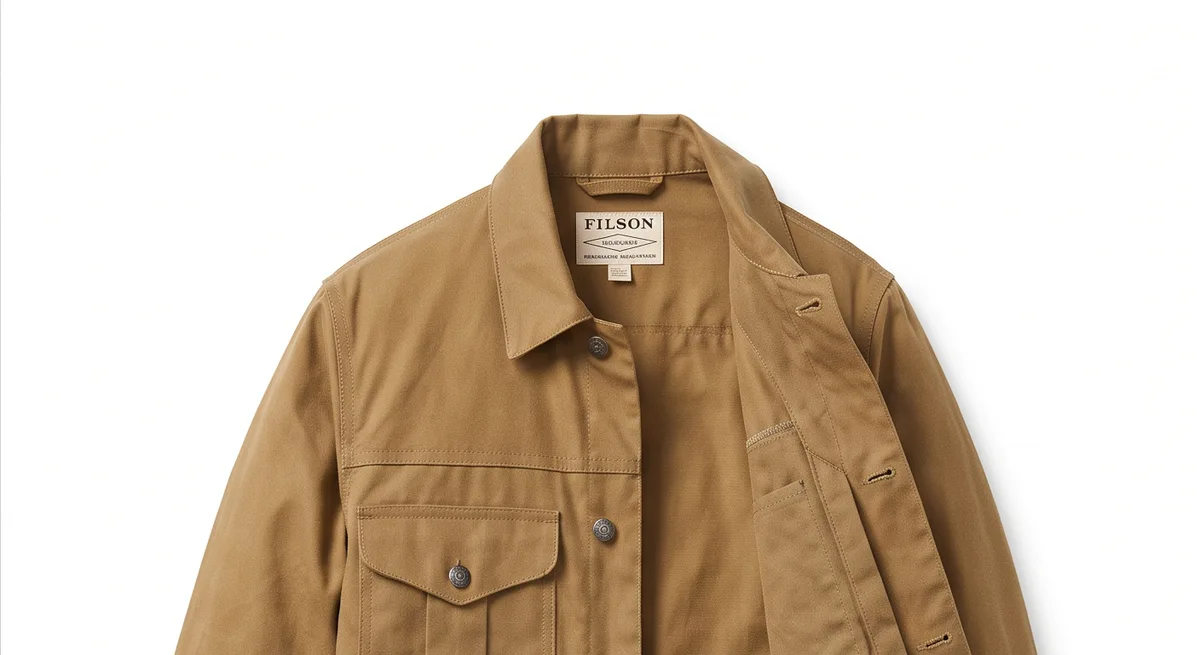
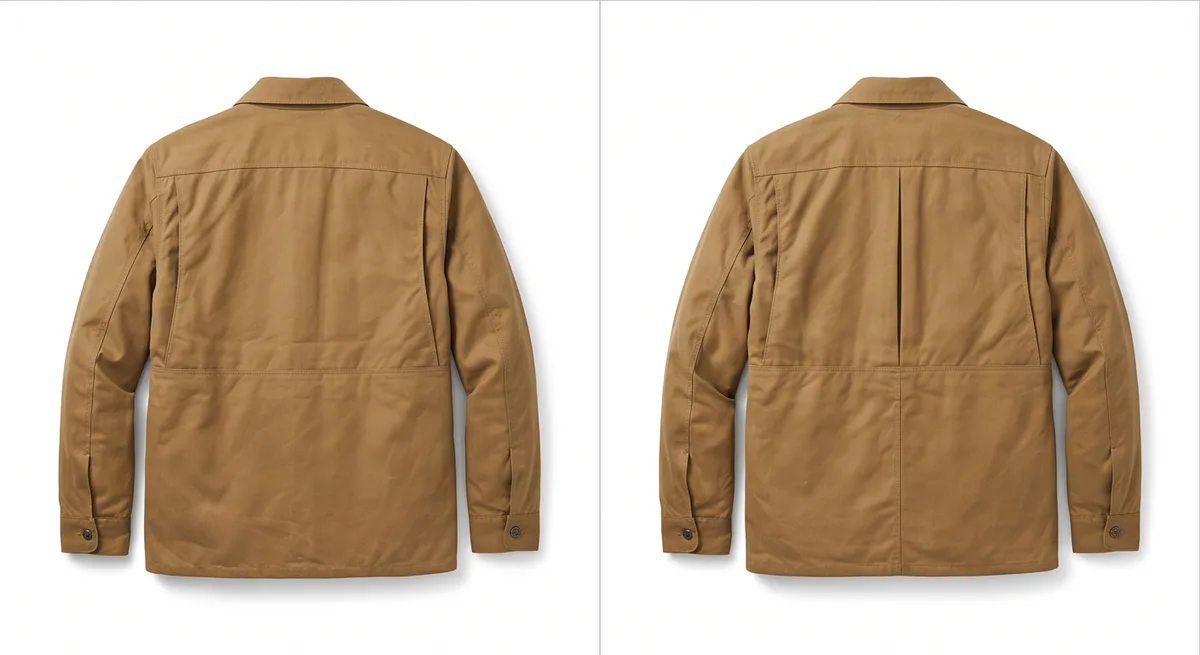
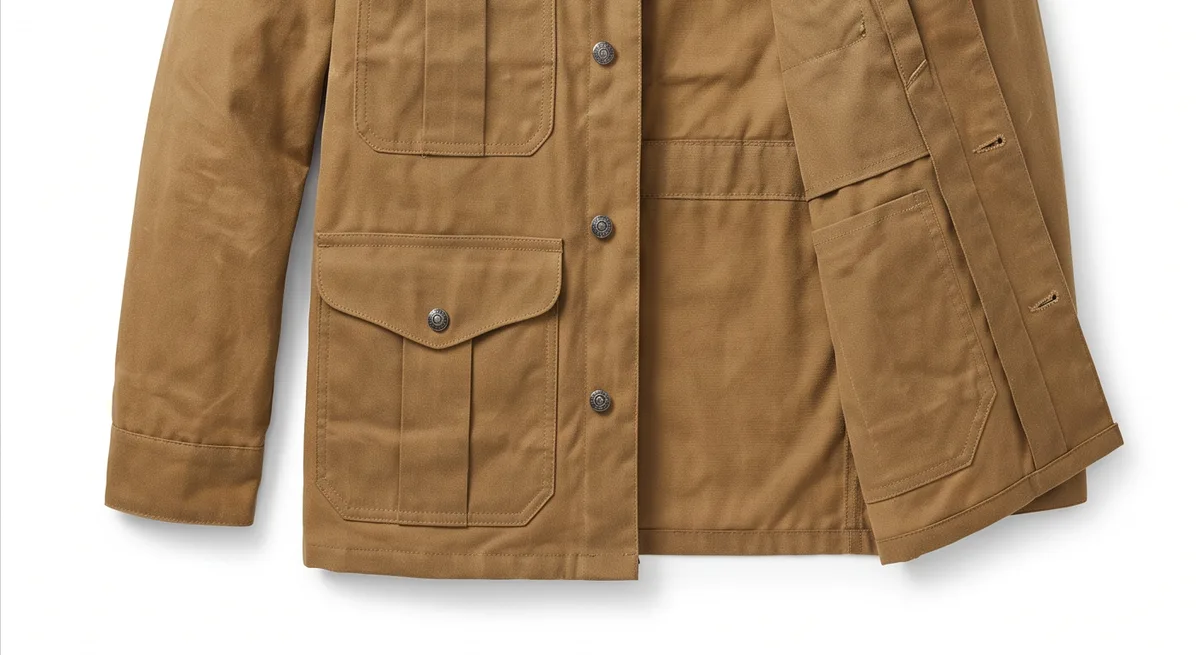
The Tin Cloth Cruiser jacket represents one of the most enduring solutions to a practical problem: how to protect workers from the elements in demanding terrain. Born from Filson's earlier wool cruiser shirt—itself a success among prospectors heading to the Klondike in 1898—the waxed cotton version emerged in the 1920s as a refinement of proven design. The jacket was engineered for timber cruisers, workers who scouted forests in advance of logging crews, marking boundaries through rain-soaked Pacific Northwest terrain. These men needed garments that could withstand constant abrasion from briars and branches while remaining waterproof through long days in wet conditions.
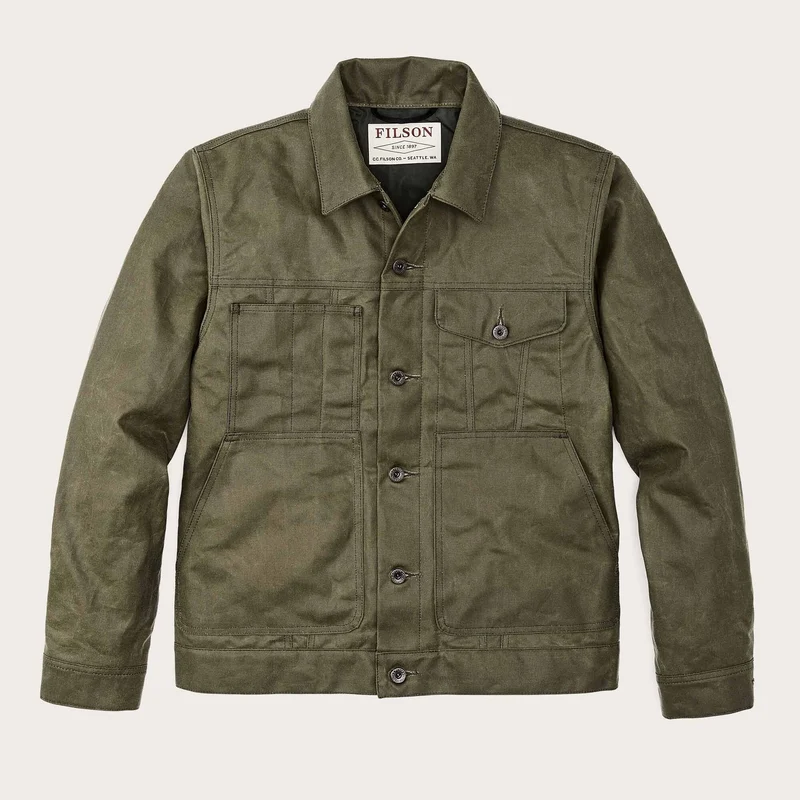
The material that gave the jacket its name—tin cloth—is waxed cotton fabric imported from England, initially treated with paraffin wax and later refined with an oil finish. The tight weave of the duck canvas creates a virtually impenetrable barrier to moisture and puncture, while the wax treatment provides flexibility and durability that synthetic alternatives struggle to match. The design itself reflects its purpose: a large reach-through pocket on the back for maps and documents, four front cargo pockets for tools, and reinforced double-layer sleeves and back panels where wear is most severe. By 1925, the jacket had become the standard uniform for U.S. Forest Service workers in backcountry operations.
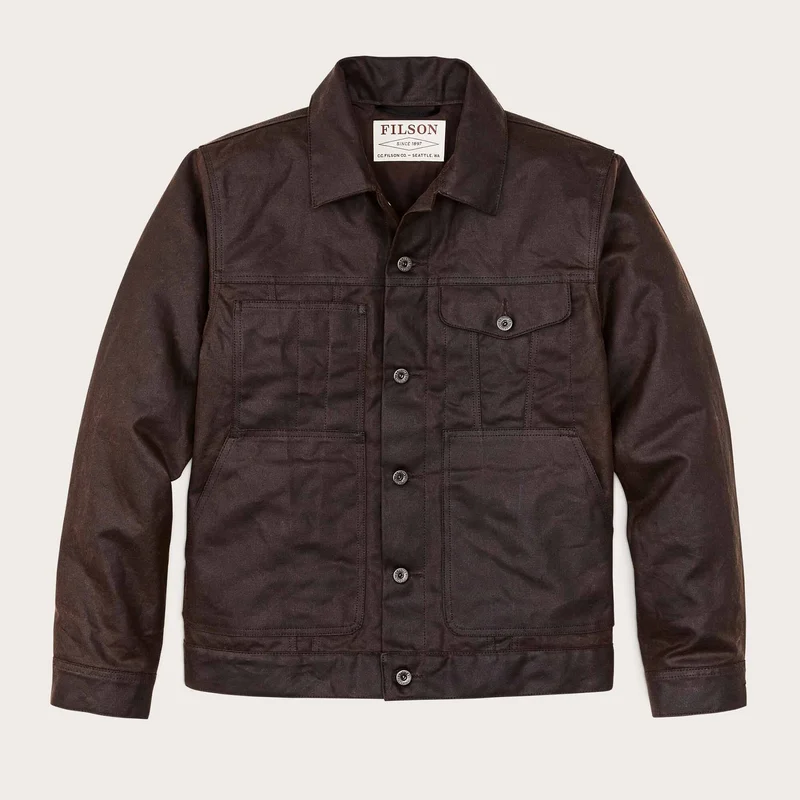
What distinguishes the Tin Cloth Cruiser from countless imitations is the consistency of its construction and the restraint of its evolution. Rather than pursuing fashion or technical innovation for their own sake, Filson has maintained the essential geometry and materials while making incremental improvements—most notably the shift to oil finish wax in the 1990s, which reduced stiffness without compromising protection. The jacket has transcended its original context, adopted by sportsmen and tradesmen across industries, yet it remains fundamentally unchanged from the garment that proved itself in the forests of the Pacific Northwest more than a century ago. This longevity reflects not nostalgia but the absence of a superior alternative for the specific demands it addresses.
Timeline
- 1912 Designed Filson files a patent for the original wool cruiser design.
- 1920 First made · Claimed Filson Tin Cloth Jacket enters production in Seattle, Washington.
- 1922 Designed The catalog shows a single-layer button-front version of the tin cloth cruiser.
- 1934 Designed The catalog introduces a front-shoulder cape and double-layered sleeves.
Milestones as we found them, not as we've checked them.
More like this
-
 Jackets & Coats · since 1923 London Fog Trench Coat American waterproof trench coat, refined since 1954. Read the entry →
 -
 Jackets & Coats · since 1914 Burberry Trench Coat Military necessity transformed into civilian standard, 1914 to present. Read the entry →
 -
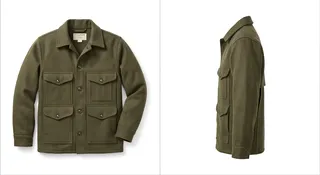 Jackets & Coats · since 1914 Filson Cruiser Wool work jacket patented 1914, still issued to U.S. Forest Service. Read the entry →
 -
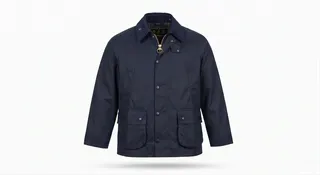 Jackets & Coats · since 1980 Barbour Bedale Short waxed jacket designed for riding, 1980 to present. Read the entry →